upload/newsarch_ebooks_2025_10/2020/02/06/The Prism of Race W.E.B. Du Bois, Langston Hughes, Paul Rob.pdf
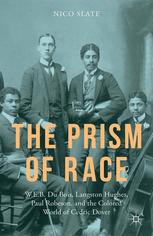
The Prism of Race : W.E.B. Du Bois, Langston Hughes, Paul Robeson, and the Colored World of Cedric Dover 🔍
Nico Slate (auth.)
Palgrave Macmillan US : Imprint: Palgrave Macmillan, 1st ed. 2014, 2014
English [en] · PDF · 0.9MB · 2014 · 📘 Book (non-fiction) · 🚀/lgli/lgrs/nexusstc/scihub/upload/zlib · Save
description
relations pivoted around the white versus black axis. More than racist divisions, however, it was African American resistance to those divisions that placed black Americans-and blackness-at the center of what Du Bois called "the dark world." Between 1919 and the early 1950s, African Americans pioneered the idea of a dark or "colored" world. They gave colored solidarity power-politically, intellectually, and artistically-and used it to foster a global struggle against racism and imperialism.
My first book, Colored Cosmopolitanism, traced that struggle from the late nineteenth century until the 1960s. It was not until the late 1980s, however, that unity between "people of color" reached its greatest prominence in the United States. By that time, notions of colored solidarity had largely faded on the global stage. Beginning in the 1950s, decolonization and the partial decline of white supremacy rendered color less central to the lives of many Asians and Africans. Throughout much of the decolonized world, oppression no longer took the form of white imperialists ruling over dark-skinned subjects. Some "colored" countries went to war with each other. Others were riven by internal conflicts between groups defined not by color but by region, religion, language, ethnicity, and class.
The declining significance of color on the global stage complicated efforts to achieve colored solidarity within the United States. Migrants from Asia and Africa encountered in the United States a color line that had lost significance in their countries of origin. Meanwhile, disagreements over affirmative action and competition for jobs and neighborhoods further divided people of color from each other. Even as the phrase "people of color" became omnipresent in the United States, relationships among people of color alternated between solidarity, distrust, and outright conflict.
A range of large-scale social changes undermined colored solidarity. The economic and educational success of many Asian Americans fueled the idea that certain "model minorities" should be distinguished from other people of color. The "war on drugs" contributed to a surge in mass incarceration that disproportionately devastated urban black communities and created, in the words of legal scholar Michelle Alexander, a "new Jim Crow." A new color line emerged that divided blacks from nonblacks. Marriage patterns reinforced this color line. The boundaries of whiteness were challenged by high rates of intermarriage between Asian Americans and white Americans, on the one hand, and Hispanic Americans and whites, on the other. Intermarriage between whites and blacks remained less common. No Preface xiii grateful for their insightful questions and for their patience. I would like to thank Joanne and Martin Proulx for hosting my family and me as I completed the final manuscript, and for the inspiration of their home and family.
My mother, Karena Slate, accompanied me on one of my visits to the home of Mrs. Alexander-Sinclair. While I was in the attic looking through books, she read Dover's correspondence regarding his book American Negro Art. I could never have found a more skillful and determined researcher. An early supporter of the African Student's Association at UCLA, my mother has her own history of connections to the African Diaspora and to the beauty of dreams never achieved. My brother, Peter Slate, taught me to respect dreamers like Dover regardless of the impossibility of their dreams.
Emily Mohn-Slate read this manuscript with the care and precision she brings to every day of our life together-and to her own writing as well. It is a rare and instructive joy to live with a poet. By sharing her writing process, Emily models for me the patience necessary to revise and the stubbornness necessary to revise again. Maybe someday I will learn both. I dedicate this book with love and gratitude to Emily.
My first book, Colored Cosmopolitanism, traced that struggle from the late nineteenth century until the 1960s. It was not until the late 1980s, however, that unity between "people of color" reached its greatest prominence in the United States. By that time, notions of colored solidarity had largely faded on the global stage. Beginning in the 1950s, decolonization and the partial decline of white supremacy rendered color less central to the lives of many Asians and Africans. Throughout much of the decolonized world, oppression no longer took the form of white imperialists ruling over dark-skinned subjects. Some "colored" countries went to war with each other. Others were riven by internal conflicts between groups defined not by color but by region, religion, language, ethnicity, and class.
The declining significance of color on the global stage complicated efforts to achieve colored solidarity within the United States. Migrants from Asia and Africa encountered in the United States a color line that had lost significance in their countries of origin. Meanwhile, disagreements over affirmative action and competition for jobs and neighborhoods further divided people of color from each other. Even as the phrase "people of color" became omnipresent in the United States, relationships among people of color alternated between solidarity, distrust, and outright conflict.
A range of large-scale social changes undermined colored solidarity. The economic and educational success of many Asian Americans fueled the idea that certain "model minorities" should be distinguished from other people of color. The "war on drugs" contributed to a surge in mass incarceration that disproportionately devastated urban black communities and created, in the words of legal scholar Michelle Alexander, a "new Jim Crow." A new color line emerged that divided blacks from nonblacks. Marriage patterns reinforced this color line. The boundaries of whiteness were challenged by high rates of intermarriage between Asian Americans and white Americans, on the one hand, and Hispanic Americans and whites, on the other. Intermarriage between whites and blacks remained less common. No Preface xiii grateful for their insightful questions and for their patience. I would like to thank Joanne and Martin Proulx for hosting my family and me as I completed the final manuscript, and for the inspiration of their home and family.
My mother, Karena Slate, accompanied me on one of my visits to the home of Mrs. Alexander-Sinclair. While I was in the attic looking through books, she read Dover's correspondence regarding his book American Negro Art. I could never have found a more skillful and determined researcher. An early supporter of the African Student's Association at UCLA, my mother has her own history of connections to the African Diaspora and to the beauty of dreams never achieved. My brother, Peter Slate, taught me to respect dreamers like Dover regardless of the impossibility of their dreams.
Emily Mohn-Slate read this manuscript with the care and precision she brings to every day of our life together-and to her own writing as well. It is a rare and instructive joy to live with a poet. By sharing her writing process, Emily models for me the patience necessary to revise and the stubbornness necessary to revise again. Maybe someday I will learn both. I dedicate this book with love and gratitude to Emily.
Alternative filename
upload/newsarch_ebooks_2025_10/2021/10/24/The Prism of Race W.E.B. Du Bois, Langston Hughes, Paul Rob.pdf
Alternative filename
lgli/K:\springer\10.1057%2F9781137484116.pdf
Alternative filename
lgrsnf/K:\springer\10.1057%2F9781137484116.pdf
Alternative filename
nexusstc/The Prism of Race: W.E.B. Du Bois, Langston Hughes, Paul Robeson, and the Colored World of Cedric Dover/0342bd8dcad55f2e5e9b7e40087283e9.pdf
Alternative filename
scihub/10.1057/9781137484116.pdf
Alternative title
Prism of Race: W. E. B. du Bois, Langston Hughes, Paul Robeson, and the Colored World of Cedric Dover
Alternative author
Slate, N.
Alternative publisher
Palgrave Macmillan : [distributor] Not Avail
Alternative publisher
Palgrave Macmillan; Springer
Alternative publisher
Macmillan Education UK
Alternative publisher
Springer Nature
Alternative publisher
Red Globe Press
Alternative edition
United Kingdom and Ireland, United Kingdom
Alternative edition
Place of publication not identified, 2016
Alternative edition
Springer Nature, New York, NY, 2014
Alternative edition
Basingstoke, 2014
Alternative edition
Dec 17, 2014
Alternative edition
8, 20141216
metadata comments
sm45144241
metadata comments
producers:
Acrobat Distiller 10.1.15 (Windows)
Acrobat Distiller 10.1.15 (Windows)
metadata comments
{"isbns":["113748411X","1349503355","9781137484116","9781349503353"],"publisher":"Palgrave Macmillan US"}
metadata comments
Source title: The Prism of Race: W.E.B. Du Bois, Langston Hughes, Paul Robeson, and the Colored World of Cedric Dover
Alternative description
Born a Eurasian 'half-caste' in Calcutta in 1904, Cedric Dover died in England in 1961 a 'colored' man. One of the foremost experts on race in his generation and a leading figure in the movement toward Afro-Asian solidarity, Dover encountered in his own life the central paradox of race in the contemporary world: he knew that race did not exist in blood or bone, even as he knew that the color of a child's skin determined everything from where he could go to school to how long he would live. Dover strove to be, in his words, 'both 'racial' and antiracial at the same time.' His life and work stand at the heart of one of the most creative and politically significant redefinitions of racial identity in the twentieth century the invention of the colored world. This innovative 'biography of race' explores the concept of colored solidarity as enacted in Dover's life as well as the ideas and relationships that connected him and four of his closest African American friends and colleagues: W.E.B. Du Bois, Claude McKay, Langston Hughes, and Paul Robeson. In doing so, it illuminates a fascinating episode in the intellectual histories of race and cosmopolitanism while offering powerful insights into ongoing debates surrounding racial and ethnic identity today
Alternative description
Cover 1
Title 0
Copyright 5
Dedication 6
Contents 0
Acknowledgments 0
Preface: Of Color 0
Introduction 0
1 Cedric Dover’s Colored Cosmopolitanism 0
2 W. E. B. Du Bois and Race as Autobiography 0
3 Langston Hughes and Race as Propaganda 0
4 Paul Robeson and Race as Solidarity 0
5 The Black Artist and the Colored World 0
Conclusion The Death and Rebirth of the Colored World 0
Epilogue Barack Obama and Race as Freedom 0
Afterword The Library of the Colored World 0
Notes 0
Index 256
Title 0
Copyright 5
Dedication 6
Contents 0
Acknowledgments 0
Preface: Of Color 0
Introduction 0
1 Cedric Dover’s Colored Cosmopolitanism 0
2 W. E. B. Du Bois and Race as Autobiography 0
3 Langston Hughes and Race as Propaganda 0
4 Paul Robeson and Race as Solidarity 0
5 The Black Artist and the Colored World 0
Conclusion The Death and Rebirth of the Colored World 0
Epilogue Barack Obama and Race as Freedom 0
Afterword The Library of the Colored World 0
Notes 0
Index 256
Alternative description
Front Matter....Pages i-xvii
Introduction....Pages 1-8
Cedric Dover’s Colored Cosmopolitanism....Pages 9-29
W. E. B. Du Bois and Race as Autobiography....Pages 31-55
Langston Hughes and Race as Propaganda....Pages 57-84
Paul Robeson and Race as Solidarity....Pages 85-112
The Black Artist and the Colored World....Pages 113-140
Conclusion....Pages 141-165
Epilogue....Pages 167-185
Afterword....Pages 187-199
Back Matter....Pages 201-246
Introduction....Pages 1-8
Cedric Dover’s Colored Cosmopolitanism....Pages 9-29
W. E. B. Du Bois and Race as Autobiography....Pages 31-55
Langston Hughes and Race as Propaganda....Pages 57-84
Paul Robeson and Race as Solidarity....Pages 85-112
The Black Artist and the Colored World....Pages 113-140
Conclusion....Pages 141-165
Epilogue....Pages 167-185
Afterword....Pages 187-199
Back Matter....Pages 201-246
Alternative description
A scholar of race and a leader in the Afro-Asian solidarity movement, Cedric Dover embodied the 20th-century cosmopolitan redefinition of racial identity. Tracing Dover's evolution through his relationships with W.E.B. Du Bois, Langston Hughes, and Paul Robeson, this book tracks racial identity in the twentieth century.
Erscheinungsdatum: 17.12.2014
Erscheinungsdatum: 17.12.2014
date open sourced
2016-03-14
🚀 Fast downloads
Become a member to support the long-term preservation of books, papers, and more. To show our gratitude for your support, you get fast downloads. ❤️
- Fast Partner Server #1 (recommended)
- Fast Partner Server #2 (recommended)
- Fast Partner Server #3 (recommended)
- Fast Partner Server #4 (recommended)
- Fast Partner Server #5 (recommended)
- Fast Partner Server #6 (recommended)
- Fast Partner Server #7
- Fast Partner Server #8
- Fast Partner Server #9
- Fast Partner Server #10
- Fast Partner Server #11
- Fast Partner Server #12
🐢 Slow downloads
From trusted partners. More information in the FAQ. (might require browser verification — unlimited downloads!)
- Slow Partner Server #1 (slightly faster but with waitlist)
- Slow Partner Server #2 (slightly faster but with waitlist)
- Slow Partner Server #3 (slightly faster but with waitlist)
- Slow Partner Server #4 (slightly faster but with waitlist)
- Slow Partner Server #5 (no waitlist, but can be very slow)
- Slow Partner Server #6 (no waitlist, but can be very slow)
- Slow Partner Server #7 (no waitlist, but can be very slow)
- Slow Partner Server #8 (no waitlist, but can be very slow)
- Slow Partner Server #9 (no waitlist, but can be very slow)
- After downloading: Open in our viewer
All download options have the same file, and should be safe to use. That said, always be cautious when downloading files from the internet, especially from sites external to Anna’s Archive. For example, be sure to keep your devices updated.
External downloads
-
For large files, we recommend using a download manager to prevent interruptions.
Recommended download managers: JDownloader -
You will need an ebook or PDF reader to open the file, depending on the file format.
Recommended ebook readers: Anna’s Archive online viewer, ReadEra, and Calibre -
Use online tools to convert between formats.
Recommended conversion tools: CloudConvert and PrintFriendly -
You can send both PDF and EPUB files to your Kindle or Kobo eReader.
Recommended tools: Amazon‘s “Send to Kindle” and djazz‘s “Send to Kobo/Kindle” -
Support authors and libraries
✍️ If you like this and can afford it, consider buying the original, or supporting the authors directly.
📚 If this is available at your local library, consider borrowing it for free there.
Total downloads:
A “file MD5” is a hash that gets computed from the file contents, and is reasonably unique based on that content. All shadow libraries that we have indexed on here primarily use MD5s to identify files.
A file might appear in multiple shadow libraries. For information about the various datasets that we have compiled, see the Datasets page.
For information about this particular file, check out its JSON file. Live/debug JSON version. Live/debug page.