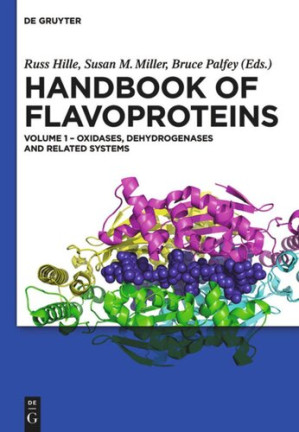
Handbook of flavoproteins : Volume 1 oxidases, dehydrogenases and related systems 🔍
Hille, Russ (editor);Miller, Susan (editor);Palfey, Bruce (editor)
de Gruyter GmbH, Walter, 2012 jan 19
English [en] · PDF · 50.6MB · 2012 · 📘 Book (non-fiction) · 🚀/lgli/lgrs/nexusstc/upload/zlib · Save
description
The dynamic field of flavin and flavoprotein biochemistry has seen rapid advancement in recent years. This comprehensive two volume set provides an overview of all aspects of contemporary research in this important class of enzymes. Topics treated include flavoproteins involved in energy generation, signal transduction and electron transfer (including respiration); oxygen activation by flavoproteins; the biology and biochemistry of complex flavoproteins; flavin and flavoprotein photochemistry/photophysics as well as biotechnological applications of flavoproteins. Recent developments in this field include new structures (including those of large membrane-integral electron transfer complexes containing FMN or FAD), elucidation of the role of flavoproteins in cell signalling pathways (including both phototaxis and the circadian cycle) and important new insights into the reaction mechanisms of flavin-containing enzymes. This volume focussing on oxidases, dehydrogenases and related systems is an essential reference for all researchers in biochemistry, chemistry, photochemistry and photophysics working on flavoenzymes.
* Comprehensive treatment of the flavoenzymes
* From basic oxidation-reduction and electron transfer chemistry and enzyme biology to modern biotechnological applications of flavoproteins
* Extensive color figures
* Comprehensive treatment of the flavoenzymes
* From basic oxidation-reduction and electron transfer chemistry and enzyme biology to modern biotechnological applications of flavoproteins
* Extensive color figures
Alternative filename
nexusstc/Handbook of Flavoproteins: Volume 1 Oxidases, Dehydrogenases and Related Systems/10b01a0c0b8e3b1e88671567b78a8e79.pdf
Alternative filename
lgli/10.1515_9783110268911.pdf
Alternative filename
lgrsnf/10.1515_9783110268911.pdf
Alternative title
Handbook of flavoproteins : oxidases, dehydrogenases and related systems. Volume 1
Alternative title
untitled
Alternative author
Miller, Susan; Mattevi, Andrea; Medina, M.; Nonato, Maria Cristina; Macheroux, Peter; Hemmi, Hisashi; Jentoft Olsen, Rikke Katrine; Kim, Jung-Ja; Vanoni, Maria A.; Wallner, Silvia; Wongnate, Thanyaporn; Tu, Shiao-Chun; Schuman Jorns, Marilyn; Tanner, John J.; Thorpe, Colin; Ghisla, S.; Palfey, Bruce; Binda, Claudia; Ceccarelli, Eduardo; Hille, Russ; Gregersen, Niels Henrik; Rokita, Steven Edward; Becker, Donald; Edmondson, D. E.; Fitzpatrick, Paul; Gadda, Giovanni; Dully, Corinna; Chaiyen, Pimchai; Costa Filho, Antonio J.; Daniel, Bastian
Alternative author
Susan Miller; Niels Henrik Gregersen; Steven Edward Rokita; Donald Becker; Russ Hille; Bruce Palfey; Claudia Binda; Eduardo Ceccarelli; Pimchai Chaiyen; Antonio J Costa Filho; Bastian Daniel; Corinna Dully; D E Edmondson; Paul Fitzpatrick; Giovanni Gadda; S Ghisla; Hisashi Hemmi; Rikke Katrine Jentoft Olsen; Jung-Ja Kim; Peter Macheroux; Andrea Mattevi; M Medina; Maria Cristina Nonato; Marilyn Schuman Jorns; John J Tanner; Colin Thorpe; Shiao-Chun Tu; Maria A Vanoni; Silvia Wallner; Thanyaporn Wongnate
Alternative author
Becker, Donald; Binda, Claudia; Ceccarelli, Eduardo; Chaiyen, Pimchai; Costa Filho, Antonio J.; Daniel, Bastian; Dully, Corinna; Edmondson, Dale; Fitzpatrick, Paul; Gadda, Giovanni; Ghisla, Sandro; Gregersen, Niels Henrik; Hemmi, Hisashi; Jentoft Olsen, Rikke Katrine; Kim, Jung-Ja; Macheroux, Peter; Mattevi, Andrea; Medina, Milagros; Nonato, Maria Cristina; Rokita, Steven; Schuman Jorns, Marilyn; Tanner, John J.; Thorpe, Colin; Tu, Shiao-Chun; Vanoni, Maria A.; Wallner, Silvia; Wongnate, Thanyaporn
Alternative author
Donald Becker; Claudia Binda; Eduardo Ceccarelli; Pimchai Chaiyen; Antonio J. Costa Filho; Bastian Daniel; Corinna Dully; Dale Edmondson; Paul Fitzpatrick; Giovanni Gadda; Sandro Ghisla; Niels Henrik Gregersen; Hisashi Hemmi; Rikke Katrine Jentoft Olsen; Jung-Ja Kim; Peter Macheroux; Andrea Mattevi; Milagros Medina; Maria Cristina Nonato; Steven Rokita; Marilyn Schuman Jorns; John J. Tanner; Colin Thorpe; Shiao-Chun Tu; Maria A. Vanoni; Silvia Wallner; Thanyaporn Wongnate
Alternative author
Donald Becker; Eduardo Ceccarelli; Pimchai Chaiyen; Antonio J Costa Filho; Bastian Daniel; Corinna Dully; Dale Edmondson; Paul Fitzpatrick; Giovanni Gadda; Sandro Ghisla; Niels Henrik Gregersen; Hi Hemmi; Russ Hille; Peter Macheroux; Susan Miller; Bruce Palfey; John J Tanner; Silvia Wallner
Alternative author
Russ Hille, Susan Miller, Bruce Palfey, Donald Becker, Claudia Binda
Alternative author
Russ Hille; Susan M Miller; Bruce Palfey
Alternative author
Adobe Acrobat 8.1 Combine Files
Alternative publisher
Saur, K. G., Verlag. ein Imprint der Walter de Gruyter GmbH
Alternative publisher
düsseldorf university press. in Walter de Gruyter GmbH
Alternative publisher
de Gruyter, Walter, GmbH
Alternative publisher
De Gruyter, Inc.
Alternative edition
Handbook of flavoproteins / ed. by Russ Hille, / ed. by Russ Hille ... ; Vol. 1, Berlin, 2013
Alternative edition
Handbook of Flavoproteins, Volume 1, Berlin, 2012
Alternative edition
De Gruyter, Berlin, 2012
Alternative edition
Berlin/Boston, 2012
Alternative edition
Germany, Germany
Alternative edition
Germany, 2013
metadata comments
degruyter.com
metadata comments
producers:
Acrobat Distiller 8.2.0 (Macintosh)
Acrobat Distiller 8.2.0 (Macintosh)
metadata comments
{"isbns":["3110268426","3110268914","9783110268423","9783110268911"],"last_page":372,"publisher":"DE GRUYTER"}
metadata comments
Указ.
Библиогр. в конце ст.
Библиогр. в конце ст.
metadata comments
РГБ
metadata comments
Russian State Library [rgb] MARC:
=001 006544390
=005 20130530130907.0
=008 130315s2013\\\\gw\||||\\\\\\\0||\|\eng|d
=017 \\ $a И3997-13 $b РГБ
=020 \\ $a 978-3-11-026842-3
=040 \\ $a RuMoRGB $b rus $e rcr
=041 0\ $a eng
=044 \\ $a gw $a xxu
=084 \\ $a Е072.534.1,0 $2 rubbk
=084 \\ $a Е072.341,0 $2 rubbk
=084 \\ $a Г297.31,0 $2 rubbk
=245 00 $a Vol. 1
=260 \\ $c Cop. 2013
=300 \\ $a XIV, 358 с. $b ил., цв. ил.
=336 \\ $a текст (text) $b txt $2 rdacontent
=337 \\ $a неопосредованный (unmediated) $b n $2 rdamedia
=338 \\ $a том (volume) $b nc $2 rdacarrier
=500 \\ $a Указ.
=504 \\ $a Библиогр. в конце ст.
=773 18 $7 nnam $g Vol. 1 $t Handbook of flavoproteins [Текст] : oxidases, dehydrogenases and related systems / ed. by Russ Hille, Susan M. Miller, Bruce Palfey $d Berlin ; Boston : De Gruyter, 2013- $h 25 см $z 978-3-11-030089-5 $w 006577023
=852 \\ $a РГБ $b FB $j 15 13-3/18 $x 90
=001 006544390
=005 20130530130907.0
=008 130315s2013\\\\gw\||||\\\\\\\0||\|\eng|d
=017 \\ $a И3997-13 $b РГБ
=020 \\ $a 978-3-11-026842-3
=040 \\ $a RuMoRGB $b rus $e rcr
=041 0\ $a eng
=044 \\ $a gw $a xxu
=084 \\ $a Е072.534.1,0 $2 rubbk
=084 \\ $a Е072.341,0 $2 rubbk
=084 \\ $a Г297.31,0 $2 rubbk
=245 00 $a Vol. 1
=260 \\ $c Cop. 2013
=300 \\ $a XIV, 358 с. $b ил., цв. ил.
=336 \\ $a текст (text) $b txt $2 rdacontent
=337 \\ $a неопосредованный (unmediated) $b n $2 rdamedia
=338 \\ $a том (volume) $b nc $2 rdacarrier
=500 \\ $a Указ.
=504 \\ $a Библиогр. в конце ст.
=773 18 $7 nnam $g Vol. 1 $t Handbook of flavoproteins [Текст] : oxidases, dehydrogenases and related systems / ed. by Russ Hille, Susan M. Miller, Bruce Palfey $d Berlin ; Boston : De Gruyter, 2013- $h 25 см $z 978-3-11-030089-5 $w 006577023
=852 \\ $a РГБ $b FB $j 15 13-3/18 $x 90
Alternative description
Preface
1 Berberine bridge enzyme and the family of bicovalent flavoenzymes
1.1 Introduction
1.2 The paradigm of bicovalent flavoenzymes: Berberine bridge enzyme (BBE) from Eschscholzia californica
1.3 The family of BBE-like enzymes in the plant kingdom: how many and what for?
1.4 The occurrence of BBE-like enzymes in fungi
1.5 BBE-like enzymes in bacteria: oxidative power for the biosynthesis of antibiotics
1.6 Conclusions
1.7 Acknowledgments
1.8 References
2 PutA and proline metabolism
2.1 Importance of proline metabolism
2.2 Proline utilization A (PutA) proteins
2.3 Three-dimensional structures of PutA and PutA domains
2.3.1 Structures of the catalytic domains of PutA
2.3.2 Crystal structure of a minimalist PutA
2.3.3 Solution structure of a trifunctional PutA and the role of the CTD
2.4 Reaction kinetics of PutA
2.4.1 Proline:ubiquinone oxidoreductase activity
2.4.2 Substrate channeling
2.5 DNA and membrane binding of trifunctional PutA
2.5.1 DNA binding
2.5.2 Membrane association
2.6 PutA functional switching
2.6.1 Redox-linked global conformational changes
2.6.2 Local structural changes near the flavin
2.6.3 Residues important for functional switching
2.7 Conclusions and future research directions
2.8 Acknowledgements
2.9 References
3 Flavoenzymes involved in non-redox reactions
3.1 Introduction
3.2 Flavoenzymes for which flavin cofactors likely play redox-based catalytic roles
3.2.1 Chorismate synthase
3.2.2 4-Hydroxybutyryl-CoA dehydratase
3.2.3 Polyunsaturated fatty acid isomerase
3.2.4 4'-Phosphopantothenoylcysteine decarboxylase
3.2.5 Other examples
3.3 Flavoenzymes for which flavin cofactors likely play non-redox catalytic roles
3.3.1 Type 2 isopentenyl diphosphate isomerase
3.3.2 UDP-galactopyranose mutase
3.4 Flavoenzymes for which flavin cofactors play uncertain, but probably catalytic roles
3.4.1 Lycopene cyclase
3.4.2 Carotene cis-trans isomerase
3.4.3 Fatty acid hydratase
3.4.4 2-Haloacrylate hydratase
3.5 Conclusions
3.6 References
4 Enzymes of FMN and FAD Metabolism
4.1 Introduction
4.2 Enzymes involved in the production of FMN and FAD in different organisms
4.3 FMN and FAD metabolism in yeasts and mammals
4.4 FMN and FAD metabolism in bacteria depends on a bifunctional enzyme
4.5 FMN and FAD metabolism in plants
4.6 Conclusions and future research directions
4.7 Acknowledgments
4.8 References
4.9 Abbreviations
5 Mechanisms of bacterial luciferase and related flavin reductases
5.1 Introduction
5.2 Luciferase mechanism overview
5.2.1 Mechanism of chemiexcitation
5.2.2 Identity of primary excited state and emitter
5.2.3 Multiple forms of 4a-hydroperoxy-FMNH intermediate II
5.2.4 Aldehyde substrate inhibition
5.3 Flavin reductases – general remarks
5.3.1 Mechanisms of flavin reductases in single-enzyme reactions
5.3.2 Mechanisms of luciferase:flavin reductase coupled reactions
5.3.3 Reduced flavin transfers in two-component monooxygenases in general
5.4 Acknowledgments
5.5 References
6 Amine and amino acid oxidases and dehydrogenases
6.1 Introduction
6.2 D-Amino acid oxidase and related enzymes
6.3 Monoamine oxidase and related enzymes
6.4 Trimethylamine dehydrogenase
6.5 Conclusions
6.6 Acknowledgments
6.7 References
7 Monoamine oxidases A and B: membrane-bound flavoenzymes of medical importance
7.1 Introduction
7.2 Structural studies of MAO A and MAO B
7.3 Flavin cofactor properties
7.4 Catalytic reaction pathway
7.5 Mechanism of C-H bond cleavage and flavin reduction
7.6 Reaction with O2 to form H2O2
7.7 Biological and pharmacological significance of MAO A and MAO B
7.8 Acknowledgements
7.9 References
8 Choline oxidase and related systems
8.1 Introduction
8.1.1 Glucose-methanol-choline enzyme oxidoreductase superfamily
8.1.2 Choline, glycine betaine and choline-oxidizing enzymes in biotechnology and medicine
8.2 Choline oxidase
8.2.1 Three-dimensional structure
8.2.2 Biophysical properties
8.2.3 Substrate specificity and inhibitors
8.2.4 Steady-state kinetic mechanism
8.2.5 Chemical mechanism for alcohol oxidation
8.2.6 Chemical mechanism for aldehyde oxidation
8.2.7 Oxygen activation for reaction with reduced flavin
8.3 Choline dehydrogenase
8.4 Thiamine oxidase/dehydrogenase
8.5 Conclusions
8.6 Acknowledgements
8.7 References
9 Pyranose oxidases
9.1 Introduction
9.2 Pyranose 2-oxidase (EC 1.13.10)
9.2.1 Importance and applications
9.2.2 General biochemical and biophysical properties of P2O
9.2.3 Structural studies on P2O
9.2.4 Substrate recognition
9.2.5 Flavin reduction (sugar oxidation) mechanism
9.2.6 Catalytic base for sugar oxidation in the P2O reaction
9.2.7 Detection of a C4a-hydroperoxyflavin intermediate in the reaction of P2O
9.2.8 The mechanism of H2O2 elimination from C4a-hydroperoxyflavin
9.3 Glucose 1-oxidase (EC. 1.1.3.4)
9.3.1 Biochemical properties and application of GO
9.3.2 Flavin reduction of GO
9.3.3 Oxidative half-reaction of GO
9.4 Conclusions and future prospects
9.5 References
10 Toward understanding the mechanism of oxygen activation by flavoprotein oxidases
10.1 Introduction
10.2 Results and discussion
10.2.1 Lys265 is the oxygen activation site in MSOX
10.2.2 Lys259 is the oxygen activation site in MTOX
10.2.3 A pair of lysines comprise the oxygen activation site in TSOX
10.2.4 Probing the oxygen activation site in MSOX using chloride as an oxygen surrogate
10.2.5 Oxygen access to the proposed activation sites in TSOX and MSOX
10.3 Common themes and mechanistic diversity
10.4 References
11 The acyl CoA dehydrogenases
11.1 Introduction
11.2 Overall structure of soluble ACADs
11.2.1 Medium chain acyl-CoA dehydrogenase (MCAD)
11.2.2 Short chain acyl-CoA dehydrogenase (SCAD)
11.2.3 Glutaryl-CoA dehydrogenase (GD)
11.2.4 Very Long Chain Acyl-CoA Dehydrogenase (VLCAD)
11.2.5 Position of the catalytic base in primary sequence
11.3 The basic biochemical mechanism of the a,ß-dehydrogenation step
11.3.1 Chain length specificity and pH dependence
11.3.2 The oxidative half-reaction/interactions of ACADs with electron transfer flavoprotein (ETF)
11.3.3 The inhibition/inactivation of ACADs
11.3.4 Deficiencies of ACADs
11.4 Biogenesis of mitochondrial FAO proteins
11.5 MCAD deficiency
11.6 ETF-QO deficiency
11.7 VLCAD deficiency
11.8 ACAD 9 deficiency
11.9 SCAD deficiency
11.9.1 Clinical aspects of SCAD deficiency
11.9.2 Biochemical aspects of SCAD deficiency
11.9.3 Molecular genetics of SCAD deficiency
11.9.4 Molecular pathogenesis of SCAD deficiency
11.9.5 Cellular pathological aspects of SCAD deficiency
11.10 Acknowledgements
11.11 Abbreviations
11.12 References
12 Flavoproteins in oxidative protein folding
12.1 Oxidative protein folding
12.2 Convergent evolution of three classes of FAD-dependent sulfhydryl oxidases
12.3 Two flavin-dependent pathways for protein disulfide bond generation in eukaryotes
12.3.1 Quiescin-sulfhydryl oxidases: structural aspects
12.3.2 Mechanistic studies of QSOX
12.3.3 QSOX can catalyze oxidative protein folding
12.3.4 Cellular roles of QSOX
12.4 Small ERV domain containing enzymes
12.4.1 Erv2p
12.4.2 Disulfide bond formation in the mitochondrial intermembrane space
12.4.3 Viral ALR proteins
12.5 Ero1
12.6 Conclusions
12.7 Acknowledgments
12.8 References
13 Glutamate synthase
13.1 Introduction
13.1.1 NADPH-GltS
13.1.2 Fd-GltS
13.1.3 NADH-GltS
13.1.4 Archeal GltS
13.2 The GltS-catalyzed reactions
13.3 Flavins and iron-sulfur centers of GltS
13.4 Localization of catalytic subsites and coenzymes
13.5 Mid-point potential values of the GltS cofactors and electron transfer pathway between the GltS flavins
13.6 Structure of aGltS and FdGltS and the mechanism of control and coordination of the partial activities
13.7 Structure of the NADPH-GltS aß-protomer
13.8 Acknowledgments
13.9 References
14 The dihydroorotate dehydrogenases
14.1 Biological function
14.2 Protein production, purification and kinetic characterization
14.2.1 Purification
14.2.2 Activity test
14.3 X-ray structures
14.3.1 Crystallization
14.3.2 Overall description of the atomic structure
14.4 Mechanism
14.4.1 Asymmetric behavior of Class 1A DHODH monomers
14.4.2 Class 2 DHODHs and the interaction with membranes
14.5 Therapeutic potential
14.6 References
15 Ferredoxin-NADP+ reductases
15.1 Introduction
15.2 Classification of FNRs
15.3 Structural features of FNR
15.4 Interaction of FNR with its natural substrates
15.5 The metabolic roles of FNR
15.6 Activities of ferredoxin-NADP+ reductase
15.7 Purification procedures
15.7.1 Transgenic expression in E. coli
15.7.2 Preparation of soluble protein extracts
15.7.3 Spectroscopic properties of FNR
15.8 Conclusions
15.9 Acknowledgments
15.10 Abbreviations
15.11 References
16 Flavoprotein dehalogenases
16.1 Organic halides and biological dehalogenation
16.1.1 Strategies for dehalogenation
16.2 Flavin-dependent dehalogenation
16.2.1 Oxidative dehalogenation by flavoproteins
16.2.2 Hydrolytic dehalogenation catalyzed by flavoproteins
16.2.3 Reductive dehalogenation catalyzed by flavoproteins
16.3 Conclusions
16.4 References
Index
1 Berberine bridge enzyme and the family of bicovalent flavoenzymes
1.1 Introduction
1.2 The paradigm of bicovalent flavoenzymes: Berberine bridge enzyme (BBE) from Eschscholzia californica
1.3 The family of BBE-like enzymes in the plant kingdom: how many and what for?
1.4 The occurrence of BBE-like enzymes in fungi
1.5 BBE-like enzymes in bacteria: oxidative power for the biosynthesis of antibiotics
1.6 Conclusions
1.7 Acknowledgments
1.8 References
2 PutA and proline metabolism
2.1 Importance of proline metabolism
2.2 Proline utilization A (PutA) proteins
2.3 Three-dimensional structures of PutA and PutA domains
2.3.1 Structures of the catalytic domains of PutA
2.3.2 Crystal structure of a minimalist PutA
2.3.3 Solution structure of a trifunctional PutA and the role of the CTD
2.4 Reaction kinetics of PutA
2.4.1 Proline:ubiquinone oxidoreductase activity
2.4.2 Substrate channeling
2.5 DNA and membrane binding of trifunctional PutA
2.5.1 DNA binding
2.5.2 Membrane association
2.6 PutA functional switching
2.6.1 Redox-linked global conformational changes
2.6.2 Local structural changes near the flavin
2.6.3 Residues important for functional switching
2.7 Conclusions and future research directions
2.8 Acknowledgements
2.9 References
3 Flavoenzymes involved in non-redox reactions
3.1 Introduction
3.2 Flavoenzymes for which flavin cofactors likely play redox-based catalytic roles
3.2.1 Chorismate synthase
3.2.2 4-Hydroxybutyryl-CoA dehydratase
3.2.3 Polyunsaturated fatty acid isomerase
3.2.4 4'-Phosphopantothenoylcysteine decarboxylase
3.2.5 Other examples
3.3 Flavoenzymes for which flavin cofactors likely play non-redox catalytic roles
3.3.1 Type 2 isopentenyl diphosphate isomerase
3.3.2 UDP-galactopyranose mutase
3.4 Flavoenzymes for which flavin cofactors play uncertain, but probably catalytic roles
3.4.1 Lycopene cyclase
3.4.2 Carotene cis-trans isomerase
3.4.3 Fatty acid hydratase
3.4.4 2-Haloacrylate hydratase
3.5 Conclusions
3.6 References
4 Enzymes of FMN and FAD Metabolism
4.1 Introduction
4.2 Enzymes involved in the production of FMN and FAD in different organisms
4.3 FMN and FAD metabolism in yeasts and mammals
4.4 FMN and FAD metabolism in bacteria depends on a bifunctional enzyme
4.5 FMN and FAD metabolism in plants
4.6 Conclusions and future research directions
4.7 Acknowledgments
4.8 References
4.9 Abbreviations
5 Mechanisms of bacterial luciferase and related flavin reductases
5.1 Introduction
5.2 Luciferase mechanism overview
5.2.1 Mechanism of chemiexcitation
5.2.2 Identity of primary excited state and emitter
5.2.3 Multiple forms of 4a-hydroperoxy-FMNH intermediate II
5.2.4 Aldehyde substrate inhibition
5.3 Flavin reductases – general remarks
5.3.1 Mechanisms of flavin reductases in single-enzyme reactions
5.3.2 Mechanisms of luciferase:flavin reductase coupled reactions
5.3.3 Reduced flavin transfers in two-component monooxygenases in general
5.4 Acknowledgments
5.5 References
6 Amine and amino acid oxidases and dehydrogenases
6.1 Introduction
6.2 D-Amino acid oxidase and related enzymes
6.3 Monoamine oxidase and related enzymes
6.4 Trimethylamine dehydrogenase
6.5 Conclusions
6.6 Acknowledgments
6.7 References
7 Monoamine oxidases A and B: membrane-bound flavoenzymes of medical importance
7.1 Introduction
7.2 Structural studies of MAO A and MAO B
7.3 Flavin cofactor properties
7.4 Catalytic reaction pathway
7.5 Mechanism of C-H bond cleavage and flavin reduction
7.6 Reaction with O2 to form H2O2
7.7 Biological and pharmacological significance of MAO A and MAO B
7.8 Acknowledgements
7.9 References
8 Choline oxidase and related systems
8.1 Introduction
8.1.1 Glucose-methanol-choline enzyme oxidoreductase superfamily
8.1.2 Choline, glycine betaine and choline-oxidizing enzymes in biotechnology and medicine
8.2 Choline oxidase
8.2.1 Three-dimensional structure
8.2.2 Biophysical properties
8.2.3 Substrate specificity and inhibitors
8.2.4 Steady-state kinetic mechanism
8.2.5 Chemical mechanism for alcohol oxidation
8.2.6 Chemical mechanism for aldehyde oxidation
8.2.7 Oxygen activation for reaction with reduced flavin
8.3 Choline dehydrogenase
8.4 Thiamine oxidase/dehydrogenase
8.5 Conclusions
8.6 Acknowledgements
8.7 References
9 Pyranose oxidases
9.1 Introduction
9.2 Pyranose 2-oxidase (EC 1.13.10)
9.2.1 Importance and applications
9.2.2 General biochemical and biophysical properties of P2O
9.2.3 Structural studies on P2O
9.2.4 Substrate recognition
9.2.5 Flavin reduction (sugar oxidation) mechanism
9.2.6 Catalytic base for sugar oxidation in the P2O reaction
9.2.7 Detection of a C4a-hydroperoxyflavin intermediate in the reaction of P2O
9.2.8 The mechanism of H2O2 elimination from C4a-hydroperoxyflavin
9.3 Glucose 1-oxidase (EC. 1.1.3.4)
9.3.1 Biochemical properties and application of GO
9.3.2 Flavin reduction of GO
9.3.3 Oxidative half-reaction of GO
9.4 Conclusions and future prospects
9.5 References
10 Toward understanding the mechanism of oxygen activation by flavoprotein oxidases
10.1 Introduction
10.2 Results and discussion
10.2.1 Lys265 is the oxygen activation site in MSOX
10.2.2 Lys259 is the oxygen activation site in MTOX
10.2.3 A pair of lysines comprise the oxygen activation site in TSOX
10.2.4 Probing the oxygen activation site in MSOX using chloride as an oxygen surrogate
10.2.5 Oxygen access to the proposed activation sites in TSOX and MSOX
10.3 Common themes and mechanistic diversity
10.4 References
11 The acyl CoA dehydrogenases
11.1 Introduction
11.2 Overall structure of soluble ACADs
11.2.1 Medium chain acyl-CoA dehydrogenase (MCAD)
11.2.2 Short chain acyl-CoA dehydrogenase (SCAD)
11.2.3 Glutaryl-CoA dehydrogenase (GD)
11.2.4 Very Long Chain Acyl-CoA Dehydrogenase (VLCAD)
11.2.5 Position of the catalytic base in primary sequence
11.3 The basic biochemical mechanism of the a,ß-dehydrogenation step
11.3.1 Chain length specificity and pH dependence
11.3.2 The oxidative half-reaction/interactions of ACADs with electron transfer flavoprotein (ETF)
11.3.3 The inhibition/inactivation of ACADs
11.3.4 Deficiencies of ACADs
11.4 Biogenesis of mitochondrial FAO proteins
11.5 MCAD deficiency
11.6 ETF-QO deficiency
11.7 VLCAD deficiency
11.8 ACAD 9 deficiency
11.9 SCAD deficiency
11.9.1 Clinical aspects of SCAD deficiency
11.9.2 Biochemical aspects of SCAD deficiency
11.9.3 Molecular genetics of SCAD deficiency
11.9.4 Molecular pathogenesis of SCAD deficiency
11.9.5 Cellular pathological aspects of SCAD deficiency
11.10 Acknowledgements
11.11 Abbreviations
11.12 References
12 Flavoproteins in oxidative protein folding
12.1 Oxidative protein folding
12.2 Convergent evolution of three classes of FAD-dependent sulfhydryl oxidases
12.3 Two flavin-dependent pathways for protein disulfide bond generation in eukaryotes
12.3.1 Quiescin-sulfhydryl oxidases: structural aspects
12.3.2 Mechanistic studies of QSOX
12.3.3 QSOX can catalyze oxidative protein folding
12.3.4 Cellular roles of QSOX
12.4 Small ERV domain containing enzymes
12.4.1 Erv2p
12.4.2 Disulfide bond formation in the mitochondrial intermembrane space
12.4.3 Viral ALR proteins
12.5 Ero1
12.6 Conclusions
12.7 Acknowledgments
12.8 References
13 Glutamate synthase
13.1 Introduction
13.1.1 NADPH-GltS
13.1.2 Fd-GltS
13.1.3 NADH-GltS
13.1.4 Archeal GltS
13.2 The GltS-catalyzed reactions
13.3 Flavins and iron-sulfur centers of GltS
13.4 Localization of catalytic subsites and coenzymes
13.5 Mid-point potential values of the GltS cofactors and electron transfer pathway between the GltS flavins
13.6 Structure of aGltS and FdGltS and the mechanism of control and coordination of the partial activities
13.7 Structure of the NADPH-GltS aß-protomer
13.8 Acknowledgments
13.9 References
14 The dihydroorotate dehydrogenases
14.1 Biological function
14.2 Protein production, purification and kinetic characterization
14.2.1 Purification
14.2.2 Activity test
14.3 X-ray structures
14.3.1 Crystallization
14.3.2 Overall description of the atomic structure
14.4 Mechanism
14.4.1 Asymmetric behavior of Class 1A DHODH monomers
14.4.2 Class 2 DHODHs and the interaction with membranes
14.5 Therapeutic potential
14.6 References
15 Ferredoxin-NADP+ reductases
15.1 Introduction
15.2 Classification of FNRs
15.3 Structural features of FNR
15.4 Interaction of FNR with its natural substrates
15.5 The metabolic roles of FNR
15.6 Activities of ferredoxin-NADP+ reductase
15.7 Purification procedures
15.7.1 Transgenic expression in E. coli
15.7.2 Preparation of soluble protein extracts
15.7.3 Spectroscopic properties of FNR
15.8 Conclusions
15.9 Acknowledgments
15.10 Abbreviations
15.11 References
16 Flavoprotein dehalogenases
16.1 Organic halides and biological dehalogenation
16.1.1 Strategies for dehalogenation
16.2 Flavin-dependent dehalogenation
16.2.1 Oxidative dehalogenation by flavoproteins
16.2.2 Hydrolytic dehalogenation catalyzed by flavoproteins
16.2.3 Reductive dehalogenation catalyzed by flavoproteins
16.3 Conclusions
16.4 References
Index
Alternative description
<!doctype html public "-//w3c//dtd html 4.0 transitional//en"> <html><head> <meta http-equiv=content-type content="text/html; charset=iso-8859-1"> <meta content="mshtml 6.00.6000.17110" name=generator></head> <body> <P>The dynamic field of flavin and flavoprotein biochemistry has seen rapid advancement in recent years. This comprehensive two volume set provides an overview of all aspects of contemporary research in this important class of enzymes. Topics treated include flavoproteins involved in energy generation, signal transduction and electron transfer (including respiration); oxygen activation by flavoproteins; the biology and biochemistry of complex flavoproteins; flavin and flavoprotein photochemistry/photophysics as well as biotechnological applications of flavoproteins. Recent developments in this field include new structures (including those of large membrane-integral electron transfer complexes containing FMN or FAD), elucidation of the role of flavoproteins in cell signalling pathways (including both phototaxis and the circadian cycle) and important new insights into the reaction mechanisms of flavin-containing enzymes. This volume focussing on oxidases, dehydrogenases and related systems is an essential reference for all researchers in biochemistry, chemistry, photochemistry and photophysics working on flavoenzymes.<BR /></P></body></html>
Alternative description
The dynamic field of flavin and flavoprotein biochemistry has seen rapid advancement in recent years. Thisfirst book of thetwo volume set provides an overview of all aspects focussing on oxidases, dehydrogenases and related systems. Discussed arerecent developments in this field including those of large membrane-integral electron transfer complexes. It is an essential reference for all researchers in biochemistry, chemistry, photochemistry and photophysics working on flavoenzymes
date open sourced
2023-07-20
🚀 Fast downloads
Become a member to support the long-term preservation of books, papers, and more. To show our gratitude for your support, you get fast downloads. ❤️
- Fast Partner Server #1 (recommended)
- Fast Partner Server #2 (recommended)
- Fast Partner Server #3 (recommended)
- Fast Partner Server #4 (recommended)
- Fast Partner Server #5 (recommended)
- Fast Partner Server #6 (recommended)
- Fast Partner Server #7
- Fast Partner Server #8
- Fast Partner Server #9
- Fast Partner Server #10
- Fast Partner Server #11
- Fast Partner Server #12
🐢 Slow downloads
From trusted partners. More information in the FAQ. (might require browser verification — unlimited downloads!)
- Slow Partner Server #1 (slightly faster but with waitlist)
- Slow Partner Server #2 (slightly faster but with waitlist)
- Slow Partner Server #3 (slightly faster but with waitlist)
- Slow Partner Server #4 (slightly faster but with waitlist)
- Slow Partner Server #5 (no waitlist, but can be very slow)
- Slow Partner Server #6 (no waitlist, but can be very slow)
- Slow Partner Server #7 (no waitlist, but can be very slow)
- Slow Partner Server #8 (no waitlist, but can be very slow)
- Slow Partner Server #9 (no waitlist, but can be very slow)
- After downloading: Open in our viewer
All download options have the same file, and should be safe to use. That said, always be cautious when downloading files from the internet, especially from sites external to Anna’s Archive. For example, be sure to keep your devices updated.
External downloads
-
For large files, we recommend using a download manager to prevent interruptions.
Recommended download managers: JDownloader -
You will need an ebook or PDF reader to open the file, depending on the file format.
Recommended ebook readers: Anna’s Archive online viewer, ReadEra, and Calibre -
Use online tools to convert between formats.
Recommended conversion tools: CloudConvert and PrintFriendly -
You can send both PDF and EPUB files to your Kindle or Kobo eReader.
Recommended tools: Amazon‘s “Send to Kindle” and djazz‘s “Send to Kobo/Kindle” -
Support authors and libraries
✍️ If you like this and can afford it, consider buying the original, or supporting the authors directly.
📚 If this is available at your local library, consider borrowing it for free there.
Total downloads:
A “file MD5” is a hash that gets computed from the file contents, and is reasonably unique based on that content. All shadow libraries that we have indexed on here primarily use MD5s to identify files.
A file might appear in multiple shadow libraries. For information about the various datasets that we have compiled, see the Datasets page.
For information about this particular file, check out its JSON file. Live/debug JSON version. Live/debug page.