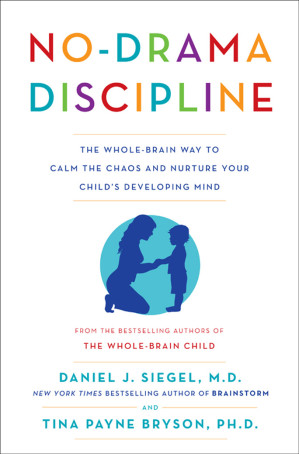
No-Drama Discipline : The Whole-Brain Way to Calm the Chaos and Nurture Your Child's Developing Mind 🔍
Daniel J. Siegel, MD; Tina Payne Bryson
Random House Publishing Group, Penguin Random House LLC, New York, 2014
English [en] · EPUB · 14.2MB · 2014 · 📘 Book (non-fiction) · 🚀/lgli/zlib · Save
description
The pioneering experts behind the bestselling The Whole-Brain Child --Tina Payne Bryson and Daniel J. Siegel, the New York Times bestselling author of Brainstorm --now explore the ultimate child-raising challenge: discipline. Highlighting the fascinating link between a child's neurological development and the way a parent reacts to misbehavior, No-Drama Discipline provides an effective, compassionate road map for dealing with tantrums, tensions, and tears--without causing a scene. Defining the true meaning of the "d" word (to instruct, not to shout or reprimand), the authors explain how to reach your child, redirect emotions, and turn a meltdown into an opportunity for growth. By doing so, the cycle of negative behavior (and punishment) is essentially brought to a halt, as problem solving becomes a win/win situation. Inside this sanity-saving guide you'll discover strategies that help parents identify their own discipline philosophy--and master the best methods to communicate the lessons they are trying to impart facts on child brain development--and what kind of discipline is most appropriate and constructive at all ages and stages the way to calmly and lovingly connect with a child--no matter how extreme the behavior--while still setting clear and consistent limits tips for navigating your children through a tantrum to achieve insight, empathy, and repair twenty discipline mistakes even the best parents make--and how to stay focused on the principles of whole-brain parenting and discipline techniques Complete with candid stories and playful illustrations that bring the authors' suggestions to life, No-Drama Discipline shows you how to work with your child's developing mind, peacefully resolve conflicts, and inspire happiness and strengthen resilience in everyone in the family. Advance praise for No-Drama Discipline "Wow! This book grabbed me from the very first page and did not let go. Daniel Siegel and Tina Payne Bryson explain extremely well why punishment is a dead-end strategy. Then they describe what to do instead. By making the latest breakthroughs in brain science accessible to any parent, they show why empathy and connection are the royal road to cooperation, discipline, and family harmony." --Lawrence J. Cohen, Ph.D., author of The Opposite of Worry "Using simple and clear explanations, practical advice, and cartoons that make the how-to guidance come alive, this book is a rich resource for families trying to navigate meltdowns and misunderstandings. It explains how neurobiology drives children's infuriating and puzzling behavior and will help parents make their way through the trenches of a typical day with grace, mutual respect, and a good helping of delight." --Wendy Mogel, Ph.D., author of The Blessing of a Skinned Knee "What a relief! Siegel and Bryson take the difficulty out of discipline, for parents or anyone who has to help kids behave. No-Drama Discipline offers a research-based, commonsense approach that any grown-up will be happy to use, and any kid will benefit from." --Daniel Goleman, author of Emotional Intelligence From the Hardcover edition
Alternative author
Siegel, Daniel J., Bryson, Tina Payne
Alternative author
Tina Payne Bryson; Overdrive Inc
Alternative publisher
Random House, Incorporated
Alternative publisher
Bantam Books
Alternative publisher
Ivy Books
Alternative publisher
Fawcett
Alternative edition
United States, United States of America
Alternative edition
S.I, 2014
Alternative edition
2, 2014
metadata comments
lg1281893
Alternative description
NEW YORK TIMES BESTSELLER • The pioneering experts behind The Whole-Brain Child and The Yes Brain tackle the ultimate parenting challenge: discipline.
“A lot of fascinating insights . . . an eye-opener worth reading.”— Parents
Highlighting the fascinating link between a child’s neurological development and the way a parent reacts to misbehavior, No-Drama Discipline provides an effective, compassionate road map for dealing with tantrums, tensions, and tears—without causing a scene.
Defining the true meaning of the “d” word (to instruct, not to shout or reprimand), the authors explain how to reach your child, redirect emotions, and turn a meltdown into an opportunity for growth. By doing so, the cycle of negative behavior (and punishment) is essentially brought to a halt, as problem solving becomes a win/win situation. Inside this sanity-saving guide you’ll discover
• strategies that help parents identify their own discipline philosophy—and master the best methods to communicate the lessons they are trying to impart
• facts on child brain development—and what kind of discipline is most appropriate and constructive at all ages and stages
• the way to calmly and lovingly connect with a child—no matter how extreme the behavior—while still setting clear and consistent limits
• tips for navigating your child through a tantrum to achieve insight, empathy, and repair
• twenty discipline mistakes even the best parents make—and how to stay focused on the principles of whole-brain parenting and discipline techniques
Complete with candid stories and playful illustrations that bring the authors’ suggestions to life, No-Drama Discipline shows you how to work with your child’s developing mind, peacefully resolve conflicts, and inspire happiness and strengthen resilience in everyone in the family.
Praise for No-Drama Discipline
“With lucid, engaging prose accompanied by cartoon illustrations, Siegel and Bryson help parents teach and communicate more effectively.” — Publishers Weekly
“Wow! This book grabbed me from the very first page and did not let go.” —Lawrence J. Cohen, Ph.D., author of The Opposite of Worry
“A lot of fascinating insights . . . an eye-opener worth reading.”— Parents
Highlighting the fascinating link between a child’s neurological development and the way a parent reacts to misbehavior, No-Drama Discipline provides an effective, compassionate road map for dealing with tantrums, tensions, and tears—without causing a scene.
Defining the true meaning of the “d” word (to instruct, not to shout or reprimand), the authors explain how to reach your child, redirect emotions, and turn a meltdown into an opportunity for growth. By doing so, the cycle of negative behavior (and punishment) is essentially brought to a halt, as problem solving becomes a win/win situation. Inside this sanity-saving guide you’ll discover
• strategies that help parents identify their own discipline philosophy—and master the best methods to communicate the lessons they are trying to impart
• facts on child brain development—and what kind of discipline is most appropriate and constructive at all ages and stages
• the way to calmly and lovingly connect with a child—no matter how extreme the behavior—while still setting clear and consistent limits
• tips for navigating your child through a tantrum to achieve insight, empathy, and repair
• twenty discipline mistakes even the best parents make—and how to stay focused on the principles of whole-brain parenting and discipline techniques
Complete with candid stories and playful illustrations that bring the authors’ suggestions to life, No-Drama Discipline shows you how to work with your child’s developing mind, peacefully resolve conflicts, and inspire happiness and strengthen resilience in everyone in the family.
Praise for No-Drama Discipline
“With lucid, engaging prose accompanied by cartoon illustrations, Siegel and Bryson help parents teach and communicate more effectively.” — Publishers Weekly
“Wow! This book grabbed me from the very first page and did not let go.” —Lawrence J. Cohen, Ph.D., author of The Opposite of Worry
date open sourced
2022-08-12
🚀 Fast downloads
Become a member to support the long-term preservation of books, papers, and more. To show our gratitude for your support, you get fast downloads. ❤️
- Fast Partner Server #1 (recommended)
- Fast Partner Server #2 (recommended)
- Fast Partner Server #3 (recommended)
- Fast Partner Server #4 (recommended)
- Fast Partner Server #5 (recommended)
- Fast Partner Server #6 (recommended)
- Fast Partner Server #7
- Fast Partner Server #8
- Fast Partner Server #9
- Fast Partner Server #10
- Fast Partner Server #11
- Fast Partner Server #12
🐢 Slow downloads
From trusted partners. More information in the FAQ. (might require browser verification — unlimited downloads!)
- Slow Partner Server #1 (slightly faster but with waitlist)
- Slow Partner Server #2 (slightly faster but with waitlist)
- Slow Partner Server #3 (slightly faster but with waitlist)
- Slow Partner Server #4 (slightly faster but with waitlist)
- Slow Partner Server #5 (no waitlist, but can be very slow)
- Slow Partner Server #6 (no waitlist, but can be very slow)
- Slow Partner Server #7 (no waitlist, but can be very slow)
- Slow Partner Server #8 (no waitlist, but can be very slow)
- Slow Partner Server #9 (no waitlist, but can be very slow)
- After downloading: Open in our viewer
External downloads
-
For large files, we recommend using a download manager to prevent interruptions.
Recommended download managers: JDownloader -
You will need an ebook or PDF reader to open the file, depending on the file format.
Recommended ebook readers: Anna’s Archive online viewer, ReadEra, and Calibre -
Use online tools to convert between formats.
Recommended conversion tools: CloudConvert and PrintFriendly -
You can send both PDF and EPUB files to your Kindle or Kobo eReader.
Recommended tools: Amazon‘s “Send to Kindle” and djazz‘s “Send to Kobo/Kindle” -
Support authors and libraries
✍️ If you like this and can afford it, consider buying the original, or supporting the authors directly.
📚 If this is available at your local library, consider borrowing it for free there.
Total downloads:
A “file MD5” is a hash that gets computed from the file contents, and is reasonably unique based on that content. All shadow libraries that we have indexed on here primarily use MD5s to identify files.
A file might appear in multiple shadow libraries. For information about the various datasets that we have compiled, see the Datasets page.
For information about this particular file, check out its JSON file. Live/debug JSON version. Live/debug page.