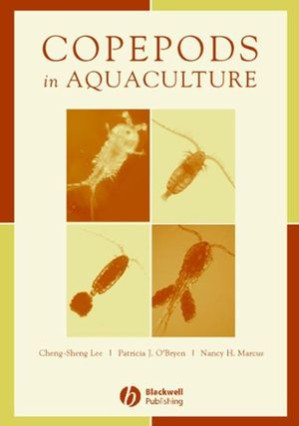
Copepods in Aquaculture 🔍
Lee, Cheng-Sheng (editor);O'Bryen, Patricia J. (editor);Marcus, Nancy H. (editor)
Blackwell Publishing Professional, 2005 apr 27
English [en] · PDF · 4.5MB · 2005 · 📘 Book (non-fiction) · 🚀/lgli/lgrs/nexusstc/zlib · Save
description
The importance of copepods in aquaculture has long been recognized, especially in the larval rearing of many marine fishes.
This timely publication provides a single source of information on copepod biology, culture methods and practical use in marine finfish hatcheries.
Originating out of a workshop held on copepods by the Oceanic Institute in Hawaii, this proceedings includes review articles and papers presented by leading international experts in copepod biology and aquaculture. It is a seminal work that integrates the most up-to-date information on selecting copepod species, effects of algal species on reproduction, ways to increase production, the nutritional value of copepods, behavioral characteristics of copepods, potential use of copepod nauplii and eggs, and their application to larval rearing of various marine finfish species.
Content:
Chapter 1 Calanoid Copepods, Resting Eggs, and Aquaculture (pages 3–10): Nancy H. Marcus
Chapter 2 The Potential to Mass?Culture Harpacticoid Copepods for Use as Food for Larval Fish (pages 11–24): John W. Fleeger
Chapter 3 Symbiotic Copepods as Live Feed in Marine Finfish Rearing (pages 25–30): Ju?Shey Ho
Chapter 4 Birth Control Effects of Diatoms on Copepod Reproduction: Implications for Aquaculture Studies (pages 31–48): Adrianna Ianora
Chapter 5 Maximizing the Nutritional Values of Copepods in Aquaculture: Managed Versus Balanced Nutrition (pages 49–60): G. S. Kleppel, Sarah E. Hazzard and Carol A. Burkart
Chapter 6 Formulated Feeds for Harpacticoid Copepods: Implications for Population Growth and Fatty Acid Composition (pages 61–74): Adelaide Rhodes and Leon Boyd
Chapter 7 A Brief Review of Mass Culture Copepods Used for Fish Food in Japanese Mariculture and A Proposed Plan to Use High Biomass Natural Populations of Brackish?Water Copepods (pages 75–90): Shin?Ichi Uye
Chapter 8 Behavioral Characteristics of Copepods That Affect Their Suitability as Food for Larval Fishes (pages 91–106): Edward J. Buskey
Chapter 9 Suitability of the Copepod Gladioferens Imparipes for Intensive Cultivation for Aquaculture (pages 107–118): Robert J. Rippingale and Michael F. Payne
Chapter 10 Development of Feeding Mechanics in Marine Fish Larvae and the Swimming Behavior of Zooplankton Prey: Implications for Rearing Marine Fishes (pages 119–132): Ralph G. Turingan, Jessica L. Beck, Justin M. Krebs and Jason D. Licamele
Chapter 11 Copepods as Live Prey: A Review of Factors That Influence the Feeding Success of Marine Fish Larvae (pages 133–150): Edward J. Chesney
Chapter 12 Intensive and Extensive Production Techniques to Provide Copepod Nauplii for Feeding Larval Red Snapper Lutjanus Campechanus (pages 151–168): Ronald P. Phelps, Gede S. Sumiarsa, Emily E. Lipman, Hsiang?Pin Lan, Komarey Kao Moss and Allen D. Davis
Chapter 13 Studies on the Use of Copepods in the Semi?Intensive Seed Production of Grouper Epinephelus Coioides (pages 169–182): Joebert D. Toledo, Ma. Salvacion Golez and Atsushi Ohno
Chapter 14 Culture of Copepods and Applications to Marine Finfish Larval Rearing in Taiwan (pages 183–194): Huei?Meei Su, Shin?Hong Cheng, Tzyy?Ing Chen and Mao?Sen Su
Chapter 15 Copepods as A Live Feed for Striped Trumpeter Latris Lineata Larvae (pages 195–208): David T. Morehead, Stephen C. Battaglene, Ephrime B. Metillo, Matthew P. Bransden and Graeme A. Dunstan
Chapter 16 Intensive Cultivation of A Subtropical Paracalanid Copepod, Parvocalanus sp., as Prey for Small Marine Fish Larvae (pages 209–224): Robin J. Shields, Tomonari Kotani, Augustin Molnar, Kimo Marion, Jon Kobashigawa and Larren Tang
Chapter 17 Characterization of an Extensive Zooplankton Culture System Coupled With Intensive Larval Rearing of Red Snapper Lutjanus Campechanus (pages 225–244): John T. Ogle, Jason T. Lemus, L. Casey Nicholson, Donald N. Barnes and Jeffrey M. Lotz
Chapter 18 Culture of Copepods and Applications to Marine Finfish Larval Rearing Workshop Discussion Summary (pages 245–253): Patricia J. O'Bryen and Cheng?Sheng Lee
This timely publication provides a single source of information on copepod biology, culture methods and practical use in marine finfish hatcheries.
Originating out of a workshop held on copepods by the Oceanic Institute in Hawaii, this proceedings includes review articles and papers presented by leading international experts in copepod biology and aquaculture. It is a seminal work that integrates the most up-to-date information on selecting copepod species, effects of algal species on reproduction, ways to increase production, the nutritional value of copepods, behavioral characteristics of copepods, potential use of copepod nauplii and eggs, and their application to larval rearing of various marine finfish species.
Content:
Chapter 1 Calanoid Copepods, Resting Eggs, and Aquaculture (pages 3–10): Nancy H. Marcus
Chapter 2 The Potential to Mass?Culture Harpacticoid Copepods for Use as Food for Larval Fish (pages 11–24): John W. Fleeger
Chapter 3 Symbiotic Copepods as Live Feed in Marine Finfish Rearing (pages 25–30): Ju?Shey Ho
Chapter 4 Birth Control Effects of Diatoms on Copepod Reproduction: Implications for Aquaculture Studies (pages 31–48): Adrianna Ianora
Chapter 5 Maximizing the Nutritional Values of Copepods in Aquaculture: Managed Versus Balanced Nutrition (pages 49–60): G. S. Kleppel, Sarah E. Hazzard and Carol A. Burkart
Chapter 6 Formulated Feeds for Harpacticoid Copepods: Implications for Population Growth and Fatty Acid Composition (pages 61–74): Adelaide Rhodes and Leon Boyd
Chapter 7 A Brief Review of Mass Culture Copepods Used for Fish Food in Japanese Mariculture and A Proposed Plan to Use High Biomass Natural Populations of Brackish?Water Copepods (pages 75–90): Shin?Ichi Uye
Chapter 8 Behavioral Characteristics of Copepods That Affect Their Suitability as Food for Larval Fishes (pages 91–106): Edward J. Buskey
Chapter 9 Suitability of the Copepod Gladioferens Imparipes for Intensive Cultivation for Aquaculture (pages 107–118): Robert J. Rippingale and Michael F. Payne
Chapter 10 Development of Feeding Mechanics in Marine Fish Larvae and the Swimming Behavior of Zooplankton Prey: Implications for Rearing Marine Fishes (pages 119–132): Ralph G. Turingan, Jessica L. Beck, Justin M. Krebs and Jason D. Licamele
Chapter 11 Copepods as Live Prey: A Review of Factors That Influence the Feeding Success of Marine Fish Larvae (pages 133–150): Edward J. Chesney
Chapter 12 Intensive and Extensive Production Techniques to Provide Copepod Nauplii for Feeding Larval Red Snapper Lutjanus Campechanus (pages 151–168): Ronald P. Phelps, Gede S. Sumiarsa, Emily E. Lipman, Hsiang?Pin Lan, Komarey Kao Moss and Allen D. Davis
Chapter 13 Studies on the Use of Copepods in the Semi?Intensive Seed Production of Grouper Epinephelus Coioides (pages 169–182): Joebert D. Toledo, Ma. Salvacion Golez and Atsushi Ohno
Chapter 14 Culture of Copepods and Applications to Marine Finfish Larval Rearing in Taiwan (pages 183–194): Huei?Meei Su, Shin?Hong Cheng, Tzyy?Ing Chen and Mao?Sen Su
Chapter 15 Copepods as A Live Feed for Striped Trumpeter Latris Lineata Larvae (pages 195–208): David T. Morehead, Stephen C. Battaglene, Ephrime B. Metillo, Matthew P. Bransden and Graeme A. Dunstan
Chapter 16 Intensive Cultivation of A Subtropical Paracalanid Copepod, Parvocalanus sp., as Prey for Small Marine Fish Larvae (pages 209–224): Robin J. Shields, Tomonari Kotani, Augustin Molnar, Kimo Marion, Jon Kobashigawa and Larren Tang
Chapter 17 Characterization of an Extensive Zooplankton Culture System Coupled With Intensive Larval Rearing of Red Snapper Lutjanus Campechanus (pages 225–244): John T. Ogle, Jason T. Lemus, L. Casey Nicholson, Donald N. Barnes and Jeffrey M. Lotz
Chapter 18 Culture of Copepods and Applications to Marine Finfish Larval Rearing Workshop Discussion Summary (pages 245–253): Patricia J. O'Bryen and Cheng?Sheng Lee
Alternative filename
lgrsnf/A:\compressed\10.1002%2F9780470277522.pdf
Alternative filename
nexusstc/Copepods in Aquaculture/21a9e6538c114ef7b51fa5df6eeb1b2b.pdf
Alternative author
edited by Cheng-Sheng Lee, Patricia J. O'Bryen, Nancy H. Marcus
Alternative author
Nancy H. Marcus, Cheng-Sheng Lee, Patricia J. O'Bryen
Alternative author
Cheng-Sheng Lee; Nancy H Marcus; P. J O'Bryen
Alternative publisher
Blackwell Pub. Professional; Wiley-Interscience; Wiley-Blackwell; Blackwell Publishing Limited
Alternative publisher
Wiley & Sons, Incorporated, John
Alternative publisher
John Wiley & Sons, Incorporated
Alternative publisher
Spectrum Publications
Alternative publisher
Halsted Press
Alternative edition
United States, United States of America
Alternative edition
John Wiley & Sons, Inc., Hoboken, 2005
Alternative edition
1st ed., Ames, Iowa, Iowa, 2005
Alternative edition
1st ed, Oxford, UK, ©2005
Alternative edition
1st ed, Ames, Iowa, c2005
Alternative edition
April 1, 2005
Alternative edition
1, PS, 2005
metadata comments
lg997319
metadata comments
{"edition":"1","isbns":["0470277521","0813800668","9780470277522","9780813800660"],"last_page":270,"publisher":"Wiley"}
metadata comments
Papers presented at a workshop held in Honolulu, Hawaii, May 5-8, 2003,
Includes bibliographical references and index.
Includes bibliographical references and index.
Alternative description
<p>The importance of copepods in aquaculture has long been recognized, especially in the larval rearing of many marine fishes.</p>
<p>This timely publication provides a single source of information on copepod biology, culture methods and practical use in marine finfish hatcheries.</p>
<p>Originating out of a workshop held on copepods by the Oceanic Institute in Hawaii, this proceedings includes review articles and papers presented by leading international experts in copepod biology and aquaculture. It is a seminal work that integrates the most up-to-date information on selecting copepod species, effects of algal species on reproduction, ways to increase production, the nutritional value of copepods, behavioral characteristics of copepods, potential use of copepod nauplii and eggs, and their application to larval rearing of various marine finfish species.</p>
<p>This timely publication provides a single source of information on copepod biology, culture methods and practical use in marine finfish hatcheries.</p>
<p>Originating out of a workshop held on copepods by the Oceanic Institute in Hawaii, this proceedings includes review articles and papers presented by leading international experts in copepod biology and aquaculture. It is a seminal work that integrates the most up-to-date information on selecting copepod species, effects of algal species on reproduction, ways to increase production, the nutritional value of copepods, behavioral characteristics of copepods, potential use of copepod nauplii and eggs, and their application to larval rearing of various marine finfish species.</p>
Alternative description
"Originating out of a workshop held on copepods by the Oceanic Institute of Hawaii, these proceedings include review articles and papers presented by leading international experts in copepod biology and aquaculture. It is a work that integrates the most up-to-date information on selecting copepod species, effects of algal species on copepod reproduction, ways to increase production and the nutritional value of copepods, behavioral characteristics of copepods, potential use of copepod nauplii and eggs, and their application to larval rearing of various marine finfish species."
date open sourced
2013-08-01
🚀 Fast downloads
Become a member to support the long-term preservation of books, papers, and more. To show our gratitude for your support, you get fast downloads. ❤️
- Fast Partner Server #1 (recommended)
- Fast Partner Server #2 (recommended)
- Fast Partner Server #3 (recommended)
- Fast Partner Server #4 (recommended)
- Fast Partner Server #5 (recommended)
- Fast Partner Server #6 (recommended)
- Fast Partner Server #7
- Fast Partner Server #8
- Fast Partner Server #9
- Fast Partner Server #10
- Fast Partner Server #11
- Fast Partner Server #12
🐢 Slow downloads
From trusted partners. More information in the FAQ. (might require browser verification — unlimited downloads!)
- Slow Partner Server #1 (slightly faster but with waitlist)
- Slow Partner Server #2 (slightly faster but with waitlist)
- Slow Partner Server #3 (slightly faster but with waitlist)
- Slow Partner Server #4 (slightly faster but with waitlist)
- Slow Partner Server #5 (no waitlist, but can be very slow)
- Slow Partner Server #6 (no waitlist, but can be very slow)
- Slow Partner Server #7 (no waitlist, but can be very slow)
- Slow Partner Server #8 (no waitlist, but can be very slow)
- Slow Partner Server #9 (no waitlist, but can be very slow)
- After downloading: Open in our viewer
All download options have the same file, and should be safe to use. That said, always be cautious when downloading files from the internet, especially from sites external to Anna’s Archive. For example, be sure to keep your devices updated.
External downloads
-
For large files, we recommend using a download manager to prevent interruptions.
Recommended download managers: JDownloader -
You will need an ebook or PDF reader to open the file, depending on the file format.
Recommended ebook readers: Anna’s Archive online viewer, ReadEra, and Calibre -
Use online tools to convert between formats.
Recommended conversion tools: CloudConvert and PrintFriendly -
You can send both PDF and EPUB files to your Kindle or Kobo eReader.
Recommended tools: Amazon‘s “Send to Kindle” and djazz‘s “Send to Kobo/Kindle” -
Support authors and libraries
✍️ If you like this and can afford it, consider buying the original, or supporting the authors directly.
📚 If this is available at your local library, consider borrowing it for free there.
Total downloads:
A “file MD5” is a hash that gets computed from the file contents, and is reasonably unique based on that content. All shadow libraries that we have indexed on here primarily use MD5s to identify files.
A file might appear in multiple shadow libraries. For information about the various datasets that we have compiled, see the Datasets page.
For information about this particular file, check out its JSON file. Live/debug JSON version. Live/debug page.