upload/alexandrina/Collections/Project-Muse/The Ohio State University Press/Tragic Effects- Ethics and Tragedy in the Age of Translation.pdf
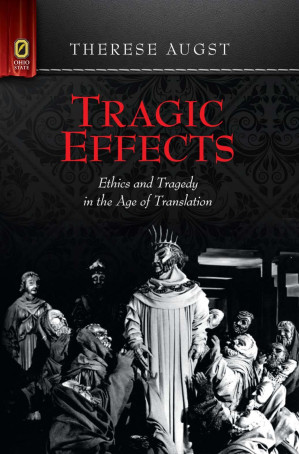
Tragic effects : ethics and tragedy in the age of translation 🔍
Augst, Therese
The Ohio State University Press, Classical memories/modern identities, Classical memories/modern identities, Columbus, Ohio, 2012
English [en] · PDF · 26.2MB · 2012 · 📘 Book (non-fiction) · 🚀/lgli/upload/zlib · Save
description
Cover 1
Title Page, Copyright 2
Contents 6
Acknowledgments 8
Abbreviations 10
Thinking in Translation 12
1. Contexts: Why Translate? Why Study the Greeks? 36
2. Distancing: Oedipal Solitude 58
3. Difference Becomes Antigone 97
4. The Translator¬タルs Courage 133
5. Out of Tune? Heidegger on Translation 157
Ruined Theater: Adaptation and Responsibility in Brecht¬タルs Antigonemodell 203
Conclusion: Re-writing 239
Bibliography 264
Index 276
Publisher:The Ohio State University Press,Published:2012,ISBN:9780814270486,Related ISBN:9780814211830,Language:English,OCLC:868220110
Tragic Effects: Ethics and Tragedy in the Age of Translation confronts the peculiar fascination with Greek tragedy as it shapes the German intellectual tradition, with particular focus on the often controversial practice of translating the Greeks. Whereas the tradition of emulating classical ideals in German intellectual life has generally emerged from the impulse to identify with models, the challenge of translating the Greeks underscores the linguistic and historical discontinuities inherent in the recourse to ancient material and inscribes that experience of disruption as fundamental to modernity. Friedrich Hölderlin’s translations are a case in point. Regarded in his own time as the work of a madman, his renditions of Sophoclean tragedy intensify dramatic effect with the unsettling experience of familiar language slipping its moorings. His attention to marking the distances between ancient source text and modern translation has granted his Oedipus and Antigone a distinct longevity as objects of discussion, adaptation, and even retranslation. Cited by Walter Benjamin, Martin Heidegger, Bertolt Brecht, and others, Hölderlin’s Sophocles project follows a path both marked by various contexts and tinged by persistent quandaries of untranslatability.
Title Page, Copyright 2
Contents 6
Acknowledgments 8
Abbreviations 10
Thinking in Translation 12
1. Contexts: Why Translate? Why Study the Greeks? 36
2. Distancing: Oedipal Solitude 58
3. Difference Becomes Antigone 97
4. The Translator¬タルs Courage 133
5. Out of Tune? Heidegger on Translation 157
Ruined Theater: Adaptation and Responsibility in Brecht¬タルs Antigonemodell 203
Conclusion: Re-writing 239
Bibliography 264
Index 276
Publisher:The Ohio State University Press,Published:2012,ISBN:9780814270486,Related ISBN:9780814211830,Language:English,OCLC:868220110
Tragic Effects: Ethics and Tragedy in the Age of Translation confronts the peculiar fascination with Greek tragedy as it shapes the German intellectual tradition, with particular focus on the often controversial practice of translating the Greeks. Whereas the tradition of emulating classical ideals in German intellectual life has generally emerged from the impulse to identify with models, the challenge of translating the Greeks underscores the linguistic and historical discontinuities inherent in the recourse to ancient material and inscribes that experience of disruption as fundamental to modernity. Friedrich Hölderlin’s translations are a case in point. Regarded in his own time as the work of a madman, his renditions of Sophoclean tragedy intensify dramatic effect with the unsettling experience of familiar language slipping its moorings. His attention to marking the distances between ancient source text and modern translation has granted his Oedipus and Antigone a distinct longevity as objects of discussion, adaptation, and even retranslation. Cited by Walter Benjamin, Martin Heidegger, Bertolt Brecht, and others, Hölderlin’s Sophocles project follows a path both marked by various contexts and tinged by persistent quandaries of untranslatability.
Alternative filename
lgli/R:\Project-Muse\md5_rep\21C2F7B5233A3FD7A4F58E9F035430C7.pdf
Alternative author
Project MUSE (https://muse.jhu.edu/)
Alternative author
Theresa Augst
Alternative author
Therese Augst
Alternative edition
United States, United States of America
Alternative edition
First Edition, 1st, 2012
metadata comments
producers:
Muse-DL/1.1.0
Muse-DL/1.1.0
metadata comments
Includes bibliographical references and index.
Alternative description
Cover 1
Title Page, Copyright 2
Contents 6
Acknowledgments 8
Abbreviations 10
Thinking in Translation 12
1. Contexts: Why Translate? Why Study the Greeks? 36
2. Distancing: Oedipal Solitude 58
3. Difference Becomes Antigone 97
4. The Translator¬タルs Courage 133
5. Out of Tune? Heidegger on Translation 157
Ruined Theater: Adaptation and Responsibility in Brecht¬タルs Antigonemodell 203
Conclusion: Re-writing 239
Bibliography 264
Index 276
Publisher:The Ohio State University Press,Published:2012,ISBN:9780814270486,Related ISBN:9780814211830,Language:English,OCLC:868220110
Tragic Effects: Ethics and Tragedy in the Age of Translation confronts the peculiar fascination with Greek tragedy as it shapes the German intellectual tradition, with particular focus on the often controversial practice of translating the Greeks. Whereas the tradition of emulating classical ideals in German intellectual life has generally emerged from the impulse to identify with models, the challenge of translating the Greeks underscores the linguistic and historical discontinuities inherent in the recourse to ancient material and inscribes that experience of disruption as fundamental to modernity. Friedrich Hölderlin’s translations are a case in point. Regarded in his own time as the work of a madman, his renditions of Sophoclean tragedy intensify dramatic effect with the unsettling experience of familiar language slipping its moorings. His attention to marking the distances between ancient source text and modern translation has granted his Oedipus and Antigone a distinct longevity as objects of discussion, adaptation, and even retranslation. Cited by Walter Benjamin, Martin Heidegger, Bertolt Brecht, and others, Hölderlin’s Sophocles project follows a path both marked by various contexts and tinged by persistent quandaries of untranslatability.
Title Page, Copyright 2
Contents 6
Acknowledgments 8
Abbreviations 10
Thinking in Translation 12
1. Contexts: Why Translate? Why Study the Greeks? 36
2. Distancing: Oedipal Solitude 58
3. Difference Becomes Antigone 97
4. The Translator¬タルs Courage 133
5. Out of Tune? Heidegger on Translation 157
Ruined Theater: Adaptation and Responsibility in Brecht¬タルs Antigonemodell 203
Conclusion: Re-writing 239
Bibliography 264
Index 276
Publisher:The Ohio State University Press,Published:2012,ISBN:9780814270486,Related ISBN:9780814211830,Language:English,OCLC:868220110
Tragic Effects: Ethics and Tragedy in the Age of Translation confronts the peculiar fascination with Greek tragedy as it shapes the German intellectual tradition, with particular focus on the often controversial practice of translating the Greeks. Whereas the tradition of emulating classical ideals in German intellectual life has generally emerged from the impulse to identify with models, the challenge of translating the Greeks underscores the linguistic and historical discontinuities inherent in the recourse to ancient material and inscribes that experience of disruption as fundamental to modernity. Friedrich Hölderlin’s translations are a case in point. Regarded in his own time as the work of a madman, his renditions of Sophoclean tragedy intensify dramatic effect with the unsettling experience of familiar language slipping its moorings. His attention to marking the distances between ancient source text and modern translation has granted his Oedipus and Antigone a distinct longevity as objects of discussion, adaptation, and even retranslation. Cited by Walter Benjamin, Martin Heidegger, Bertolt Brecht, and others, Hölderlin’s Sophocles project follows a path both marked by various contexts and tinged by persistent quandaries of untranslatability.
date open sourced
2022-03-08
🚀 Fast downloads
Become a member to support the long-term preservation of books, papers, and more. To show our gratitude for your support, you get fast downloads. ❤️
- Fast Partner Server #1 (recommended)
- Fast Partner Server #2 (recommended)
- Fast Partner Server #3 (recommended)
- Fast Partner Server #4 (recommended)
- Fast Partner Server #5 (recommended)
- Fast Partner Server #6 (recommended)
- Fast Partner Server #7
- Fast Partner Server #8
- Fast Partner Server #9
- Fast Partner Server #10
- Fast Partner Server #11
- Fast Partner Server #12
🐢 Slow downloads
From trusted partners. More information in the FAQ. (might require browser verification — unlimited downloads!)
- Slow Partner Server #1 (slightly faster but with waitlist)
- Slow Partner Server #2 (slightly faster but with waitlist)
- Slow Partner Server #3 (slightly faster but with waitlist)
- Slow Partner Server #4 (slightly faster but with waitlist)
- Slow Partner Server #5 (no waitlist, but can be very slow)
- Slow Partner Server #6 (no waitlist, but can be very slow)
- Slow Partner Server #7 (no waitlist, but can be very slow)
- Slow Partner Server #8 (no waitlist, but can be very slow)
- Slow Partner Server #9 (no waitlist, but can be very slow)
- After downloading: Open in our viewer
All download options have the same file, and should be safe to use. That said, always be cautious when downloading files from the internet, especially from sites external to Anna’s Archive. For example, be sure to keep your devices updated.
External downloads
-
For large files, we recommend using a download manager to prevent interruptions.
Recommended download managers: JDownloader -
You will need an ebook or PDF reader to open the file, depending on the file format.
Recommended ebook readers: Anna’s Archive online viewer, ReadEra, and Calibre -
Use online tools to convert between formats.
Recommended conversion tools: CloudConvert and PrintFriendly -
You can send both PDF and EPUB files to your Kindle or Kobo eReader.
Recommended tools: Amazon‘s “Send to Kindle” and djazz‘s “Send to Kobo/Kindle” -
Support authors and libraries
✍️ If you like this and can afford it, consider buying the original, or supporting the authors directly.
📚 If this is available at your local library, consider borrowing it for free there.
Total downloads:
A “file MD5” is a hash that gets computed from the file contents, and is reasonably unique based on that content. All shadow libraries that we have indexed on here primarily use MD5s to identify files.
A file might appear in multiple shadow libraries. For information about the various datasets that we have compiled, see the Datasets page.
For information about this particular file, check out its JSON file. Live/debug JSON version. Live/debug page.