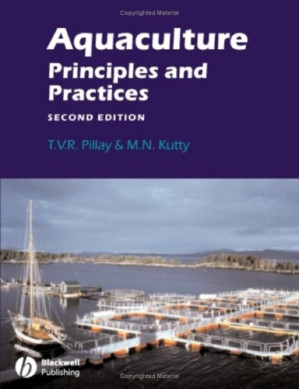
Aquaculture: Principles and Practices (Fishing News Books) 🔍
Thundathil V R Pillay; M N Kutty
Blackwell Publishing Limited; Wiley-Blackwell; Blackwell Pub., Fishing News Books, 2, 2005
English [en] · PDF · 11.1MB · 2005 · 📘 Book (non-fiction) · 🚀/lgli/lgrs/nexusstc/upload/zlib · Save
description
Covering all aspects of subsistence and commercial aquaculture as practiced across the globe, this fully revised new edition from two leading world authorities in the field is set in two parts: principles and practices, and covers in detail recent developments in:
History and planning
Nutrition
Reproduction and genetic selection
Production statistics and economics
Integrated aquaculture
Sustainability and environmental effects (new chapter)
All cultured species groups are addressed, from freshwater and marine fish to shellfish and seaweeds. Essential new facts and data have been included throughout.
This comprehensive work is an essential purchase for all those studying aquaculture and is a valuable source of reference for all personnel involved in the aquaculture industry; including those working in fish farms, research institutions, teaching posts in universities and commercial establishments such as aquaculture equipment and feed supply companies. Libraries in all universities and research establishments will find this book an important addition to their shelves.
History and planning
Nutrition
Reproduction and genetic selection
Production statistics and economics
Integrated aquaculture
Sustainability and environmental effects (new chapter)
All cultured species groups are addressed, from freshwater and marine fish to shellfish and seaweeds. Essential new facts and data have been included throughout.
This comprehensive work is an essential purchase for all those studying aquaculture and is a valuable source of reference for all personnel involved in the aquaculture industry; including those working in fish farms, research institutions, teaching posts in universities and commercial establishments such as aquaculture equipment and feed supply companies. Libraries in all universities and research establishments will find this book an important addition to their shelves.
Alternative filename
nexusstc/Aquaculture: Principles and Practices (Fishing News Books)/51d0f81f2bcbe8879f6e22014791b066.pdf
Alternative author
Pillay, T. V. R., Kutty, M. N.
Alternative publisher
Wiley-Blackwell (an imprint of John Wiley & Sons Ltd)
Alternative edition
United Kingdom and Ireland, United Kingdom
Alternative edition
2nd ed, Oxford UK ; Ames IA, 2005
Alternative edition
2 edition, September 1, 2005
Alternative edition
2nd ed, Ames, Iowa, 2005
metadata comments
duansci.com -- 0
metadata comments
lg250579
metadata comments
producers:
Acrobat Distiller 5.00 for Macintosh
Acrobat Distiller 5.00 for Macintosh
metadata comments
{"edition":"2","isbns":["1405105321","9781405105323"],"last_page":640,"publisher":"Wiley-Blackwell","series":"Fishing News Books"}
Alternative description
Preface......Page 14
Acknowledgements......Page 16
Part I: Principles of Aquaculture......Page 17
1.2 Cultural and socio-economic basis......Page 19
1.3 Biological and technological basis......Page 20
1.4 Role in fishery management......Page 21
1.5 References......Page 22
2.1 Origins and growth of aquaculture......Page 23
2.2 Present state of aquaculture......Page 25
2.3 References......Page 29
3. National Planning of Aquaculture Development......Page 30
3.2 National resources......Page 31
3.4 Legal and environmental factors......Page 35
3.5.1 Stakeholder participation......Page 37
3.5.3 Industrial-scale aquaculture......Page 38
3.6 Aquaculture for rural development......Page 39
3.7.1 Participation of the local community......Page 40
3.8 References......Page 41
4.1 General considerations......Page 43
4.2.1 Soil characteristics......Page 46
4.2.2 Acid sulphate soils......Page 48
4.4 Water quantity and quality......Page 50
4.5 Sources of pollution and user conflicts......Page 52
4.6 Environmental impact assessment......Page 55
4.7 Social aspects of site selection and management......Page 56
4.9 References......Page 57
5. Selection of Species for Culture......Page 59
5.1 Biological characteristics of aquaculture species......Page 60
5.2 Economic and market considerations......Page 61
5.3 Introduction of exotic species......Page 62
5.4 Common aquaculture species......Page 64
5.5 References......Page 71
6.1.1 Data for pond farm design......Page 72
6.1.2 Design and construction of pond farms......Page 77
6.2.1 Tank farms......Page 93
6.2.2 Raceway farms......Page 98
6.3.1 Types of cages and layout of cage farms......Page 100
6.3.2 Submersible cages and cage maintenance......Page 103
6.4 Pens and enclosures......Page 106
6.5 Design and construction of hatcheries......Page 107
6.5.1 Source and supply of water......Page 109
6.5.2 Reconditioning and recirculation of water......Page 110
6.5.3 Hatchery equipment......Page 111
6.5.4 Layout and accessories......Page 114
6.6 References......Page 118
7.1 Feeding habits and food utilization......Page 121
7.2 Energy metabolism......Page 122
7.3 Energy requirements and sources......Page 123
7.3.2 Proteins......Page 124
7.3.3 Lipids and essential fatty acids......Page 128
7.3.4 Vitamins......Page 131
7.3.5 Minerals......Page 134
7.4 Broodstock and larval nutrition......Page 136
7.5.1 Nature and source of live foods......Page 137
7.5.2 Pond fertilization for production of live foods......Page 150
7.6.1 Supplementary feedstuffs......Page 159
7.6.2 Types of processed feeds......Page 160
7.6.3 Ingredients......Page 161
7.6.4 Feed formulation and feed formulae......Page 164
7.6.5 Substitution of fish meal in feeds......Page 169
7.6.6 Feed preparation......Page 170
7.6.7 Larval feeds......Page 175
7.6.8 Feeding techniques......Page 178
7.7 References......Page 184
8.1 Reproductive cycles......Page 190
8.2 Control of reproduction......Page 191
8.3 Induced reproduction......Page 192
8.3.1 Hypophysation......Page 194
8.3.2 Gametes and fertilization......Page 196
8.5 Use of sex steroids for sex reversal......Page 197
8.6 Genetic selection and hybridization......Page 198
8.6.1 Methods of genetic selection......Page 199
8.6.2 Mass selection......Page 200
8.6.3 Genotypic selection......Page 201
8.6.5 Combined selection......Page 202
8.6.6 Cross-breeding......Page 203
8.7 Transgenics in aquaculture......Page 205
8.8 Molecular techniques......Page 206
8.8.2 Intraspecific crossbreeding......Page 207
8.8.6 Polyploidy......Page 208
8.8.9 Interspecific nuclear transfer......Page 209
8.8.12 Combining genetic enhancement programmes......Page 210
8.9 References......Page 211
9.1 Health and diseases in aquaculture......Page 217
9.1.1 Factors affecting fish health......Page 218
9.1.2 Integrated health management......Page 222
9.2 Major diseases of aquaculture species......Page 232
9.2.1 Viral diseases......Page 233
9.2.2 Bacterial diseases......Page 238
9.2.3 Fungus diseases......Page 246
9.2.4 Protozoan diseases......Page 249
9.2.5 Copepod infections......Page 253
9.2.6 Trematode infections......Page 255
9.3 Public health and aquaculture......Page 256
9.4 References......Page 258
10.1 Weed problems in aquaculture farms......Page 262
10.3.1 Prevention of infestations and utilization of weeds......Page 263
10.3.2 Manual and mechanical methods......Page 265
10.3.3 Chemical methods......Page 266
10.3.4 Biological control......Page 268
10.4 Control of predators, weed animals and pests......Page 269
10.4.1 Predators......Page 270
10.4.2 Weed animals and pests......Page 271
10.4.3 Use of non-selective pesticides......Page 272
10.5 References......Page 273
11.1.2 Seining undrainable ponds......Page 276
11.1.3 Other methods of fishing......Page 280
11.1.4 Harvesting cage and raceway farms......Page 282
11.1.5 Harvesting of molluscs......Page 283
11.2.1 Sorting......Page 284
11.2.2 Depuration of molluscs......Page 286
11.2.3 Preservation and processing......Page 287
11.3 References......Page 288
12.1 Outlets for aquaculture products......Page 290
12.2 Organization of marketing......Page 291
12.3.1 Market research......Page 292
12.3.2 Formulation of market strategies......Page 296
12.4 Marketing strategies for aquaculture products......Page 298
12.5 References......Page 299
13.1 Economic viability......Page 300
13.2.2 Variable and fixed costs......Page 301
13.3 Analysis of data......Page 302
13.3.1 Evaluation of farm performance......Page 303
13.3.2 Sensitivity analysis......Page 305
13.3.3 Minimum farm size......Page 306
13.4 Financial and economic feasibility of investment......Page 309
13.4.1 Financial analysis......Page 312
13.4.3 Socio-economic analysis......Page 315
13.5 Risk and insurance......Page 317
13.6 References......Page 319
14.1 Concepts and economic principles of farm management......Page 320
14.2 Application of farm management principles in aquaculture......Page 322
14.2.1 Farm business analysis......Page 323
14.2.3 Operation and financing......Page 324
14.2.5 Decision-making......Page 325
14.3 References......Page 326
15.2 Pollutionary effects of waste discharges from aquatic farms......Page 327
15.4 Selection of sites and farming practices......Page 328
15.5.2 Regulation and licensing......Page 331
15.6 References......Page 332
Part II: Aquaculture Practices......Page 335
16.1.1 Common carp......Page 337
16.1.2 Chinese carps......Page 340
16.1.3 Indian carps......Page 342
16.2 Culture systems......Page 344
16.3 Spawning and fry production......Page 346
16.3.2 Selection and segregation of brood stock......Page 348
16.3.3 Spawning and larval rearing......Page 349
16.3.4 Hypophysation......Page 350
16.3.5 Nursing of carp fry......Page 358
16.4.2 Polyculture......Page 359
16.4.3 Pond fertilization and feeding......Page 361
16.5 Diseases and mortality......Page 362
16.6 Harvesting and marketing......Page 365
16.7 References......Page 366
17. Trouts and Salmons......Page 368
17.1 Trouts......Page 369
17.1.1 Culture systems......Page 371
17.1.2 Development of brood stock......Page 374
17.1.3 Techniques of propagation......Page 375
17.1.4 Grow-out......Page 378
17.2 Salmons......Page 379
17.2.1 Culture systems......Page 380
17.2.2 Techniques of propagation......Page 381
17.2.3 Grow-out......Page 383
17.3 Feeds and feeding of salmonids......Page 384
17.4 Salmonid diseases......Page 386
17.6 Economics......Page 387
17.7 References......Page 388
18.1.1 Culture systems......Page 389
18.1.2 Propagation and grow-out......Page 390
18.2 Asian catfishes......Page 395
18.2.1 Spawning and fry production of Clarias spp.......Page 396
18.2.2 Propagation of Pangasius......Page 397
18.2.3 Grow-out of Asian catfishes......Page 398
18.2.4 Diseases......Page 399
18.3 African catfish......Page 400
18.3.1 Spawning and fry production......Page 401
18.3.2 Grow-out and feeds......Page 402
18.4.1 Spawning and rearing of fry......Page 403
18.4.2 Grow-out......Page 404
18.5 References......Page 405
19.1 Culture systems......Page 407
19.2 Collection and rearing of seed eels......Page 409
19.3 Feeds and grow-out of adult eels......Page 410
19.4 Diseases and mortality......Page 411
19.5 Harvesting and marketing......Page 413
19.6 Economics......Page 414
19.7 References......Page 415
20. Tilapias......Page 416
20.1 Cultivated species of tilapias......Page 417
20.2 Culture systems......Page 418
20.3.1 Methods of spawning......Page 420
20.3.2 Mono-sex seed stock and hybrids......Page 422
20.4.1 Grow-out in ponds......Page 425
20.4.2 Cage and pen culture......Page 426
20.4.4 Feeds and feeding......Page 427
20.7 Economics......Page 428
20.8 References......Page 431
21.1 Grey mullets (family Mugilidae)......Page 433
21.1.1 Culture systems......Page 434
21.1.2 Fry collection and artificial propagation......Page 435
21.1.3 Grow-out......Page 437
21.2 Milkfish......Page 439
21.2.2 Fry collection and induced spawning......Page 440
21.2.3 Grow-out......Page 444
21.2.4 Harvesting and marketing......Page 447
21.3 References......Page 448
22.1 Culture systems......Page 450
22.2 Production of seedlings......Page 451
22.4 Diseases......Page 452
22.6 References......Page 453
23.1 Sea-basses......Page 454
23.1.2 Asian sea-bass......Page 456
23.2.1 Gilthead sea-bream......Page 460
23.2.2 Red sea-bream......Page 462
23.3 References......Page 463
24. Other Finfishes......Page 465
24.1 Murrels (snakeheads)......Page 467
24.1.1 Spawning and fry production......Page 468
24.2 Gouramis......Page 469
24.2.1 Spawning and fry production......Page 470
24.2.2 Grow-out......Page 472
24.3.1 Fry collection and induced spawning......Page 473
24.4 Rabbit fishes......Page 474
24.4.1 Fry collection and induced spawning......Page 475
24.5.1 Controlled spawning and hatchery production of juveniles......Page 476
24.5.2 Grow-out......Page 478
24.6 Cod......Page 479
24.7 Tunas......Page 481
24.8 References......Page 485
25.1 Major cultivated species of shrimps and prawns......Page 489
25.2 Shrimp culture systems......Page 494
25.2.3 Hatchery production of seed stock......Page 496
25.3.1 Brood stock......Page 497
25.3.2 Hatchery systems......Page 498
25.3.3 Spawning and larval rearing......Page 501
25.4 Grow-out of shrimps......Page 503
25.4.2 Diseases......Page 506
25.4.3 Harvesting and marketing......Page 508
25.5 Economics of shrimp farming......Page 509
25.6 Reproduction and larval rearing of fresh-water prawns......Page 511
25.6.1 Hatchery systems......Page 512
25.6.2 Spawning and larval rearing......Page 513
25.7 Grow-out of fresh-water prawns......Page 516
25.7.1 Food and feeding......Page 517
25.7.2 Harvesting and marketing......Page 519
25.9 References......Page 522
26.1 Crayfishes......Page 526
26.1.1 Culture of Procambarus clarkii......Page 529
26.2.1 Culture of Scylla serrata......Page 531
26.3 References......Page 533
27. Oysters and Mussels......Page 535
27.1 Oysters......Page 536
27.1.1 Culture systems......Page 538
27.1.2 Production of seed oysters......Page 541
27.1.3 Grow-out......Page 548
27.2 Mussels......Page 554
27.2.1 Culture systems......Page 557
27.2.2 Seed stock......Page 559
27.2.3 Grow-out......Page 560
27.2.4 Harvesting, depuration and marketing......Page 561
27.3 References......Page 562
28.1.1 Culture systems......Page 565
28.1.2 Hatchery production of seed......Page 566
28.1.3 Grow-out......Page 567
28.2.1 Spat collection......Page 568
28.2.3 Grow-out......Page 569
28.3 Abalones......Page 571
28.3.1 Controlled reproduction and larval rearing......Page 574
28.3.2 Grow-out......Page 575
28.4 References......Page 576
29. Seaweeds......Page 578
29.1 Culture systems......Page 579
29.2.1 Porphyra culture......Page 580
29.2.2 Culture of Undaria......Page 585
29.2.3 Culture of Laminaria......Page 586
29.2.4 Culture of other edible seaweeds......Page 587
29.2.5 Culture of seaweeds for industrial use......Page 588
29.3 References......Page 590
30.1 Rationale of integrated farming......Page 592
30.2.1 Pig and fish farming......Page 593
30.2.2 Duck and fish farming......Page 595
30.3 Rice-field aquaculture......Page 598
30.3.1 Objectives and types of rice-field aquaculture......Page 600
30.3.2 Rice–fish rotation......Page 601
30.3.3 Combined culture of rice and fish......Page 603
30.5 References......Page 607
31.1.1 Reservoirs......Page 610
31.1.2 Lakes and streams......Page 612
31.1.3 Coastal and inland seas......Page 616
31.2 Ranching of anadromous species......Page 618
31.2.1 Salmons......Page 619
31.2.2 Sturgeons......Page 625
31.4 References......Page 627
Index......Page 630
Acknowledgements......Page 16
Part I: Principles of Aquaculture......Page 17
1.2 Cultural and socio-economic basis......Page 19
1.3 Biological and technological basis......Page 20
1.4 Role in fishery management......Page 21
1.5 References......Page 22
2.1 Origins and growth of aquaculture......Page 23
2.2 Present state of aquaculture......Page 25
2.3 References......Page 29
3. National Planning of Aquaculture Development......Page 30
3.2 National resources......Page 31
3.4 Legal and environmental factors......Page 35
3.5.1 Stakeholder participation......Page 37
3.5.3 Industrial-scale aquaculture......Page 38
3.6 Aquaculture for rural development......Page 39
3.7.1 Participation of the local community......Page 40
3.8 References......Page 41
4.1 General considerations......Page 43
4.2.1 Soil characteristics......Page 46
4.2.2 Acid sulphate soils......Page 48
4.4 Water quantity and quality......Page 50
4.5 Sources of pollution and user conflicts......Page 52
4.6 Environmental impact assessment......Page 55
4.7 Social aspects of site selection and management......Page 56
4.9 References......Page 57
5. Selection of Species for Culture......Page 59
5.1 Biological characteristics of aquaculture species......Page 60
5.2 Economic and market considerations......Page 61
5.3 Introduction of exotic species......Page 62
5.4 Common aquaculture species......Page 64
5.5 References......Page 71
6.1.1 Data for pond farm design......Page 72
6.1.2 Design and construction of pond farms......Page 77
6.2.1 Tank farms......Page 93
6.2.2 Raceway farms......Page 98
6.3.1 Types of cages and layout of cage farms......Page 100
6.3.2 Submersible cages and cage maintenance......Page 103
6.4 Pens and enclosures......Page 106
6.5 Design and construction of hatcheries......Page 107
6.5.1 Source and supply of water......Page 109
6.5.2 Reconditioning and recirculation of water......Page 110
6.5.3 Hatchery equipment......Page 111
6.5.4 Layout and accessories......Page 114
6.6 References......Page 118
7.1 Feeding habits and food utilization......Page 121
7.2 Energy metabolism......Page 122
7.3 Energy requirements and sources......Page 123
7.3.2 Proteins......Page 124
7.3.3 Lipids and essential fatty acids......Page 128
7.3.4 Vitamins......Page 131
7.3.5 Minerals......Page 134
7.4 Broodstock and larval nutrition......Page 136
7.5.1 Nature and source of live foods......Page 137
7.5.2 Pond fertilization for production of live foods......Page 150
7.6.1 Supplementary feedstuffs......Page 159
7.6.2 Types of processed feeds......Page 160
7.6.3 Ingredients......Page 161
7.6.4 Feed formulation and feed formulae......Page 164
7.6.5 Substitution of fish meal in feeds......Page 169
7.6.6 Feed preparation......Page 170
7.6.7 Larval feeds......Page 175
7.6.8 Feeding techniques......Page 178
7.7 References......Page 184
8.1 Reproductive cycles......Page 190
8.2 Control of reproduction......Page 191
8.3 Induced reproduction......Page 192
8.3.1 Hypophysation......Page 194
8.3.2 Gametes and fertilization......Page 196
8.5 Use of sex steroids for sex reversal......Page 197
8.6 Genetic selection and hybridization......Page 198
8.6.1 Methods of genetic selection......Page 199
8.6.2 Mass selection......Page 200
8.6.3 Genotypic selection......Page 201
8.6.5 Combined selection......Page 202
8.6.6 Cross-breeding......Page 203
8.7 Transgenics in aquaculture......Page 205
8.8 Molecular techniques......Page 206
8.8.2 Intraspecific crossbreeding......Page 207
8.8.6 Polyploidy......Page 208
8.8.9 Interspecific nuclear transfer......Page 209
8.8.12 Combining genetic enhancement programmes......Page 210
8.9 References......Page 211
9.1 Health and diseases in aquaculture......Page 217
9.1.1 Factors affecting fish health......Page 218
9.1.2 Integrated health management......Page 222
9.2 Major diseases of aquaculture species......Page 232
9.2.1 Viral diseases......Page 233
9.2.2 Bacterial diseases......Page 238
9.2.3 Fungus diseases......Page 246
9.2.4 Protozoan diseases......Page 249
9.2.5 Copepod infections......Page 253
9.2.6 Trematode infections......Page 255
9.3 Public health and aquaculture......Page 256
9.4 References......Page 258
10.1 Weed problems in aquaculture farms......Page 262
10.3.1 Prevention of infestations and utilization of weeds......Page 263
10.3.2 Manual and mechanical methods......Page 265
10.3.3 Chemical methods......Page 266
10.3.4 Biological control......Page 268
10.4 Control of predators, weed animals and pests......Page 269
10.4.1 Predators......Page 270
10.4.2 Weed animals and pests......Page 271
10.4.3 Use of non-selective pesticides......Page 272
10.5 References......Page 273
11.1.2 Seining undrainable ponds......Page 276
11.1.3 Other methods of fishing......Page 280
11.1.4 Harvesting cage and raceway farms......Page 282
11.1.5 Harvesting of molluscs......Page 283
11.2.1 Sorting......Page 284
11.2.2 Depuration of molluscs......Page 286
11.2.3 Preservation and processing......Page 287
11.3 References......Page 288
12.1 Outlets for aquaculture products......Page 290
12.2 Organization of marketing......Page 291
12.3.1 Market research......Page 292
12.3.2 Formulation of market strategies......Page 296
12.4 Marketing strategies for aquaculture products......Page 298
12.5 References......Page 299
13.1 Economic viability......Page 300
13.2.2 Variable and fixed costs......Page 301
13.3 Analysis of data......Page 302
13.3.1 Evaluation of farm performance......Page 303
13.3.2 Sensitivity analysis......Page 305
13.3.3 Minimum farm size......Page 306
13.4 Financial and economic feasibility of investment......Page 309
13.4.1 Financial analysis......Page 312
13.4.3 Socio-economic analysis......Page 315
13.5 Risk and insurance......Page 317
13.6 References......Page 319
14.1 Concepts and economic principles of farm management......Page 320
14.2 Application of farm management principles in aquaculture......Page 322
14.2.1 Farm business analysis......Page 323
14.2.3 Operation and financing......Page 324
14.2.5 Decision-making......Page 325
14.3 References......Page 326
15.2 Pollutionary effects of waste discharges from aquatic farms......Page 327
15.4 Selection of sites and farming practices......Page 328
15.5.2 Regulation and licensing......Page 331
15.6 References......Page 332
Part II: Aquaculture Practices......Page 335
16.1.1 Common carp......Page 337
16.1.2 Chinese carps......Page 340
16.1.3 Indian carps......Page 342
16.2 Culture systems......Page 344
16.3 Spawning and fry production......Page 346
16.3.2 Selection and segregation of brood stock......Page 348
16.3.3 Spawning and larval rearing......Page 349
16.3.4 Hypophysation......Page 350
16.3.5 Nursing of carp fry......Page 358
16.4.2 Polyculture......Page 359
16.4.3 Pond fertilization and feeding......Page 361
16.5 Diseases and mortality......Page 362
16.6 Harvesting and marketing......Page 365
16.7 References......Page 366
17. Trouts and Salmons......Page 368
17.1 Trouts......Page 369
17.1.1 Culture systems......Page 371
17.1.2 Development of brood stock......Page 374
17.1.3 Techniques of propagation......Page 375
17.1.4 Grow-out......Page 378
17.2 Salmons......Page 379
17.2.1 Culture systems......Page 380
17.2.2 Techniques of propagation......Page 381
17.2.3 Grow-out......Page 383
17.3 Feeds and feeding of salmonids......Page 384
17.4 Salmonid diseases......Page 386
17.6 Economics......Page 387
17.7 References......Page 388
18.1.1 Culture systems......Page 389
18.1.2 Propagation and grow-out......Page 390
18.2 Asian catfishes......Page 395
18.2.1 Spawning and fry production of Clarias spp.......Page 396
18.2.2 Propagation of Pangasius......Page 397
18.2.3 Grow-out of Asian catfishes......Page 398
18.2.4 Diseases......Page 399
18.3 African catfish......Page 400
18.3.1 Spawning and fry production......Page 401
18.3.2 Grow-out and feeds......Page 402
18.4.1 Spawning and rearing of fry......Page 403
18.4.2 Grow-out......Page 404
18.5 References......Page 405
19.1 Culture systems......Page 407
19.2 Collection and rearing of seed eels......Page 409
19.3 Feeds and grow-out of adult eels......Page 410
19.4 Diseases and mortality......Page 411
19.5 Harvesting and marketing......Page 413
19.6 Economics......Page 414
19.7 References......Page 415
20. Tilapias......Page 416
20.1 Cultivated species of tilapias......Page 417
20.2 Culture systems......Page 418
20.3.1 Methods of spawning......Page 420
20.3.2 Mono-sex seed stock and hybrids......Page 422
20.4.1 Grow-out in ponds......Page 425
20.4.2 Cage and pen culture......Page 426
20.4.4 Feeds and feeding......Page 427
20.7 Economics......Page 428
20.8 References......Page 431
21.1 Grey mullets (family Mugilidae)......Page 433
21.1.1 Culture systems......Page 434
21.1.2 Fry collection and artificial propagation......Page 435
21.1.3 Grow-out......Page 437
21.2 Milkfish......Page 439
21.2.2 Fry collection and induced spawning......Page 440
21.2.3 Grow-out......Page 444
21.2.4 Harvesting and marketing......Page 447
21.3 References......Page 448
22.1 Culture systems......Page 450
22.2 Production of seedlings......Page 451
22.4 Diseases......Page 452
22.6 References......Page 453
23.1 Sea-basses......Page 454
23.1.2 Asian sea-bass......Page 456
23.2.1 Gilthead sea-bream......Page 460
23.2.2 Red sea-bream......Page 462
23.3 References......Page 463
24. Other Finfishes......Page 465
24.1 Murrels (snakeheads)......Page 467
24.1.1 Spawning and fry production......Page 468
24.2 Gouramis......Page 469
24.2.1 Spawning and fry production......Page 470
24.2.2 Grow-out......Page 472
24.3.1 Fry collection and induced spawning......Page 473
24.4 Rabbit fishes......Page 474
24.4.1 Fry collection and induced spawning......Page 475
24.5.1 Controlled spawning and hatchery production of juveniles......Page 476
24.5.2 Grow-out......Page 478
24.6 Cod......Page 479
24.7 Tunas......Page 481
24.8 References......Page 485
25.1 Major cultivated species of shrimps and prawns......Page 489
25.2 Shrimp culture systems......Page 494
25.2.3 Hatchery production of seed stock......Page 496
25.3.1 Brood stock......Page 497
25.3.2 Hatchery systems......Page 498
25.3.3 Spawning and larval rearing......Page 501
25.4 Grow-out of shrimps......Page 503
25.4.2 Diseases......Page 506
25.4.3 Harvesting and marketing......Page 508
25.5 Economics of shrimp farming......Page 509
25.6 Reproduction and larval rearing of fresh-water prawns......Page 511
25.6.1 Hatchery systems......Page 512
25.6.2 Spawning and larval rearing......Page 513
25.7 Grow-out of fresh-water prawns......Page 516
25.7.1 Food and feeding......Page 517
25.7.2 Harvesting and marketing......Page 519
25.9 References......Page 522
26.1 Crayfishes......Page 526
26.1.1 Culture of Procambarus clarkii......Page 529
26.2.1 Culture of Scylla serrata......Page 531
26.3 References......Page 533
27. Oysters and Mussels......Page 535
27.1 Oysters......Page 536
27.1.1 Culture systems......Page 538
27.1.2 Production of seed oysters......Page 541
27.1.3 Grow-out......Page 548
27.2 Mussels......Page 554
27.2.1 Culture systems......Page 557
27.2.2 Seed stock......Page 559
27.2.3 Grow-out......Page 560
27.2.4 Harvesting, depuration and marketing......Page 561
27.3 References......Page 562
28.1.1 Culture systems......Page 565
28.1.2 Hatchery production of seed......Page 566
28.1.3 Grow-out......Page 567
28.2.1 Spat collection......Page 568
28.2.3 Grow-out......Page 569
28.3 Abalones......Page 571
28.3.1 Controlled reproduction and larval rearing......Page 574
28.3.2 Grow-out......Page 575
28.4 References......Page 576
29. Seaweeds......Page 578
29.1 Culture systems......Page 579
29.2.1 Porphyra culture......Page 580
29.2.2 Culture of Undaria......Page 585
29.2.3 Culture of Laminaria......Page 586
29.2.4 Culture of other edible seaweeds......Page 587
29.2.5 Culture of seaweeds for industrial use......Page 588
29.3 References......Page 590
30.1 Rationale of integrated farming......Page 592
30.2.1 Pig and fish farming......Page 593
30.2.2 Duck and fish farming......Page 595
30.3 Rice-field aquaculture......Page 598
30.3.1 Objectives and types of rice-field aquaculture......Page 600
30.3.2 Rice–fish rotation......Page 601
30.3.3 Combined culture of rice and fish......Page 603
30.5 References......Page 607
31.1.1 Reservoirs......Page 610
31.1.2 Lakes and streams......Page 612
31.1.3 Coastal and inland seas......Page 616
31.2 Ranching of anadromous species......Page 618
31.2.1 Salmons......Page 619
31.2.2 Sturgeons......Page 625
31.4 References......Page 627
Index......Page 630
Alternative description
"This comprehensive work is an essential purchase for all those studying aquaculture and is a valuable source of reference for all personnel involved in the aquaculture industry, including those working in fish farms, research institutions, teaching posts in universities and commercial establishments such as aquaculture equipment and feed supply companies. Libraries in universities and research establishments will find this book an important addition to their shelves."--BOOK JACKET
Alternative description
fully updated and revised new edition of very popular book contains many essential new facts and data covers environmental and pollution effect of aquaculture an essential purchase for all those studying and working in the area.
date open sourced
2010-05-17
🚀 Fast downloads
Become a member to support the long-term preservation of books, papers, and more. To show our gratitude for your support, you get fast downloads. ❤️
- Fast Partner Server #1 (recommended)
- Fast Partner Server #2 (recommended)
- Fast Partner Server #3 (recommended)
- Fast Partner Server #4 (recommended)
- Fast Partner Server #5 (recommended)
- Fast Partner Server #6 (recommended)
- Fast Partner Server #7
- Fast Partner Server #8
- Fast Partner Server #9
- Fast Partner Server #10
- Fast Partner Server #11
- Fast Partner Server #12
🐢 Slow downloads
From trusted partners. More information in the FAQ. (might require browser verification — unlimited downloads!)
- Slow Partner Server #1 (slightly faster but with waitlist)
- Slow Partner Server #2 (slightly faster but with waitlist)
- Slow Partner Server #3 (slightly faster but with waitlist)
- Slow Partner Server #4 (slightly faster but with waitlist)
- Slow Partner Server #5 (no waitlist, but can be very slow)
- Slow Partner Server #6 (no waitlist, but can be very slow)
- Slow Partner Server #7 (no waitlist, but can be very slow)
- Slow Partner Server #8 (no waitlist, but can be very slow)
- Slow Partner Server #9 (no waitlist, but can be very slow)
- After downloading: Open in our viewer
All download options have the same file, and should be safe to use. That said, always be cautious when downloading files from the internet, especially from sites external to Anna’s Archive. For example, be sure to keep your devices updated.
External downloads
-
For large files, we recommend using a download manager to prevent interruptions.
Recommended download managers: JDownloader -
You will need an ebook or PDF reader to open the file, depending on the file format.
Recommended ebook readers: Anna’s Archive online viewer, ReadEra, and Calibre -
Use online tools to convert between formats.
Recommended conversion tools: CloudConvert and PrintFriendly -
You can send both PDF and EPUB files to your Kindle or Kobo eReader.
Recommended tools: Amazon‘s “Send to Kindle” and djazz‘s “Send to Kobo/Kindle” -
Support authors and libraries
✍️ If you like this and can afford it, consider buying the original, or supporting the authors directly.
📚 If this is available at your local library, consider borrowing it for free there.
Total downloads:
A “file MD5” is a hash that gets computed from the file contents, and is reasonably unique based on that content. All shadow libraries that we have indexed on here primarily use MD5s to identify files.
A file might appear in multiple shadow libraries. For information about the various datasets that we have compiled, see the Datasets page.
For information about this particular file, check out its JSON file. Live/debug JSON version. Live/debug page.