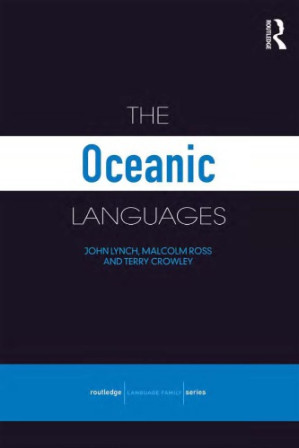
The Oceanic Languages 🔍
Crowley, Terry; Lynch, John; Ross, Malcolm (eds.)
Routledge, Routledge Language Family Series, 2013
English [en] · PDF · 9.5MB · 2013 · 📘 Book (non-fiction) · 🚀/lgli/lgrs/nexusstc/zlib · Save
description
The Oceanic Languages form a closed subgroup within one of the world’s largest language families, Austronesian. There are between 1000 and 1500 Austronesian languages (estimates vary), with so much structural diversity that they are best handled in two volumes, one on the Oceanic and one on the non-Oceanic Austronesian languages. This division is clear and the grammar sketches in this volume provide a cross-section through the structural diversity of the Oceanic languages which is not available elsewhere. Much of the material is drawn from data collected by the authors and has not been previously published.The volume contains five background chapters: The Oceanic Languages, Sociolinguistic Background, Typological Overview, Proto-Oceanic and Internal Subgrouping. In addition, the volume presents forty-three grammar sketches, selected from the five hundred Oceanic languages spread across a region embracing eastern Indonesia, Melanesia, Polynesia, and Micronesia.
Alternative filename
lgli/Crowley-The Oceanic Languages.pdf
Alternative filename
lgrsnf/Crowley-The Oceanic Languages.pdf
Alternative author
Terry Crowley, John Lynch, Malcolm Ross
metadata comments
0
metadata comments
lg1193790
metadata comments
{"last_page":941,"publisher":"Routledge","series":"Routledge Language Family Series"}
Alternative description
Cover......Page 1
THE OCEANIC LANGUAGES......Page 2
Title Page......Page 4
Copyright Page......Page 5
Table of Contents......Page 6
Preface......Page 10
Abbreviations......Page 13
List of illustrations......Page 18
1 The Austronesian family......Page 19
2 Geography......Page 22
2.3 Regional profile: Melanesia......Page 24
3.1 Populations......Page 28
3.2 Language and territory......Page 30
4.1.1 Papuan Tip OV order......Page 33
4.3 Contact between different Oceanic languages
......Page 34
4.3.2 Direct and indirect inheritance in Rotuman
......Page 35
4.4 Contact with intrusive languages
......Page 36
5.1 Up until World War II
......Page 37
5.3 More recent comparative studies
......Page 38
6 Language names
......Page 39
1 Socia-cultural background
......Page 41
2 Language varieties
......Page 42
3 Vernaculars and lingua francas
......Page 43
4 Language status
......Page 46
5 Written forms
......Page 48
6 Oceanic languages into the future
......Page 49
1 Phonology......Page 52
2.1 Pronouns......Page 53
2.2 Nouns......Page 55
2.3 Articles and demonstratives......Page 56
2.4 Numerals and number-marking......Page 57
2.7 Possession......Page 58
3.1 Verbal derivation and inflection......Page 61
3.2 Basic verb phrase structure......Page 63
3.3 Verb serialisation......Page 64
4.2 Verbal clauses: core arguments......Page 67
4.4 Negative clauses......Page 69
5.2 Interrogative sentences......Page 70
6 Complex sentences......Page 71
1 Theoretical and methodological preliminaries......Page 72
2 The position of Proto Oceanic within Austronesian......Page 74
2.2 Proto Oceanic and Proto Malayo-Polynesian......Page 75
3.1.1 Phonemes......Page 81
3.1.3 Phonotactics......Page 84
3.2.1 Pronouns......Page 85
3.2.2 Nouns......Page 87
3.2.3 Articles and demonstratives......Page 88
3.2.4 Numerals and number-marking......Page 90
3.2.5 Adjectives and nominal modifiers......Page 92
3.2.7 Possession......Page 93
3.3.1 Verbal derivation and inflection......Page 98
3.3.2 Basic verb phrase structure......Page 101
3.4.2 Verbal clauses: core arguments......Page 104
3.4.3 Verbal clauses: peripheral arguments......Page 105
3.4.4 Negative clauses......Page 106
3.6 Complex sentences......Page 107
1 Theoretical background
......Page 110
2 Proto Oceanic and primary subgroups of Oceanic
......Page 112
4 Western Oceanic subgrouping
......Page 117
4.1 The Meso-Melanesian linkage
......Page 119
4.2 The Papuan Tip linkage
......Page 120
4.4 The diversification of Western Oceanic
......Page 124
5 Central/Eastern Oceanic subgrouping
......Page 126
5.1 The Southeast Solomonic family
......Page 128
5.3 The Southern Oceanic linkage
......Page 130
5.4 The Central Pacific linkage
......Page 132
5.5 The Micronesian family
......Page 135
5.6 The diversification of Central/Eastern Oceanic
......Page 137
The grammar sketches......Page 139
Kele......Page 140
Mussau......Page 165
Sobei......Page 184
Tobati......Page 203
Kairiru......Page 221
Takia......Page 233
Arop-Lokep......Page 266
Jabem......Page 287
Gapapaiwa......Page 314
Sudest......Page 339
'Ala'ala......Page 364
Bali-Vitu......Page 379
Kaulong......Page 404
Siar......Page 427
Taiof......Page 443
Banoni......Page 457
Sisiqa......Page 473
Roviana......Page 484
Kokota......Page 515
Gela......Page 542
Longgu......Page 555
Arosi......Page 579
Buma......Page 590
Mwotlap......Page 604
Sakao......Page 616
Tamabo......Page 625
Raga......Page 643
Vinmavis......Page 655
Port Sandwich......Page 667
Southeast Ambrym......Page 677
Lamen......Page 688
Ifira-Mele......Page 698
Sye......Page 711
Anejom......Page 740
Cèmuhî......Page 770
Xârâcùù......Page 782
Iaai......Page 793
Ulithian......Page 809
Puluwatese......Page 821
Rotuman......Page 832
Nadrogā......Page 850
Niuafo'ou......Page 865
Marquesan......Page 882
Listing of Oceanic languages, by subgroup......Page 894
References......Page 908
Index to Chapters 1-5......Page 932
THE OCEANIC LANGUAGES......Page 2
Title Page......Page 4
Copyright Page......Page 5
Table of Contents......Page 6
Preface......Page 10
Abbreviations......Page 13
List of illustrations......Page 18
1 The Austronesian family......Page 19
2 Geography......Page 22
2.3 Regional profile: Melanesia......Page 24
3.1 Populations......Page 28
3.2 Language and territory......Page 30
4.1.1 Papuan Tip OV order......Page 33
4.3 Contact between different Oceanic languages
......Page 34
4.3.2 Direct and indirect inheritance in Rotuman
......Page 35
4.4 Contact with intrusive languages
......Page 36
5.1 Up until World War II
......Page 37
5.3 More recent comparative studies
......Page 38
6 Language names
......Page 39
1 Socia-cultural background
......Page 41
2 Language varieties
......Page 42
3 Vernaculars and lingua francas
......Page 43
4 Language status
......Page 46
5 Written forms
......Page 48
6 Oceanic languages into the future
......Page 49
1 Phonology......Page 52
2.1 Pronouns......Page 53
2.2 Nouns......Page 55
2.3 Articles and demonstratives......Page 56
2.4 Numerals and number-marking......Page 57
2.7 Possession......Page 58
3.1 Verbal derivation and inflection......Page 61
3.2 Basic verb phrase structure......Page 63
3.3 Verb serialisation......Page 64
4.2 Verbal clauses: core arguments......Page 67
4.4 Negative clauses......Page 69
5.2 Interrogative sentences......Page 70
6 Complex sentences......Page 71
1 Theoretical and methodological preliminaries......Page 72
2 The position of Proto Oceanic within Austronesian......Page 74
2.2 Proto Oceanic and Proto Malayo-Polynesian......Page 75
3.1.1 Phonemes......Page 81
3.1.3 Phonotactics......Page 84
3.2.1 Pronouns......Page 85
3.2.2 Nouns......Page 87
3.2.3 Articles and demonstratives......Page 88
3.2.4 Numerals and number-marking......Page 90
3.2.5 Adjectives and nominal modifiers......Page 92
3.2.7 Possession......Page 93
3.3.1 Verbal derivation and inflection......Page 98
3.3.2 Basic verb phrase structure......Page 101
3.4.2 Verbal clauses: core arguments......Page 104
3.4.3 Verbal clauses: peripheral arguments......Page 105
3.4.4 Negative clauses......Page 106
3.6 Complex sentences......Page 107
1 Theoretical background
......Page 110
2 Proto Oceanic and primary subgroups of Oceanic
......Page 112
4 Western Oceanic subgrouping
......Page 117
4.1 The Meso-Melanesian linkage
......Page 119
4.2 The Papuan Tip linkage
......Page 120
4.4 The diversification of Western Oceanic
......Page 124
5 Central/Eastern Oceanic subgrouping
......Page 126
5.1 The Southeast Solomonic family
......Page 128
5.3 The Southern Oceanic linkage
......Page 130
5.4 The Central Pacific linkage
......Page 132
5.5 The Micronesian family
......Page 135
5.6 The diversification of Central/Eastern Oceanic
......Page 137
The grammar sketches......Page 139
Kele......Page 140
Mussau......Page 165
Sobei......Page 184
Tobati......Page 203
Kairiru......Page 221
Takia......Page 233
Arop-Lokep......Page 266
Jabem......Page 287
Gapapaiwa......Page 314
Sudest......Page 339
'Ala'ala......Page 364
Bali-Vitu......Page 379
Kaulong......Page 404
Siar......Page 427
Taiof......Page 443
Banoni......Page 457
Sisiqa......Page 473
Roviana......Page 484
Kokota......Page 515
Gela......Page 542
Longgu......Page 555
Arosi......Page 579
Buma......Page 590
Mwotlap......Page 604
Sakao......Page 616
Tamabo......Page 625
Raga......Page 643
Vinmavis......Page 655
Port Sandwich......Page 667
Southeast Ambrym......Page 677
Lamen......Page 688
Ifira-Mele......Page 698
Sye......Page 711
Anejom......Page 740
Cèmuhî......Page 770
Xârâcùù......Page 782
Iaai......Page 793
Ulithian......Page 809
Puluwatese......Page 821
Rotuman......Page 832
Nadrogā......Page 850
Niuafo'ou......Page 865
Marquesan......Page 882
Listing of Oceanic languages, by subgroup......Page 894
References......Page 908
Index to Chapters 1-5......Page 932
date open sourced
2014-07-13
🚀 Fast downloads
Become a member to support the long-term preservation of books, papers, and more. To show our gratitude for your support, you get fast downloads. ❤️
- Fast Partner Server #1 (recommended)
- Fast Partner Server #2 (recommended)
- Fast Partner Server #3 (recommended)
- Fast Partner Server #4 (recommended)
- Fast Partner Server #5 (recommended)
- Fast Partner Server #6 (recommended)
- Fast Partner Server #7
- Fast Partner Server #8
- Fast Partner Server #9
- Fast Partner Server #10
- Fast Partner Server #11
- Fast Partner Server #12
🐢 Slow downloads
From trusted partners. More information in the FAQ. (might require browser verification — unlimited downloads!)
- Slow Partner Server #1 (slightly faster but with waitlist)
- Slow Partner Server #2 (slightly faster but with waitlist)
- Slow Partner Server #3 (slightly faster but with waitlist)
- Slow Partner Server #4 (slightly faster but with waitlist)
- Slow Partner Server #5 (no waitlist, but can be very slow)
- Slow Partner Server #6 (no waitlist, but can be very slow)
- Slow Partner Server #7 (no waitlist, but can be very slow)
- Slow Partner Server #8 (no waitlist, but can be very slow)
- Slow Partner Server #9 (no waitlist, but can be very slow)
- After downloading: Open in our viewer
All download options have the same file, and should be safe to use. That said, always be cautious when downloading files from the internet, especially from sites external to Anna’s Archive. For example, be sure to keep your devices updated.
External downloads
-
For large files, we recommend using a download manager to prevent interruptions.
Recommended download managers: JDownloader -
You will need an ebook or PDF reader to open the file, depending on the file format.
Recommended ebook readers: Anna’s Archive online viewer, ReadEra, and Calibre -
Use online tools to convert between formats.
Recommended conversion tools: CloudConvert and PrintFriendly -
You can send both PDF and EPUB files to your Kindle or Kobo eReader.
Recommended tools: Amazon‘s “Send to Kindle” and djazz‘s “Send to Kobo/Kindle” -
Support authors and libraries
✍️ If you like this and can afford it, consider buying the original, or supporting the authors directly.
📚 If this is available at your local library, consider borrowing it for free there.
Total downloads:
A “file MD5” is a hash that gets computed from the file contents, and is reasonably unique based on that content. All shadow libraries that we have indexed on here primarily use MD5s to identify files.
A file might appear in multiple shadow libraries. For information about the various datasets that we have compiled, see the Datasets page.
For information about this particular file, check out its JSON file. Live/debug JSON version. Live/debug page.