upload/alexandrina/Collections/Project-Muse/Johns Hopkins University Press/Disease and Discovery- A History of the Johns Hopkins School of Hygiene and Public Health, 1916–1939.pdf
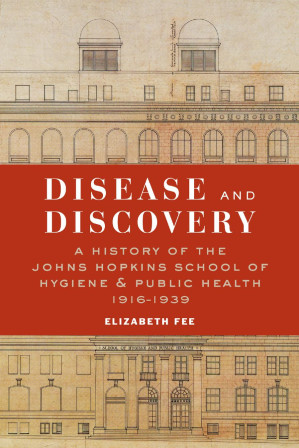
Disease and Discovery : A History of the Johns Hopkins School of Hygiene and Public Health, 1916–1939 🔍
Johns Hopkins University. School of Hygiene and Public Health;Johns Hopkins University. School of Hygiene and Public Health.;Fee, Elizabeth
Johns Hopkins University Press;Project Muse, Baltimore, Maryland, [Place of publication not identified, 2016
English [en] · PDF · 20.8MB · 2016 · 📘 Book (non-fiction) · 🚀/lgli/upload/zlib · Save
description
The story of the founding and early years of the nation's first dedicated school of public health has been reissued to coincide with the school's centennial celebration.At the end of the nineteenth century, public health was the province of part-time political appointees and volunteer groups of every variety. Public health officers were usually physicians, but they could also be sanitary engineers, lawyers, or chemists—there was little agreement about the skills and knowledge necessary for practice. In Disease and Discovery, Elizabeth Fee examines the conflicting ideas about public health's proper subject and scope and its search for a coherent professional unity and identity. She draws on the debates and decisions surrounding the establishment of what was initially known as the Johns Hopkins School of Hygiene and Public Health, the first independent institution for public health research and education, to crystallize the fundamental questions of the field. Many of the issues of public health education in the early twentieth century are still debated today. What is the proper relationship of public health to medicine? What is the relative importance of biomedical, environmental, and sociopolitical approaches to public health? Should schools of public health emphasize research skills over practical training? Should they provide advanced training and credentials for the few or simpler educational courses for the many? Fee explores the many dimensions of these issues in the context of the founding of the Johns Hopkins school. She details the efforts to define the school's structure and purpose, select faculty and students, and organize the curriculum, and she follows the school's growth and adaptation to the changing social environment through the beginning of World War II. As Fee demonstrates, not simply in its formation but throughout its history the School of Hygiene served as a crucible for the forces shaping the public health profession as a whole.
Alternative filename
lgli/R:\Project-Muse\md5_rep\B7757C2D67E3AE9999E89E7EAAB11A2A.pdf
Alternative author
Project MUSE (https://muse.jhu.edu/)
Alternative author
Elizabeth Fee
Alternative publisher
Johns Hopkins University Press, [publisher not identified
Alternative edition
Johns Hopkins University Press, Baltimore, 1987
Alternative edition
United States, United States of America
Alternative edition
2, 20160701
metadata comments
producers:
Muse-DL/1.0.0
Muse-DL/1.0.0
Alternative description
Cover 1
Half-Title, Title Page, Copyright, Dedication 2
Contents 8
List of Illustrations 10
Preface 12
Introduction 16
I: Toward a New Profession of Public Health 24
II: Competition for the First School of Hygiene and Public Health 41
III: Working It Out: William Henry Welch and the Art of Negotiation 72
IV: Creating New Disciplines, I: The Pathology of Disease 111
V: Creating New Disciplines, II: The Physiology of Health 137
VI: Surviving the Thirties 170
VII: The Community as Public Health Laboratory 197
VIII: Extending the Hopkins Model 230
Notes 252
Index 288
Publisher:Johns Hopkins University Press,Published:2016,ISBN:9781421421124,DOI:10.1353/book.47484,Language:English,OCLC:957137656
At the end of the nineteenth century, public health was the province of part-time political appointees and volunteer groups of every variety. Public health officers were usually physicians, but they could also be sanitary engineers, lawyers, or chemists—there was little agreement about the skills and knowledge necessary for practice. In Disease and Discovery, Elizabeth Fee examines the conflicting ideas about public health’s proper subject and scope and its search for a coherent professional unity and identity. She draws on the debates and decisions surrounding the establishment of what was initially known as the Johns Hopkins School of Hygiene and Public Health, the first independent institution for public health research and education, to crystallize the fundamental questions of the field. Many of the issues of public health education in the early twentieth century are still debated today. What is the proper relationship of public health to medicine? What is the relative importance of biomedical, environmental, and sociopolitical approaches to public health? Should schools of public health emphasize research skills over practical training? Should they provide advanced training and credentials for the few or simpler educational courses for the many? Fee explores the many dimensions of these issues in the context of the founding of the Johns Hopkins school. She details the efforts to define the school’s structure and purpose, select faculty and students, and organize the curriculum, and she follows the school’s growth and adaptation to the changing social environment through the beginning of World War II. As Fee demonstrates, not simply in its formation but throughout its history the School of Hygiene served as a crucible for the forces shaping the public health profession as a whole.
Half-Title, Title Page, Copyright, Dedication 2
Contents 8
List of Illustrations 10
Preface 12
Introduction 16
I: Toward a New Profession of Public Health 24
II: Competition for the First School of Hygiene and Public Health 41
III: Working It Out: William Henry Welch and the Art of Negotiation 72
IV: Creating New Disciplines, I: The Pathology of Disease 111
V: Creating New Disciplines, II: The Physiology of Health 137
VI: Surviving the Thirties 170
VII: The Community as Public Health Laboratory 197
VIII: Extending the Hopkins Model 230
Notes 252
Index 288
Publisher:Johns Hopkins University Press,Published:2016,ISBN:9781421421124,DOI:10.1353/book.47484,Language:English,OCLC:957137656
At the end of the nineteenth century, public health was the province of part-time political appointees and volunteer groups of every variety. Public health officers were usually physicians, but they could also be sanitary engineers, lawyers, or chemists—there was little agreement about the skills and knowledge necessary for practice. In Disease and Discovery, Elizabeth Fee examines the conflicting ideas about public health’s proper subject and scope and its search for a coherent professional unity and identity. She draws on the debates and decisions surrounding the establishment of what was initially known as the Johns Hopkins School of Hygiene and Public Health, the first independent institution for public health research and education, to crystallize the fundamental questions of the field. Many of the issues of public health education in the early twentieth century are still debated today. What is the proper relationship of public health to medicine? What is the relative importance of biomedical, environmental, and sociopolitical approaches to public health? Should schools of public health emphasize research skills over practical training? Should they provide advanced training and credentials for the few or simpler educational courses for the many? Fee explores the many dimensions of these issues in the context of the founding of the Johns Hopkins school. She details the efforts to define the school’s structure and purpose, select faculty and students, and organize the curriculum, and she follows the school’s growth and adaptation to the changing social environment through the beginning of World War II. As Fee demonstrates, not simply in its formation but throughout its history the School of Hygiene served as a crucible for the forces shaping the public health profession as a whole.
Alternative description
<P>At the end of the nineteenth century, public health was the province of part-time political appointees and volunteer groups of every variety. Public health officers were usually physicians, but they could also be sanitary engineers, lawyers, or chemists—there was little agreement about the skills and knowledge necessary for practice. In <I>Disease and Discovery</I>, Elizabeth Fee examines the conflicting ideas about public health’s proper subject and scope and its search for a coherent professional unity and identity. She draws on the debates and decisions surrounding the establishment of what was initially known as the Johns Hopkins School of Hygiene and Public Health, the first independent institution for public health research and education, to crystallize the fundamental questions of the field. </P><P>Many of the issues of public health education in the early twentieth century are still debated today. What is the proper relationship of public health to medicine? What is the relative importance of biomedical, environmental, and sociopolitical approaches to public health? Should schools of public health emphasize research skills over practical training? Should they provide advanced training and credentials for the few or simpler educational courses for the many? </P><P>Fee explores the many dimensions of these issues in the context of the founding of the Johns Hopkins school. She details the efforts to define the school’s structure and purpose, select faculty and students, and organize the curriculum, and she follows the school’s growth and adaptation to the changing social environment through the beginning of World War II. As Fee demonstrates, not simply in its formation but throughout its history the School of Hygiene served as a crucible for the forces shaping the public health profession as a whole.</P>
Alternative description
"At the end of the nineteenth century, public health was the province of part-time political appointees and volunteer groups of every variety. Public health officers were usually physicians, but they could also be sanitary engineers, lawyers, or chemists- there was little agreement about the skills and knowledge necessary for practice. ... [This book] examines the conflicting ideas of public health's proper subject and scope and its search for some coherent professional unity and identity. ..[The author] uses the debates and decisions surrounding the establishment of the Johns Hopkins School of Hygiene and Public Health, the first independent institution for public health research and education, to crystallize the fundamental questions of the field."--Jacket.
date open sourced
2022-03-08
🚀 Fast downloads
Become a member to support the long-term preservation of books, papers, and more. To show our gratitude for your support, you get fast downloads. ❤️
- Fast Partner Server #1 (recommended)
- Fast Partner Server #2 (recommended)
- Fast Partner Server #3 (recommended)
- Fast Partner Server #4 (recommended)
- Fast Partner Server #5 (recommended)
- Fast Partner Server #6 (recommended)
- Fast Partner Server #7
- Fast Partner Server #8
- Fast Partner Server #9
- Fast Partner Server #10
- Fast Partner Server #11
- Fast Partner Server #12
🐢 Slow downloads
From trusted partners. More information in the FAQ. (might require browser verification — unlimited downloads!)
- Slow Partner Server #1 (slightly faster but with waitlist)
- Slow Partner Server #2 (slightly faster but with waitlist)
- Slow Partner Server #3 (slightly faster but with waitlist)
- Slow Partner Server #4 (slightly faster but with waitlist)
- Slow Partner Server #5 (no waitlist, but can be very slow)
- Slow Partner Server #6 (no waitlist, but can be very slow)
- Slow Partner Server #7 (no waitlist, but can be very slow)
- Slow Partner Server #8 (no waitlist, but can be very slow)
- Slow Partner Server #9 (no waitlist, but can be very slow)
- After downloading: Open in our viewer
All download options have the same file, and should be safe to use. That said, always be cautious when downloading files from the internet, especially from sites external to Anna’s Archive. For example, be sure to keep your devices updated.
External downloads
-
For large files, we recommend using a download manager to prevent interruptions.
Recommended download managers: JDownloader -
You will need an ebook or PDF reader to open the file, depending on the file format.
Recommended ebook readers: Anna’s Archive online viewer, ReadEra, and Calibre -
Use online tools to convert between formats.
Recommended conversion tools: CloudConvert and PrintFriendly -
You can send both PDF and EPUB files to your Kindle or Kobo eReader.
Recommended tools: Amazon‘s “Send to Kindle” and djazz‘s “Send to Kobo/Kindle” -
Support authors and libraries
✍️ If you like this and can afford it, consider buying the original, or supporting the authors directly.
📚 If this is available at your local library, consider borrowing it for free there.
Total downloads:
A “file MD5” is a hash that gets computed from the file contents, and is reasonably unique based on that content. All shadow libraries that we have indexed on here primarily use MD5s to identify files.
A file might appear in multiple shadow libraries. For information about the various datasets that we have compiled, see the Datasets page.
For information about this particular file, check out its JSON file. Live/debug JSON version. Live/debug page.