nexusstc/Equity by Design: Delivering on the Power and Promise of UDL/b9a7e4a831b464562d8abf8b78facc71.epub
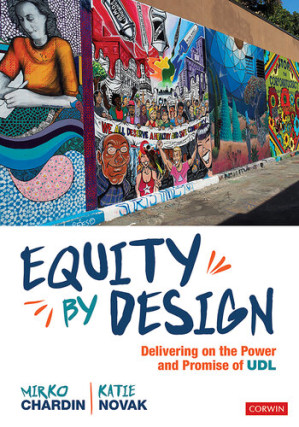
Equity by design : delivering on the power and promise of UDL 🔍
Mirko Chardin, Katie R. Novak
Corwin Press Inc, 1, 2020-08-06
English [en] · EPUB · 12.4MB · 2020 · 📘 Book (non-fiction) · 🚀/lgli/lgrs/nexusstc/zlib · Save
description
"Our calling is to drop our egos, commit to removing barriers, and treat our learners with the unequivocal respect and dignity they deserve."
--Mirko Chardin and Katie Novak
When it comes to the hard work of reconstructing our schools into places where every student has the opportunity to succeed, Mirko Chardin and Katie Novak are absolutely convinced that teachers should serve as our primary architects. And by "teachers" they mean legions of teachers working in close collaboration. After all, it’s teachers who design students’ learning experiences, who build student relationships . . . who ultimately have the power to change the trajectory of our students’ lives.
Equity by Design is intended to serve as a blueprint for teachers to alter the all-too-predictable outcomes for our historically under-served students. A first of its kind resource, the book makes the critical link between social justice and Universal Design for Learning (UDL) so that we can equip students (and teachers, too) with the will, skill, and collective capacity to enact positive change.
Inside you’ll find:
Concrete strategies for designing and delivering a culturally responsive, sustainable, and equitable framework for all students Rich examples, case studies, and implementation spotlights of educators, students (including Parkland survivors), and programs that have embraced a social justice imperative Evidence-based application of best practices for UDL to create more inclusive and equitable classrooms A flexible format to facilitate use with individual teachers, teacher teams, and as the basis for whole-school implementation "Every student," Mirko and Katie insist, "deserves the opportunity to be successful regardless of their zip code, the color of their skin, the language they speak, their sexual and/or gender identity, and whether or not they have a disability." Consider Equity by Design a critical first step forward in providing that all-important opportunity.
Also From Corwin:
Hammond/Culturally Responsive Teaching & the Brain: 9781483308012 Moore/The Guide for White Women Who Teach Black Boys: 9781506351681 France/Reclaiming Professional Learning: 9781544360669
--Mirko Chardin and Katie Novak
When it comes to the hard work of reconstructing our schools into places where every student has the opportunity to succeed, Mirko Chardin and Katie Novak are absolutely convinced that teachers should serve as our primary architects. And by "teachers" they mean legions of teachers working in close collaboration. After all, it’s teachers who design students’ learning experiences, who build student relationships . . . who ultimately have the power to change the trajectory of our students’ lives.
Equity by Design is intended to serve as a blueprint for teachers to alter the all-too-predictable outcomes for our historically under-served students. A first of its kind resource, the book makes the critical link between social justice and Universal Design for Learning (UDL) so that we can equip students (and teachers, too) with the will, skill, and collective capacity to enact positive change.
Inside you’ll find:
Concrete strategies for designing and delivering a culturally responsive, sustainable, and equitable framework for all students Rich examples, case studies, and implementation spotlights of educators, students (including Parkland survivors), and programs that have embraced a social justice imperative Evidence-based application of best practices for UDL to create more inclusive and equitable classrooms A flexible format to facilitate use with individual teachers, teacher teams, and as the basis for whole-school implementation "Every student," Mirko and Katie insist, "deserves the opportunity to be successful regardless of their zip code, the color of their skin, the language they speak, their sexual and/or gender identity, and whether or not they have a disability." Consider Equity by Design a critical first step forward in providing that all-important opportunity.
Also From Corwin:
Hammond/Culturally Responsive Teaching & the Brain: 9781483308012 Moore/The Guide for White Women Who Teach Black Boys: 9781506351681 France/Reclaiming Professional Learning: 9781544360669
Alternative filename
lgrsnf/Equity by Design - Delivering on the Power and Promise of UDL.epub
Alternative title
Culturally Responsive Teaching and The Brain : Promoting Authentic Engagement and Rigor Among Culturally and Linguistically Diverse Students
Alternative title
Reclaiming Personalized Learning : A Pedagogy for Restoring Equity and Humanity in Our Classrooms
Alternative title
The guide for White women who teach Black boys : understanding, connecting, respecting
Alternative title
Social Justice in the Hands of Educators: Practical Strategies Using the UDL Lens
Alternative author
Eddie Moore, Jr.; Ali Michael; Marguerite W Penick-Parks; Glenn E Singleton; Heather Hackman
Alternative author
Zaretta Hammond; foreword by Yvette Jackson
Alternative author
Zaretta Lynn Hammond; Yvette Jackson
Alternative author
Chardin, Mirko, Novak, Katie R.
Alternative author
Katie R. Novak, Mirko Chardin
Alternative author
France, Paul Emerich
Alternative author
Paul Emerich France
Alternative author
Hammond, Zaretta L.
Alternative publisher
SAGE Publications, Incorporated
Alternative publisher
Corwin, a SAGE company
Alternative publisher
Corwin Publishers
Alternative edition
Sage Publications Inc., Thousand Oaks, California, 2015
Alternative edition
Sage Publications Inc., Thousand Oaks, California, 2020
Alternative edition
Sage Publications Inc., Thousand Oaks, California, 2018
Alternative edition
First edition, Thousand Oaks, California, 2020
Alternative edition
United States, United States of America
Alternative edition
First, First Edition, US, 2019
Alternative edition
1, PS, 2014
Alternative edition
1, PS, 2017
Alternative edition
1, PT, 2020
Alternative edition
20141201
metadata comments
lg2840405
metadata comments
{"edition":"1","isbns":["1544380240","9781544380247"],"last_page":208,"publisher":"Corwin"}
metadata comments
Includes bibliographical references (pages 161-168) and index.
metadata comments
gaaagpl
Alternative description
Ready To Make A Difference, The Old Fashioned Way / Debby Irving -- The State Of The White Woman Teacher / Julie Landsman -- The State Of Black Boy Student Expected Early March / Jerlando Jackson -- Understanding Unconscious Bias As One More Tool In The Committed White Teacher's Equity Toolkit / Diane Finnerty -- White Female Teachers And Black Boys : Right Teachers And (mis)understood Boys / John Marshall -- White Racial Identity Development / Ali Michael -- What If Being Called 'racist' Is The Beginning, Not The End, Of The Conversation? / Elizabeth Denevi -- What Does It Mean To Be A White Teacher? / Robin Diangelo -- Strategies For Showing Love To Black Boys / Jaime Washington -- Black Excellence And White Privilege / David Stills -- Black Boys & Their Racial Identity : Learning How They Fit Into Society And In Your Classroom / Keisha Bentley-edwards Et Al. -- Teaching Black Boys During Childhood : A Counter Narrative And Considerations / Joseph Nelson -- How Dare You Make This About Race?! : Centering Race, Gender And Poverty / H. Richard Milner -- The N!gga/er In Me / Eddie Moore Jr. -- Blackness/transness : Two Targets On My Back / Zeam Porter With Ty Gale -- White Teachers And The Power To Transform : Early Childhood Educators And The Potential For Lasting Harm / Chonika Coleman-king And Jabina Coleman -- Learn About Us Before You Teach (about) Us : Queer Black Boys / Benny Vasquez -- Black Male Students And Teachers In K-12 Classrooms : Strategies For Support To Increase Performance As Students And Professionals / Chance Lewis -- Respecting Black Boys And Their History / Jawanza Kunjufu -- I Can Switch My Language, But I Can't Switch My Skin : What Teachers Must Understand About Linguistic Racism / April Baker-bell -- Identity Safety As An Antidote To Stereotype Threat / Becki Cohn-vargas -- The Science Behind Psychological Verve And What It Means For Black Students / Darla Scott -- The Visit / Chezare Warren And Justin Coles -- Rewriting The Narrative / Toni Williamson -- Don't Lean, Jump In : The Fierce Urgency To Confront, Dismantle, And (re)write The Historical Narrative Of Black Boys In Educational Institutions / Sharoni Little -- Zero Margin For Error / Vern? Myers -- Connecting With Black Students And Parents : Equal Vision / Shakti Butler -- Activating Inclusiveness / Chris Avery -- Belief, Pedagogy And Practice : Strategies For Building Powerful Classroom Communities / Ty-ron Douglas & Stefanie Rome -- Ruminations From The Intersections Of A #blackmommyactivist / Shemariah Arki -- Find Freedom In The Classroom : A Love Letter To My Babies' Teachers / Crystal Laura -- Start Out Firm / Valerie Adams-bass -- A Parable Of Academic Misgivings : The Educator's Role In Addressing College Undermatch / Ed Smith -- The Collusion Of Social Norms And Working With Interracial Families / Jennifer Chandler -- What Are We Doing To Address These Students? : Strategies For Creating Equitable Classrooms / Brian Johnson -- Add/adhd Over-identification And Bow Black Cultural Styles Are Often Confused For Add / Erica Snowden -- Football, Sports And Moore : Using Schools Structures To Get More Out Of Black Boys / Eddie Moore Jr., Frederick Gooding Jr. -- Strategies That De-escalate Conflict In The Classroom / Barbara Moore-williams, Deidre Spence, Chris Mcginley -- Heath, Bloom, Banks : Exploring The Importance Of What And Why Questions / Marguerite Penick-parks & Suzanne Fondrie -- Black Faces And White Spaces : Recognizing And Supporting Black Boys In Gifted Education / Donna Y. Ford, Brian L. Wright & Tarek C. Grantham -- Books And Curriculum : What To Read With Black Males In Elementary School To Create A Strong Foundation Of Positive Racial Identity Development / Marie Michael -- Global Skills : Beyond The Classroom And The Playground / Dion Crushshon -- Outtro : Remember, Black Girls Aren't Doing Just Fine : Supporting Black Girls In The Classroom / Charlotte Jacobs. [edited By] Eddie Moore, Jr., Ali Michael, Marguerite W. Penick-parks ; Forewords By Glenn E. Singleton And Heather Hackman. Includes Bibliographical References (pages 391-411) And Index.
Alternative description
Empower black boys to dream, believe, achieve Schools that routinely fail Black boys are not extraordinary. In fact, they are all-too ordinary. If we are to succeed in positively shifting outcomes for Black boys and young men, we must first change the way school is'done.'That's where the eight in ten teachers who are White women fit in... and this urgently needed resource is written specifically for them as a way to help them understand, respect and connect with all of their students. So much more than a call to call to action—but that, too!—The Guide for White Women Who Teach Black Boys brings together research, activities, personal stories, and video interviews to help us all embrace the deep realities and thrilling potential of this crucial American task. With Eddie, Ali, and Marguerite as your mentors, you will learn how to: Develop learning environments that help Black boys feel a sense of belonging, nurturance, challenge, and love at school Change school culture so that Black boys can show up in the wholeness of their selves Overcome your unconscious bias and forge authentic connections with your Black male students If you are a teacher who is afraid to talk about race, that's okay. Fear is a normal human emotion and racial competence is a skill that can be learned. We promise that reading this extraordinary guide will be a life-changing first step forward... for both you and the students you serve. About the Authors Dr. Eddie Moore, Jr., has pursued and achieved success in academia, business, diversity, leadership, and community service. In 1996, he started America & MOORE, LLC to provide comprehensive diversity, privilege, and leadership trainings/workshops. Dr. Moore is recognized as one of the nation's top motivational speakers and educators, especially for his work with students K–16. Dr. Moore is the Founder/Program Director for the White Privilege Conference, one of the top national and international conferences for participants who want to move beyond dialogue and into action around issues of diversity, power, privilege, and leadership. Ali Michael, Ph.D., is the co-founder and director of the Race Institute for K–12 Educators, and the author of Raising Race Questions: Whiteness, Inquiry, and Education, winner of the 2017 Society of Professors of Education Outstanding Book Award. She is co-editor of the bestselling Everyday White People Confront Racial and Social Injustice and sits on the editorial board of the journal, Whiteness and Education. Dr. Michael teaches in the mid-career doctoral program at the University of Pennsylvania's Graduate School of Education, as well as the Graduate Counseling Program at Arcadia University. Dr. Marguerite W. Penick-Parks currently serves as Chair of Educational Leadership and Policy at the University of Wisconsin, Oshkosh. Her work centers on issues of power, privilege, and oppression in relationship to issues of curriculum with a special emphasis on the incorporation of quality literature in K–12 classrooms. She appears in the movie,'Mirrors of Privilege: Making Whiteness Visible,'by the World Trust Organization. Her most recent work includes a joint article on creating safe spaces for discussing White privilege with preservice teachers.
Alternative description
Empower black boys to dream, believe, achieve
Schools that routinely fail Black boys are not extraordinary. In fact, they are all too ordinary. If we are to succeed in positively shifting outcomes for Black boys and young men, we must first change the way school is "done." Thats where the eight in ten teachers who are White women fit in . . . and this urgently needed resource is written specifically for them as a way to help them understand, respect and connect with all of their students.
So much more than a call to call to actionbut that, too! The Guide for White Women Who Teach Black Boys brings together research, activities, personal stories, and video interviews to help us all embrace the deep realities and thrilling potential of this crucial American task.With Eddie, Ali, and Marguerite as your mentors, you will learn how to: If you are a teacher who is afraid to talk about race, thats okay. Fear is a normal human emotion and racial competence is a skill that can be learned. We promise that reading this extraordinary guide will be a life changing first step forward . . . for both you and the students you serve.
About the Authors
Dr. Eddie Moore, Jr. , has pursued and achieved success in academia, business, diversity, leadership, and community service. In 1996, he started America & MOORE, LLC to provide comprehensive diversity, privilege, and leadership trainings/workshops. Dr. Moore is recognized as one of the nations top motivational speakers and educators, especially for his work with students K16. Dr. Moore is the Founder/Program Director for the White Privilege Conference, one of the top national and international conferences for participants who want to move beyond dialogue and into action around issues of diversity, power, privilege, and leadership.
Ali Michael, Ph.D. ,is the co founder and director of the Race Institute for K12 Educators, and the author of Raising Race Questions: Whiteness, Inquiry, and Education , winner of the 2017 Society of Professors of Education Outstanding Book Award. She is co editor of the bestselling Everyday White People Confront Racial and Social Injustice and sits on the editorial board of the journal, Whiteness and Education . Dr. Michael teaches in the mid career doctoral program at the University of Pennsylvanias Graduate School of Education, as well as the Graduate Counseling Program at Arcadia University.
Dr. Marguerite W. Penick Parks currently serves as Chair of Educational Leadership and Policy at the University of Wisconsin, Oshkosh. Her work centers on issues of power, privilege, and oppression in relationship to issues of curriculum with a special emphasis on the incorporation of quality literature in K12 classrooms. She appears in the movie, "Mirrors of Privilege: Making Whiteness Visible," by the World Trust Organization. Her most recent work includes a joint article on creating safe spaces for discussing White privilege with preservice teachers.
Schools that routinely fail Black boys are not extraordinary. In fact, they are all too ordinary. If we are to succeed in positively shifting outcomes for Black boys and young men, we must first change the way school is "done." Thats where the eight in ten teachers who are White women fit in . . . and this urgently needed resource is written specifically for them as a way to help them understand, respect and connect with all of their students.
So much more than a call to call to actionbut that, too! The Guide for White Women Who Teach Black Boys brings together research, activities, personal stories, and video interviews to help us all embrace the deep realities and thrilling potential of this crucial American task.With Eddie, Ali, and Marguerite as your mentors, you will learn how to: If you are a teacher who is afraid to talk about race, thats okay. Fear is a normal human emotion and racial competence is a skill that can be learned. We promise that reading this extraordinary guide will be a life changing first step forward . . . for both you and the students you serve.
About the Authors
Dr. Eddie Moore, Jr. , has pursued and achieved success in academia, business, diversity, leadership, and community service. In 1996, he started America & MOORE, LLC to provide comprehensive diversity, privilege, and leadership trainings/workshops. Dr. Moore is recognized as one of the nations top motivational speakers and educators, especially for his work with students K16. Dr. Moore is the Founder/Program Director for the White Privilege Conference, one of the top national and international conferences for participants who want to move beyond dialogue and into action around issues of diversity, power, privilege, and leadership.
Ali Michael, Ph.D. ,is the co founder and director of the Race Institute for K12 Educators, and the author of Raising Race Questions: Whiteness, Inquiry, and Education , winner of the 2017 Society of Professors of Education Outstanding Book Award. She is co editor of the bestselling Everyday White People Confront Racial and Social Injustice and sits on the editorial board of the journal, Whiteness and Education . Dr. Michael teaches in the mid career doctoral program at the University of Pennsylvanias Graduate School of Education, as well as the Graduate Counseling Program at Arcadia University.
Dr. Marguerite W. Penick Parks currently serves as Chair of Educational Leadership and Policy at the University of Wisconsin, Oshkosh. Her work centers on issues of power, privilege, and oppression in relationship to issues of curriculum with a special emphasis on the incorporation of quality literature in K12 classrooms. She appears in the movie, "Mirrors of Privilege: Making Whiteness Visible," by the World Trust Organization. Her most recent work includes a joint article on creating safe spaces for discussing White privilege with preservice teachers.
Alternative description
Where exactly did personalized learning go so wrong? For teacher and consultant Paul France, at first technology-powered personalized learning seemed like a panacea. But after three years spent at a personalized learning start-up and network of microschools, he soon realized that such corporate-driven individualized learning initiatives do more harm than good, especially among our most vulnerable students. The far-superior alternative? A human-centered pedagogy that prioritizes children over technology. First, let's be clear: Reclaiming Personalized Learning is not yet-another ed tech book. Instead it's a user's guide to restoring equity and humanity to our classrooms and schools through personalization. One part polemical, eleven parts practical, the book describes how to: Shape whole-class instruction, leverage small-group interactions, and nurture a student's inner-dialogue Cultivate awareness within and among students, and build autonomy and authority Design curriculum with a flexible frame and where exactly the standards fit Humanize assessment and instruction, including the place of responsive teaching Create a sense of belonging, humanize technology integration, and effect socially just teaching and learning—all central issues in equity The truth is this: there's no one framework, there's no one tool that makes learning personalized–what personalized learning companies with a vested interest in profits might tempt you to believe. It's people who personalize learning, and people not technology must be at the center of education. The time is now for all of us teachers to reclaim personalized learning, and this all-important book is our very best resource for getting started.'This is a compelling and critically important book for our time. With rich stories of teaching and learning Paul France considers ways to create the most positive learning experiences possible.'- JO BOALER, Nomellini & Olivier Professor of Education, Stanford Graduate School of Education'This brilliant book is a major contribution to the re-imagination of learning and teaching for the twenty-first century and should be essential reading for new and experienced teachers alike.'- TONY WAGNER, Senior Research Fellow, Learning Policy Institute'In these troubled times, this book is more than a breath of fresh air, it is a call to action. Paul gives us an accessible and sophisticated book that explains how and why we should celebrate the humanity of every single student.'- JIM KNIGHT, Senior Partner of the Instructional Coaching Group (ICG) and Author of The Impact Cycle
Alternative description
Where exactly did personalized learning go so wrong?
For teacher and consultant Paul France, at first technology-powered personalized learning seemed like a panacea. But after three years spent at a personalized learning start-up and network of microschools, he soon realized that such corporate-driven individualized learning initiatives do more harm than good, especially among our most vulnerable students. The far-superior alternative? A human-centered pedagogy that prioritizes children over technology.
First, lets be Reclaiming Personalized Learning is not yet-another ed tech book. Instead its a users guide to restoring equity and humanity to our classrooms and schools through personalization. One part polemical, eleven parts practical, the book describes how The truth is theres no one framework, theres no one tool that makes learning personalizedwhat personalized learning companies with a vested interest in profits might tempt you to believe. Its people who personalize learning, and people not technology must be at the center of education. The time is now for all of us teachers to reclaim personalized learning, and this all-important book is our very best resource for getting started.
"This is a compelling and critically important book for our time. With rich stories of teaching and learning Paul France considers ways to create the most positive learning experiences possible." - JO BOALER, Nomellini & Olivier Professor of Education,Stanford Graduate School of Education "This brilliant book is a major contribution to the re-imagination of learning and teaching for the twenty-first century and should be essential reading for new and experienced teachers alike." - TONY WAGNER, Senior Research Fellow, Learning Policy Institute "In these troubled times, this book is more than a breath of fresh air, it is a call to action. Paul gives us an accessible and sophisticated book that explains how and why we should celebrate the humanity of every single student." - JIM KNIGHT, Senior Partner of the Instructional CoachingGroup (ICG) and Author of The Impact Cycle
For teacher and consultant Paul France, at first technology-powered personalized learning seemed like a panacea. But after three years spent at a personalized learning start-up and network of microschools, he soon realized that such corporate-driven individualized learning initiatives do more harm than good, especially among our most vulnerable students. The far-superior alternative? A human-centered pedagogy that prioritizes children over technology.
First, lets be Reclaiming Personalized Learning is not yet-another ed tech book. Instead its a users guide to restoring equity and humanity to our classrooms and schools through personalization. One part polemical, eleven parts practical, the book describes how The truth is theres no one framework, theres no one tool that makes learning personalizedwhat personalized learning companies with a vested interest in profits might tempt you to believe. Its people who personalize learning, and people not technology must be at the center of education. The time is now for all of us teachers to reclaim personalized learning, and this all-important book is our very best resource for getting started.
"This is a compelling and critically important book for our time. With rich stories of teaching and learning Paul France considers ways to create the most positive learning experiences possible." - JO BOALER, Nomellini & Olivier Professor of Education,Stanford Graduate School of Education "This brilliant book is a major contribution to the re-imagination of learning and teaching for the twenty-first century and should be essential reading for new and experienced teachers alike." - TONY WAGNER, Senior Research Fellow, Learning Policy Institute "In these troubled times, this book is more than a breath of fresh air, it is a call to action. Paul gives us an accessible and sophisticated book that explains how and why we should celebrate the humanity of every single student." - JIM KNIGHT, Senior Partner of the Instructional CoachingGroup (ICG) and Author of The Impact Cycle
Alternative description
"Our calling is to drop our egos, commit to removing barriers, and treat our learners with the unequivocal respect and dignity they deserve."
**--Mirko Chardin and Katie Novak**
When it comes to the hard work of reconstructing our schools into places where **every** student has the opportunity to succeed, Mirko Chardin and Katie Novak are absolutely convinced that teachers should serve as our primary architects. And by "teachers" they mean __legions of teachers__ working in close collaboration. After all, it’s teachers who design students’ learning experiences, who build student relationships . . . who ultimately have the power to change the trajectory of our students’ lives.
__Equity by Design__ is intended to serve as a blueprint for teachers to alter the all-too-predictable outcomes for our historically under-served students. A first of its kind resource, the book makes the critical link between social justice and Universal Design for Learning (UDL) so that we can equip students (and teachers, too) with the will, skill, and collective capacity to enact positive change.
Inside you’ll find:
* Concrete strategies for designing and delivering a culturally responsive, sustainable, and equitable framework for all students
* Rich examples, case studies, and implementation spotlights of educators, students (including Parkland survivors), and programs that have embraced a social justice imperative
* Evidence-based application of best practices for UDL to create more inclusive and equitable classrooms
* A flexible format to facilitate use with individual teachers, teacher teams, and as the basis for whole-school implementation
**Also From Corwin:**
* Hammond/Culturally Responsive Teaching & the Brain: 9781483308012
* Moore/The Guide for White Women Who Teach Black Boys: 9781506351681
* France/Reclaiming Professional Learning: 9781544360669
**--Mirko Chardin and Katie Novak**
When it comes to the hard work of reconstructing our schools into places where **every** student has the opportunity to succeed, Mirko Chardin and Katie Novak are absolutely convinced that teachers should serve as our primary architects. And by "teachers" they mean __legions of teachers__ working in close collaboration. After all, it’s teachers who design students’ learning experiences, who build student relationships . . . who ultimately have the power to change the trajectory of our students’ lives.
__Equity by Design__ is intended to serve as a blueprint for teachers to alter the all-too-predictable outcomes for our historically under-served students. A first of its kind resource, the book makes the critical link between social justice and Universal Design for Learning (UDL) so that we can equip students (and teachers, too) with the will, skill, and collective capacity to enact positive change.
Inside you’ll find:
* Concrete strategies for designing and delivering a culturally responsive, sustainable, and equitable framework for all students
* Rich examples, case studies, and implementation spotlights of educators, students (including Parkland survivors), and programs that have embraced a social justice imperative
* Evidence-based application of best practices for UDL to create more inclusive and equitable classrooms
* A flexible format to facilitate use with individual teachers, teacher teams, and as the basis for whole-school implementation
**Also From Corwin:**
* Hammond/Culturally Responsive Teaching & the Brain: 9781483308012
* Moore/The Guide for White Women Who Teach Black Boys: 9781506351681
* France/Reclaiming Professional Learning: 9781544360669
Alternative description
A bold, brain-based teaching approach to culturally responsive instruction The achievement gap remains a stubborn problem for educators of culturally and linguistically diverse students. With the introduction of the rigorous Common Core State Standards, diverse classrooms need a proven framework for optimizing student engagement and facilitating deeper learning Culturally responsive pedagogy has shown great promise in meeting this need, but many educators still struggle with its implementation. In this book, Zaretta Hammond draws on cutting-edge neuroscience research to offer an innovative approach for designing and implementing brain-compatible culturally responsive instruction. The book includes: Information on how one's culture programs the brain to process data and affects learning relationships Ten'key moves'to build students'learner operating systems and prepare them to become independent learners Prompts for action and valuable self-reflection With a firm understanding of these techniques and principles, teachers and instructional leaders will confidently reap the benefits of culturally responsive instruction.'An essential, compelling, and practical examination of the relationship between culture and cognition that will forever transform how we think about our role facilitating the learning of other people's children—and our own children! —LaShawn Routé Chatmon, Executive Director National Equity Project'All students can and will learn at high levels when provided the type of instruction described in this book. This work calls us to action by mandating that we move beyond looking for student outcomes that rely heavily on the regurgitation of memorized facts to applying the information learned to new situations.'—Kendra Ferguson, Chief of Schools Kipp Bay Area Schools, Oakland, CA
Alternative description
A Bold, Brain-based Teaching Approach To Culturally Responsive Instruction. The Achievement Gap Remains A Stubborn Problem For Educators Of Culturally And Linguistically Diverse Students. With The Introduction Of The Rigorous Common Core State Standards, Diverse Classrooms Need A Proven Framework For Optimizing Student Engagement And Facilitating Deeper Learning. Culturally Responsive Pedagogy Has Shown Great Promise In Meeting This Need, But Many Educators Still Struggle With Its Implementation. In This Book, Zaretta Hammond Draws On Cutting-edge Neuroscience Research To Offer An Innovative Approach For Designing And Implementing Brain-compatible Culturally Responsive Instruction. The Book Includes: Information On How One’s Culture Programs The Brain To Process Data And Affects Learning Relationships; Ten “key Moves” To Build Students’ Learner Operating Systems And Prepare Them To Become Independent Learners; Prompts For Action And Valuable Self-reflection. With A Firm Understanding Of These Techniques And Principles, Teachers And Instructional Leaders Will Confidently Reap The Benefits Of Culturally Responsive Instruction.--publisher Website. Pt. I. Building Awareness And Knowledge -- Climbing Out Of The Gap -- What's Culture Got To Do With It? -- This Is Your Brain On Culture -- Preparing To Be A Culturally Responsive Practitioner -- Pt. Ii. Building Learning Partnerships -- Building The Foundation Of Learning Partnerships -- Establishing Alliance In The Learning Partnership -- Shifting Academic Mindset In The Learning Partnership -- Pt. Iii. Building Intellective Capacity -- Information Processing To Build Intellective Capacity -- Creating A Culturally Responsive Community For Learning. Zaretta Hammond ; Foreword By Yvette Jackson. Includes Bibliographical References And Index.
Alternative description
When it comes to the hard work of reconstructing our schools into places where every student has the opportunity to succeed, Mirko Chardin and Katie Novak are absolutely convinced that teachers should serve as our primary architects. And by "teachers" they mean legions of teachers working in close collaboration. After all, its teachers who design students learning experiences, who build student relationships . . .who ultimately have the power to change the trajectory of our students lives. Equity by Design is intended to serve as a blueprint for teachers to alter the all-too-predictable outcomes for our historically under-served students. A first of its kind resource, the book makes the critical link between social justice and Universal Design for Learning (UDL) so that we can equip students (and teachers, too) with the will, skill, and collective capacity to enact positive change. Inside youll "Every student," Mirko and Katie insist, "deserves the opportunity to be successful regardless of their zip code, the color of their skin, the language they speak, their sexual and/or gender identity, and whether or not they have a disability." Consider Equity by Design a critical first step forward in providing that all-important opportunity.
"Our calling is to drop our egos, commit to removing barriers, and treat our learners with the unequivocal respect and dignity they deserve." ~Mirko Chardin and Katie Novak
"Our calling is to drop our egos, commit to removing barriers, and treat our learners with the unequivocal respect and dignity they deserve." ~Mirko Chardin and Katie Novak
Alternative description
"Schools that routinely fail Black boys are not extraordinary. In fact, they are all-too ordinary. If we are to succeed in positively shifting outcomes for Black boys and young men, we must first change the way school is "done." That's where the eight in ten teachers who are White women fit in ... and this urgently needed resource is written specifically for them as a way to help them understand, respect and connect with all of their students. So much more than a call to call to action--but that, too!--The Guide for White Women Who Teach Black Boys brings together research, activities, personal stories, and video interviews to help us all embrace the deep realities and thrilling potential of this crucial American task. With Eddie, Ali, and Marguerite as your mentors, you will learn how to: Develop learning environments that help Black boys feel a sense of belonging, nurturance, challenge, and love at school ; Change school culture so that Black boys can show up in the wholeness of their selves ; Overcome your unconscious bias and forge authentic connections with your Black male students. If you are a teacher who is afraid to talk about race, that's okay. Fear is a normal human emotion and racial competence is a skill that can be learned. We promise that reading this extraordinary guide will be a life-changing first step forward ... for both you and the students you serve."--Publisher's description
Alternative description
The Concept Of Personalized Learning Is Inherently Appealing To Most K-12 Education Stakeholders Including Educators, Parents, And Children. In Its Purest Sense, The Goal Of Giving Every Child Precisely What They Need In Order To Learn Is Also Congruent With The Goal Of Educational Equity. And Yet, Despite The Ubiquitous Use Of The Term, There Is Little In The Way Of A Shared Understanding Of What It Actually Is. In The Words Of Eliot Soloway, A Professor Of Computer Science At The University Of Michigan: Everybody's Saying They're Doing It--but We Have To Go One Level Deeper When We Say 'personalized Learning.' If Schools And Technology Advocates Don't Set Higher Standards For What They Mean, The Movement Will Not Be Sustainable. It Will Peter Out. Some Believe That It Can Be Leveraged To Promote Equity-- Paul Emerich France. Includes Bibliographical References And Index.
Alternative description
"The concept of personalized learning is inherently appealing to most K-12 education stakeholders including educators, parents, and children. In its purest sense, the goal of giving every child precisely what they need in order to learn is also congruent with the goal of educational equity. And yet, despite the ubiquitous use of the term, there is little in the way of a shared understanding of what it actually is. In the words of Eliot Soloway, a professor of Computer Science at the University of Michigan: Everybody's saying they're doing it--but we have to go one level deeper when we say 'personalized learning.' If schools and technology advocates don't set higher standards for what they mean, the movement "will not be sustainable. It will peter out." Some believe that it can be leveraged to promote equity"-- Provided by publisher
Alternative description
"The concept of personalized learning is inherently appealing to most K-12 education stakeholders including educators, parents, and children. In its purest sense, the goal of giving every child precisely what they need in order to learn is also congruent with the goal of educational equity. And yet, despite the ubiquitous use of the term, there is little in the way of a shared understanding of what it actually is. In the words of Eliot Soloway, a professor of Computer Science at the University of Michigan: Everybody's saying they're doing it--but we have to go one level deeper when we say 'personalized learning.' If schools and technology advocates don't set higher standards for what they mean, the movement "will not be sustainable. It will peter out." Some believe that it can be leveraged to promote equity."-- Résumé de l'éditeur
Alternative description
A bold, brain-based teaching approach to culturally responsive instruction To close the achievement gap, diverse classrooms need a proven framework for optimizing student engagement. Culturally responsive instruction has shown promise, but many teachers have struggled with its implementation--until now. In this book, Zaretta Hammond draws on cutting-edge neuroscience research to offer an innovative approach for designing and implementing brain-compatible culturally responsive instruction. The book includes: Information on how one's culture programs the brain to process data and affects learning relationships Ten key moves to build students' learner operating systems and prepare them to become independent learners Prompts for action and valuable self-reflection
Alternative description
Written in a teacher-friendly manner, this resource builds teacher capacity for addressing the needs of underserved students by presenting high-leverage instructional strategies that are informed by the latest findings in neuroscience and cognition, as well as culturally-responsive instruction.
Alternative description
Resource added for the Foundations of Teacher Education 105222 and Paraeducator (Instructional Assistant) 315222 programs
date open sourced
2020-11-15
🚀 Fast downloads
Become a member to support the long-term preservation of books, papers, and more. To show our gratitude for your support, you get fast downloads. ❤️
- Fast Partner Server #1 (recommended)
- Fast Partner Server #2 (recommended)
- Fast Partner Server #3 (recommended)
- Fast Partner Server #4 (recommended)
- Fast Partner Server #5 (recommended)
- Fast Partner Server #6 (recommended)
- Fast Partner Server #7
- Fast Partner Server #8
- Fast Partner Server #9
- Fast Partner Server #10
- Fast Partner Server #11
- Fast Partner Server #12
🐢 Slow downloads
From trusted partners. More information in the FAQ. (might require browser verification — unlimited downloads!)
- Slow Partner Server #1 (slightly faster but with waitlist)
- Slow Partner Server #2 (slightly faster but with waitlist)
- Slow Partner Server #3 (slightly faster but with waitlist)
- Slow Partner Server #4 (slightly faster but with waitlist)
- Slow Partner Server #5 (no waitlist, but can be very slow)
- Slow Partner Server #6 (no waitlist, but can be very slow)
- Slow Partner Server #7 (no waitlist, but can be very slow)
- Slow Partner Server #8 (no waitlist, but can be very slow)
- Slow Partner Server #9 (no waitlist, but can be very slow)
- After downloading: Open in our viewer
All download options have the same file, and should be safe to use. That said, always be cautious when downloading files from the internet, especially from sites external to Anna’s Archive. For example, be sure to keep your devices updated.
External downloads
-
For large files, we recommend using a download manager to prevent interruptions.
Recommended download managers: JDownloader -
You will need an ebook or PDF reader to open the file, depending on the file format.
Recommended ebook readers: Anna’s Archive online viewer, ReadEra, and Calibre -
Use online tools to convert between formats.
Recommended conversion tools: CloudConvert and PrintFriendly -
You can send both PDF and EPUB files to your Kindle or Kobo eReader.
Recommended tools: Amazon‘s “Send to Kindle” and djazz‘s “Send to Kobo/Kindle” -
Support authors and libraries
✍️ If you like this and can afford it, consider buying the original, or supporting the authors directly.
📚 If this is available at your local library, consider borrowing it for free there.
Total downloads:
A “file MD5” is a hash that gets computed from the file contents, and is reasonably unique based on that content. All shadow libraries that we have indexed on here primarily use MD5s to identify files.
A file might appear in multiple shadow libraries. For information about the various datasets that we have compiled, see the Datasets page.
For information about this particular file, check out its JSON file. Live/debug JSON version. Live/debug page.