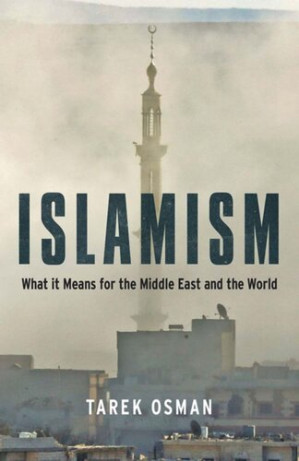
Islamism : What It Means for the Middle East and the World 🔍
Tarek Osman; OverDrive, Inc
Yale University Press, Yale University Press, New Haven, CT, 2016
English [en] · PDF · 6.8MB · 2016 · 📘 Book (non-fiction) · 🚀/lgli/lgrs/nexusstc/upload/zlib · Save
description
**An incisive analysis of Islamist movements in the Middle East**
A political, social, and cultural battle is currently raging in the Middle East. On one side are the Islamists, those who believe Islam should be the region’s primary identity. In opposition are nationalists, secularists, royal families, military establishments, and others who view Islamism as a serious threat to national security, historical identity, and a cohesive society.
This provocative, vitally important work explores the development of the largest, most influential Islamic groups in the Middle East over the past century. Tarek Osman examines why political Islam managed to win successive elections and how Islamist groups in various nations have responded after ascending to power. He dissects the alliances that have formed among Islamist factions and against them, addressing the important issues of Islamism’s compatibility with modernity, with the region’s experiences in the twentieth century, and its impact on social contracts and minorities. He explains what Salafism means, its evolution, and connections to jihadist groups in the Middle East. Osman speculates on what the Islamists’ prospects for the future will mean for the region and the rest of the world.
A political, social, and cultural battle is currently raging in the Middle East. On one side are the Islamists, those who believe Islam should be the region’s primary identity. In opposition are nationalists, secularists, royal families, military establishments, and others who view Islamism as a serious threat to national security, historical identity, and a cohesive society.
This provocative, vitally important work explores the development of the largest, most influential Islamic groups in the Middle East over the past century. Tarek Osman examines why political Islam managed to win successive elections and how Islamist groups in various nations have responded after ascending to power. He dissects the alliances that have formed among Islamist factions and against them, addressing the important issues of Islamism’s compatibility with modernity, with the region’s experiences in the twentieth century, and its impact on social contracts and minorities. He explains what Salafism means, its evolution, and connections to jihadist groups in the Middle East. Osman speculates on what the Islamists’ prospects for the future will mean for the region and the rest of the world.
Alternative filename
nexusstc/Islamism: What it Means for the Middle East and the World/e675129b51d5d93dd9053a31f2607f93.pdf
Alternative filename
lgli/10.12987_9780300216011.pdf
Alternative filename
lgrsnf/10.12987_9780300216011.pdf
Alternative title
Islamism : what it means to the Middle East and the world
Alternative author
Osman, Tarek
Alternative publisher
San Francisco Museum of Modern Art
Alternative publisher
Brandywine River Museum
Alternative publisher
Mariners' Museum, The
Alternative edition
United States, United States of America
Alternative edition
1, 2016
Alternative edition
2020
metadata comments
producers:
PyPDF2
PyPDF2
metadata comments
{"isbns":["0300216017","9780300216011"],"last_page":328,"publisher":"Yale University Press"}
Alternative description
"A political, social, and cultural battle is currently raging in the Middle East. On one side are the Islamists, those who believe Islam should be the region's primary identity. In opposition are nationalists, secularists, royal families, military establishments, and others who view Islamism as a serious threat to national security, historical identity, and a cohesive society. This provocative, vitally important work explores the development of the largest, most influential Islamic groups in the Middle East over the past century. Tarek Osman examines why political Islam managed to win successive elections and how Islamist groups in various nations have responded after ascending to power. He dissects the alliances that have formed among Islamist factions and against them, addressing the important issues of Islamism's compatibility with modernity, with the region's experiences in the twentieth century, and its impact on social contracts and minorities. He explains what Salafism means, its evolution, and connections to jihadist groups in the Middle East. Osman speculates on what the Islamists' prospects for the future will mean for the region and the rest of the world."--Publisher website.
Alternative description
<div>A political, social, and cultural battle is currently raging in the Middle East. On one side are the Islamists, those who believe Islam should be the region’s primary identity. In opposition are nationalists, secularists, royal families, military establishments, and others who view Islamism as a serious threat to national security, historical identity, and a cohesive society.<BR> <BR> This provocative, vitally important work explores the development of the largest, most influential Islamic groups in the Middle East over the past century. Tarek Osman examines why political Islam managed to win successive elections and how Islamist groups in various nations have responded after ascending to power. He dissects the alliances that have formed among Islamist factions and against them, addressing the important issues of Islamism’s compatibility with modernity, with the region’s experiences in the twentieth century, and its impact on social contracts and minorities. He explains what Salafism means, its evolution, and connections to jihadist groups in the Middle East. Osman speculates on what the Islamists’ prospects for the future will mean for the region and the rest of the world.</div>
date open sourced
2023-05-30
🚀 Fast downloads
Become a member to support the long-term preservation of books, papers, and more. To show our gratitude for your support, you get fast downloads. ❤️
- Fast Partner Server #1 (recommended)
- Fast Partner Server #2 (recommended)
- Fast Partner Server #3 (recommended)
- Fast Partner Server #4 (recommended)
- Fast Partner Server #5 (recommended)
- Fast Partner Server #6 (recommended)
- Fast Partner Server #7
- Fast Partner Server #8
- Fast Partner Server #9
- Fast Partner Server #10
- Fast Partner Server #11
- Fast Partner Server #12
🐢 Slow downloads
From trusted partners. More information in the FAQ. (might require browser verification — unlimited downloads!)
- Slow Partner Server #1 (slightly faster but with waitlist)
- Slow Partner Server #2 (slightly faster but with waitlist)
- Slow Partner Server #3 (slightly faster but with waitlist)
- Slow Partner Server #4 (slightly faster but with waitlist)
- Slow Partner Server #5 (no waitlist, but can be very slow)
- Slow Partner Server #6 (no waitlist, but can be very slow)
- Slow Partner Server #7 (no waitlist, but can be very slow)
- Slow Partner Server #8 (no waitlist, but can be very slow)
- Slow Partner Server #9 (no waitlist, but can be very slow)
- After downloading: Open in our viewer
All download options have the same file, and should be safe to use. That said, always be cautious when downloading files from the internet, especially from sites external to Anna’s Archive. For example, be sure to keep your devices updated.
External downloads
-
For large files, we recommend using a download manager to prevent interruptions.
Recommended download managers: JDownloader -
You will need an ebook or PDF reader to open the file, depending on the file format.
Recommended ebook readers: Anna’s Archive online viewer, ReadEra, and Calibre -
Use online tools to convert between formats.
Recommended conversion tools: CloudConvert and PrintFriendly -
You can send both PDF and EPUB files to your Kindle or Kobo eReader.
Recommended tools: Amazon‘s “Send to Kindle” and djazz‘s “Send to Kobo/Kindle” -
Support authors and libraries
✍️ If you like this and can afford it, consider buying the original, or supporting the authors directly.
📚 If this is available at your local library, consider borrowing it for free there.
Total downloads:
A “file MD5” is a hash that gets computed from the file contents, and is reasonably unique based on that content. All shadow libraries that we have indexed on here primarily use MD5s to identify files.
A file might appear in multiple shadow libraries. For information about the various datasets that we have compiled, see the Datasets page.
For information about this particular file, check out its JSON file. Live/debug JSON version. Live/debug page.