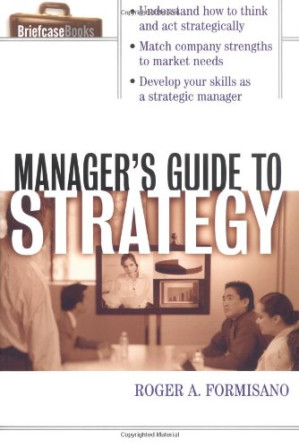
The Manager's Guide to Strategy 🔍
Roger A. Formisano
McGraw-Hill Companies, The, 1 edition, October 20, 2003
English [en] · PDF · 2.9MB · 2003 · 📘 Book (non-fiction) · 🚀/lgli/lgrs/nexusstc/upload/zlib · Save
description
I enjoyed reading this book which I found to be fascinating and enlightening. The book describes strategy and its role in ensuring that organisations achieve their mission. It is a comprehensive book on various aspects of strategy including the need to focus on customer needs, environmental analysis, strategy formulation, strategy implementation, corrective adjustments to strategy with time and the process of ensuring that employees and other stakeholders are motivated to ensure the success of the strategy.
The book is well written, well presented and easy to follow and understand. It is very practical and with many good examples. I would strongly recommend managers at all levels to read this interesting, practical and insightful book on strategy. The book is also useful and handy for students doing an MBA or other postgraduate studies in business.
Alternative filename
nexusstc/The Manager's Guide to Strategy/e819b1ba666952e45d3ee7503ebf8c5c.pdf
Alternative filename
lgli/Formisano R. The Managers Guide to Strategy (MGH, 2003)(ISBN 9780071421720)(O)(240s).pdf
Alternative filename
lgrsnf/Formisano R. The Managers Guide to Strategy (MGH, 2003)(ISBN 9780071421720)(O)(240s).pdf
Alternative author
Formisano, Roger
Alternative publisher
McGraw-Hill School Education Group
Alternative publisher
Irwin Professional Publishing
Alternative publisher
Oracle Press
Alternative publisher
McGraw Hill
Alternative edition
McGraw Hill LLC Professional Division, New York, 2004
Alternative edition
United States, United States of America
Alternative edition
Briefcase book, New York, ©2004
Alternative edition
Briefcase book, New York, 2003
Alternative edition
Blacklick, Oct. 2003
Alternative edition
1, PS, 2003
metadata comments
0
metadata comments
lg272996
metadata comments
{"edition":"1","isbns":["0071421726","9780071421720"],"last_page":240,"publisher":"McGraw-Hill"}
Alternative description
Cover......Page 1
Copyright......Page 6
Contents......Page 7
Preface......Page 11
1. What Is Business Strategy?......Page 17
The Power of Business......Page 18
The Basics of Strategy......Page 21
What Is Our Business Idea?......Page 23
What Is Our Business Purpose?......Page 25
What Is Our Advantage?......Page 26
Who Are Our Customers?......Page 27
What Is Our Product?......Page 29
How Do We Reach the Market?......Page 31
What Trends and New Factors Will Change Our Business?......Page 34
How Shall We Do Business?......Page 35
A Word About Strategy Implementation and Evaluation......Page 37
Manager's Checklist for Chapter 1......Page 38
2. Goal Setting: The First Step in Strategy......Page 40
Corporate Goals......Page 41
"The Vision Thing"......Page 42
Constructing a Corporate Vision......Page 45
Products and Services......Page 47
Customers......Page 48
Markets......Page 49
Putting It All Together......Page 53
Organizational Goals That Make Sense......Page 55
Manager's Checklist for Chapter 2......Page 57
Reference......Page 58
3. A Strategy Road Map......Page 59
Where Is Strategy Born?......Page 60
Evaluating Current Performance......Page 62
Environmental Analysis......Page 66
Social Factors......Page 67
Economic Factors......Page 68
Political and Regulatory Factors......Page 69
Technological Factors......Page 70
Structure......Page 72
Industry Evolution......Page 73
Competition......Page 75
Internal Analysis......Page 76
Resources......Page 77
Culture......Page 78
So Where Are We Now?......Page 79
SWOT Analysis......Page 80
Evaluate Options, Evaluate Results......Page 81
Manager's Checklist for Chapter 3......Page 83
4. Customer Analysis......Page 84
Steps in Customer Analysis......Page 86
Who Are Our Customers? Who Buys from Competitors?......Page 87
Point-of-Sale Information......Page 91
Customer Surveys......Page 93
Focus Groups......Page 95
Can We Meet the Needs of Those Buying from Competitors, Without Sacrificing Value to Our Customers?......Page 98
What Else Can We Do for Our Customers to Create Value for Them and for Ourselves?......Page 104
Manager's Checklist for Chapter 4......Page 106
5. Internal Business Analysis......Page 107
Results Audit......Page 108
People Audit......Page 109
Functions and Processes Audit......Page 113
Relationships Audit......Page 116
SWOT Analysis......Page 117
Strengths......Page 118
Weaknesses......Page 120
Opportunities......Page 122
Putting the SWOT Analysis Together......Page 123
Manager's Checklist for Chapter 5......Page 125
6. Strategic Choices......Page 126
Low-Cost Producer Strategy......Page 127
Differentiator Strategy......Page 128
Choosing and Committing......Page 129
Strategic Direction......Page 131
Product and Market Focus......Page 132
Resources......Page 133
Operational Capabilities......Page 135
Organization......Page 136
Aligning Resources, Operational Capabilities, and Organization......Page 137
Classes of Strategies......Page 138
Integration Strategies......Page 139
Market Development Strategies......Page 141
Product Development Strategies......Page 142
Diversification Strategies......Page 143
Divestiture Strategies......Page 145
Manager's Checklist for Chapter 6......Page 146
7. Strategic Thinking: Optimizing Assets......Page 147
Asset Optimization......Page 148
People......Page 150
Property......Page 156
Relationships......Page 162
Manager's Checklist for Chapter 7......Page 165
8. Strategic Thinking: Core Business Analysis......Page 166
Core Research......Page 167
Defining the Core......Page 168
Evaluate the Core Markets......Page 171
Deliver Excellence in the Operation of the Core Business......Page 174
Explore the Financial Performance Potential Without Anything New......Page 176
Look to Adjacencies......Page 178
Manager's Checklist for Chapter 8......Page 187
9. Strategic Thinking: Ten Tested Business Strategies......Page 188
Consolidation......Page 189
Bypassing......Page 192
Value Migration......Page 194
Teaming Up......Page 196
Digital Delivery......Page 198
Deep Connections......Page 200
ASAP......Page 201
Customization......Page 203
Mass Market......Page 204
Fix-It-for-Me......Page 205
This Is Interesting, but What Do I Do Now?......Page 206
Manager's Checklist for Chapter 9......Page 207
10. Implementing Strategic Decisions......Page 208
Four Key Principles......Page 209
A System for Implementing Strategy: The Balanced Scorecard......Page 212
Elements of the Balanced Scorecard Approach......Page 213
Background......Page 214
Strategy......Page 215
Balanced Scorecard: La Casa di Poggi......Page 216
Balanced Scorecard: Summary......Page 220
A Final Thought......Page 221
Manager's Checklist for Chapter 10......Page 222
References for Strategic Planning......Page 225
Index......Page 229
Copyright......Page 6
Contents......Page 7
Preface......Page 11
1. What Is Business Strategy?......Page 17
The Power of Business......Page 18
The Basics of Strategy......Page 21
What Is Our Business Idea?......Page 23
What Is Our Business Purpose?......Page 25
What Is Our Advantage?......Page 26
Who Are Our Customers?......Page 27
What Is Our Product?......Page 29
How Do We Reach the Market?......Page 31
What Trends and New Factors Will Change Our Business?......Page 34
How Shall We Do Business?......Page 35
A Word About Strategy Implementation and Evaluation......Page 37
Manager's Checklist for Chapter 1......Page 38
2. Goal Setting: The First Step in Strategy......Page 40
Corporate Goals......Page 41
"The Vision Thing"......Page 42
Constructing a Corporate Vision......Page 45
Products and Services......Page 47
Customers......Page 48
Markets......Page 49
Putting It All Together......Page 53
Organizational Goals That Make Sense......Page 55
Manager's Checklist for Chapter 2......Page 57
Reference......Page 58
3. A Strategy Road Map......Page 59
Where Is Strategy Born?......Page 60
Evaluating Current Performance......Page 62
Environmental Analysis......Page 66
Social Factors......Page 67
Economic Factors......Page 68
Political and Regulatory Factors......Page 69
Technological Factors......Page 70
Structure......Page 72
Industry Evolution......Page 73
Competition......Page 75
Internal Analysis......Page 76
Resources......Page 77
Culture......Page 78
So Where Are We Now?......Page 79
SWOT Analysis......Page 80
Evaluate Options, Evaluate Results......Page 81
Manager's Checklist for Chapter 3......Page 83
4. Customer Analysis......Page 84
Steps in Customer Analysis......Page 86
Who Are Our Customers? Who Buys from Competitors?......Page 87
Point-of-Sale Information......Page 91
Customer Surveys......Page 93
Focus Groups......Page 95
Can We Meet the Needs of Those Buying from Competitors, Without Sacrificing Value to Our Customers?......Page 98
What Else Can We Do for Our Customers to Create Value for Them and for Ourselves?......Page 104
Manager's Checklist for Chapter 4......Page 106
5. Internal Business Analysis......Page 107
Results Audit......Page 108
People Audit......Page 109
Functions and Processes Audit......Page 113
Relationships Audit......Page 116
SWOT Analysis......Page 117
Strengths......Page 118
Weaknesses......Page 120
Opportunities......Page 122
Putting the SWOT Analysis Together......Page 123
Manager's Checklist for Chapter 5......Page 125
6. Strategic Choices......Page 126
Low-Cost Producer Strategy......Page 127
Differentiator Strategy......Page 128
Choosing and Committing......Page 129
Strategic Direction......Page 131
Product and Market Focus......Page 132
Resources......Page 133
Operational Capabilities......Page 135
Organization......Page 136
Aligning Resources, Operational Capabilities, and Organization......Page 137
Classes of Strategies......Page 138
Integration Strategies......Page 139
Market Development Strategies......Page 141
Product Development Strategies......Page 142
Diversification Strategies......Page 143
Divestiture Strategies......Page 145
Manager's Checklist for Chapter 6......Page 146
7. Strategic Thinking: Optimizing Assets......Page 147
Asset Optimization......Page 148
People......Page 150
Property......Page 156
Relationships......Page 162
Manager's Checklist for Chapter 7......Page 165
8. Strategic Thinking: Core Business Analysis......Page 166
Core Research......Page 167
Defining the Core......Page 168
Evaluate the Core Markets......Page 171
Deliver Excellence in the Operation of the Core Business......Page 174
Explore the Financial Performance Potential Without Anything New......Page 176
Look to Adjacencies......Page 178
Manager's Checklist for Chapter 8......Page 187
9. Strategic Thinking: Ten Tested Business Strategies......Page 188
Consolidation......Page 189
Bypassing......Page 192
Value Migration......Page 194
Teaming Up......Page 196
Digital Delivery......Page 198
Deep Connections......Page 200
ASAP......Page 201
Customization......Page 203
Mass Market......Page 204
Fix-It-for-Me......Page 205
This Is Interesting, but What Do I Do Now?......Page 206
Manager's Checklist for Chapter 9......Page 207
10. Implementing Strategic Decisions......Page 208
Four Key Principles......Page 209
A System for Implementing Strategy: The Balanced Scorecard......Page 212
Elements of the Balanced Scorecard Approach......Page 213
Background......Page 214
Strategy......Page 215
Balanced Scorecard: La Casa di Poggi......Page 216
Balanced Scorecard: Summary......Page 220
A Final Thought......Page 221
Manager's Checklist for Chapter 10......Page 222
References for Strategic Planning......Page 225
Index......Page 229
Alternative description
Cover 1
Copyright 6
Contents 7
Preface 11
1. What Is Business Strategy? 17
The Game of Business 18
The Power of Business 18
The Basics of Strategy 21
An Overview of Strategy Development 23
What Is Our Business Idea? 23
What Is Our Business Purpose? 25
What Is Our Advantage? 26
Who Are Our Customers? 27
What Is Our Product? 29
How Do We Reach the Market? 31
What Trends and New Factors Will Change Our Business? 34
How Shall We Do Business? 35
A Word About Strategy Implementation and Evaluation 37
Manager's Checklist for Chapter 1 38
2. Goal Setting: The First Step in Strategy 40
Corporate Goals 41
"The Vision Thing" 42
Constructing a Corporate Vision 45
Mission Statements 47
Products and Services 47
Customers 48
Markets 49
Putting It All Together 53
Organizational Goals That Make Sense 55
Manager's Checklist for Chapter 2 57
Reference 58
3. A Strategy Road Map 59
Where Is Strategy Born? 60
Evaluating Current Performance 62
Environmental Analysis 66
Social Factors 67
Economic Factors 68
Political and Regulatory Factors 69
Technological Factors 70
Industry Analysis 72
Structure 72
Industry Evolution 73
Competition 75
Internal Analysis 76
Structure 77
Resources 77
Culture 78
So Where Are We Now? 79
Strategy Formulation 80
SWOT Analysis 80
Developing Strategy Options 81
Evaluate Options, Evaluate Results 81
Manager's Checklist for Chapter 3 83
4. Customer Analysis 84
Basic Customer Questions 86
Steps in Customer Analysis 86
Who Are Our Customers? Who Buys from Competitors? 87
Why Do They Buy from Us? Why Do Some Buy from Competitors? 91
Point-of-Sale Information 91
Customer Surveys 93
Focus Groups 95
Can We Meet the Needs of Those Buying from Competitors, Without Sacrificing Value to Our Customers? 98
What Else Can We Do for Our Customers to Create Value for Them and for Ourselves? 104
Manager's Checklist for Chapter 4 106
5. Internal Business Analysis 107
Internal Audit 108
Results Audit 108
People Audit 109
Functions and Processes Audit 113
Relationships Audit 116
SWOT Analysis 117
Strengths 118
Weaknesses 120
Opportunities 122
Putting the SWOT Analysis Together 123
Manager's Checklist for Chapter 5 125
6. Strategic Choices 126
Generic Strategies 127
Low-Cost Producer Strategy 127
Differentiator Strategy 128
Niche Player Strategy 129
Choosing and Committing 129
Positioning 131
Strategic Direction 131
Product and Market Focus 132
Execution 133
Resources 133
Operational Capabilities 135
Organization 136
Aligning Resources, Operational Capabilities, and Organization 137
Classes of Strategies 138
Integration Strategies 139
Market Penetration Strategies 141
Market Development Strategies 141
Product Development Strategies 142
Diversification Strategies 143
Divestiture Strategies 145
On to Strategic Thinking 146
Manager's Checklist for Chapter 6 146
7. Strategic Thinking: Optimizing Assets 147
Asset Optimization 148
Asset Categories 150
People 150
Property 156
Relationships 162
Manager's Checklist for Chapter 7 165
8. Strategic Thinking: Core Business Analysis 166
Core Research 167
Strategic Development Using the Core Business Approach 168
Defining the Core 168
Working the Core 171
Evaluate the Core Markets 171
Deliver Excellence in the Operation of the Core Business 174
Explore the Financial Performance Potential Without Anything New 176
Penetrate the Market Deeply 178
Look to Adjacencies 178
Manager's Checklist for Chapter 8 187
9. Strategic Thinking: Ten Tested Business Strategies 188
Background 189
Consolidation 189
Bypassing 192
Value Migration 194
Teaming Up 196
Digital Delivery 198
Deep Connections 200
ASAP 201
Customization 203
Mass Market 204
Fix-It-for-Me 205
This Is Interesting, but What Do I Do Now? 206
Manager's Checklist for Chapter 9 207
10. Implementing Strategic Decisions 208
Strategic Decision Making 209
Four Key Principles 209
A System for Implementing Strategy: The Balanced Scorecard 212
Elements of the Balanced Scorecard Approach 213
Balanced Scorecard in Action 214
Background 214
Strategy 215
Balanced Scorecard: La Casa di Poggi 216
Balanced Scorecard: Summary 220
Change 221
A Final Thought 221
Manager's Checklist for Chapter 10 222
References for Strategic Planning 225
Index 229
Copyright 6
Contents 7
Preface 11
1. What Is Business Strategy? 17
The Game of Business 18
The Power of Business 18
The Basics of Strategy 21
An Overview of Strategy Development 23
What Is Our Business Idea? 23
What Is Our Business Purpose? 25
What Is Our Advantage? 26
Who Are Our Customers? 27
What Is Our Product? 29
How Do We Reach the Market? 31
What Trends and New Factors Will Change Our Business? 34
How Shall We Do Business? 35
A Word About Strategy Implementation and Evaluation 37
Manager's Checklist for Chapter 1 38
2. Goal Setting: The First Step in Strategy 40
Corporate Goals 41
"The Vision Thing" 42
Constructing a Corporate Vision 45
Mission Statements 47
Products and Services 47
Customers 48
Markets 49
Putting It All Together 53
Organizational Goals That Make Sense 55
Manager's Checklist for Chapter 2 57
Reference 58
3. A Strategy Road Map 59
Where Is Strategy Born? 60
Evaluating Current Performance 62
Environmental Analysis 66
Social Factors 67
Economic Factors 68
Political and Regulatory Factors 69
Technological Factors 70
Industry Analysis 72
Structure 72
Industry Evolution 73
Competition 75
Internal Analysis 76
Structure 77
Resources 77
Culture 78
So Where Are We Now? 79
Strategy Formulation 80
SWOT Analysis 80
Developing Strategy Options 81
Evaluate Options, Evaluate Results 81
Manager's Checklist for Chapter 3 83
4. Customer Analysis 84
Basic Customer Questions 86
Steps in Customer Analysis 86
Who Are Our Customers? Who Buys from Competitors? 87
Why Do They Buy from Us? Why Do Some Buy from Competitors? 91
Point-of-Sale Information 91
Customer Surveys 93
Focus Groups 95
Can We Meet the Needs of Those Buying from Competitors, Without Sacrificing Value to Our Customers? 98
What Else Can We Do for Our Customers to Create Value for Them and for Ourselves? 104
Manager's Checklist for Chapter 4 106
5. Internal Business Analysis 107
Internal Audit 108
Results Audit 108
People Audit 109
Functions and Processes Audit 113
Relationships Audit 116
SWOT Analysis 117
Strengths 118
Weaknesses 120
Opportunities 122
Putting the SWOT Analysis Together 123
Manager's Checklist for Chapter 5 125
6. Strategic Choices 126
Generic Strategies 127
Low-Cost Producer Strategy 127
Differentiator Strategy 128
Niche Player Strategy 129
Choosing and Committing 129
Positioning 131
Strategic Direction 131
Product and Market Focus 132
Execution 133
Resources 133
Operational Capabilities 135
Organization 136
Aligning Resources, Operational Capabilities, and Organization 137
Classes of Strategies 138
Integration Strategies 139
Market Penetration Strategies 141
Market Development Strategies 141
Product Development Strategies 142
Diversification Strategies 143
Divestiture Strategies 145
On to Strategic Thinking 146
Manager's Checklist for Chapter 6 146
7. Strategic Thinking: Optimizing Assets 147
Asset Optimization 148
Asset Categories 150
People 150
Property 156
Relationships 162
Manager's Checklist for Chapter 7 165
8. Strategic Thinking: Core Business Analysis 166
Core Research 167
Strategic Development Using the Core Business Approach 168
Defining the Core 168
Working the Core 171
Evaluate the Core Markets 171
Deliver Excellence in the Operation of the Core Business 174
Explore the Financial Performance Potential Without Anything New 176
Penetrate the Market Deeply 178
Look to Adjacencies 178
Manager's Checklist for Chapter 8 187
9. Strategic Thinking: Ten Tested Business Strategies 188
Background 189
Consolidation 189
Bypassing 192
Value Migration 194
Teaming Up 196
Digital Delivery 198
Deep Connections 200
ASAP 201
Customization 203
Mass Market 204
Fix-It-for-Me 205
This Is Interesting, but What Do I Do Now? 206
Manager's Checklist for Chapter 9 207
10. Implementing Strategic Decisions 208
Strategic Decision Making 209
Four Key Principles 209
A System for Implementing Strategy: The Balanced Scorecard 212
Elements of the Balanced Scorecard Approach 213
Balanced Scorecard in Action 214
Background 214
Strategy 215
Balanced Scorecard: La Casa di Poggi 216
Balanced Scorecard: Summary 220
Change 221
A Final Thought 221
Manager's Checklist for Chapter 10 222
References for Strategic Planning 225
Index 229
Alternative description
<p><P><b>How Top Managers Create and Implement Strategies that Benefit Their Companies <i>and </i>Their Careers </b><P> As a manager, every decision you make must both support and drive your organization's strategic goals. But first you must understand those goals—what they are, how they were arrived at, how you can contribute to them, and what you can do to help achieve them.<P><i>Manager's Guide to Strategy </i>provides you with proven, up-to-date concepts, tools, and insights for effective strategy formulation, along with myriad examples of successful and not-so-successful strategies from real companies. The latest results-focused volume in McGraw-Hill's bestselling Briefcase Books series, this step-by-step introduction to strategy and strategic planning will show you how to:<P><ul> <li>Formulate long-term goals, and create a plan to achieve those goals <li>Factor your best customers and their needs into every strategic decision <li>Evaluate and revise strategies to take advantage of new opportunities <P></ul><P>Successful companies and managers recognize that strategy development is a continuous, iterative, and interactive process. Learn how to both think and act strategically—for the benefit of your organization, your customers, and your career—in <i>Manager's Guide to Strategy</i>.<P><b>Briefcase Books </b>are written <i>specifically </i>for today's busy manager. Each book features eye-catching icons, checklists, and sidebars to guide managers step-by-step through everyday workplace situations. Look for these innovative design features to help you navigate through each page:<P><b>[Key Terms icon] </b>Clear definitions of key strategy development terms and jargon<P><b>[Smart Managing icon] </b>Ideas for intelligent strategy development and implementation<P><b>[Tricks of the Trade icon] </b>How-to hints for efficient, effective strategic management<P><b>[Mistake proofing icon] </b>Advice for minimizing errors when planning strategy<P><b>[Caution icon] </b>Warning signs of strategic planning attempts going wrong<P><b>[For Example icon] </b>Examples from a variety of companies, large and small<P><b>[Tools icon] </b>Boxes where you'll find specific strategic planning procedures<P><P><b>Roger A. Formisano </b>is a professor of executive education at UW-Madison, focused on the areas of strategy, leadership, governance, and mergers and acquisitions.</p>
Alternative description
Annotation How Top Managers Create and Implement Strategies that Benefit Their Companies "and Their Careers As a manager, every decision you make must both support and drive your organization's strategic goals. But first you must understand those goals--what they are, how they were arrived at, how you can contribute to them, and what you can do to help achieve them."Manager's Guide to Strategy provides you with proven, up-to-date concepts, tools, and insights for effective strategy formulation, along with myriad examples of successful and not-so-successful strategies from real companies. The latest results-focused volume in McGraw-Hill's bestselling Briefcase Books series, this step-by-step introduction to strategy and strategic planning will show you how to: Formulate long-term goals, and create a plan to achieve those goals Factor your best customers and their needs into every strategic decision Evaluate and revise strategies to take advantage of new opportunities Successful companies and managers recognize, that strategy development is a continuous, iterative, and interactive process. Learn how to both think and act strategically--for the benefit of your organization, your customers, and your career--in "Manager's Guide to Strategy. Briefcase Books are written "specifically for today's busy manager. Each book features eye-catching icons, checklists, and sidebars to guide managers step-by-step through everyday workplace situations. Look for these innovative design features to help you navigate through each page: [Key Terms icon] Clear definitions of key strategy development terms and jargon[Smart Managing icon] Ideas for intelligent strategy development andimplementation[Tricks of the Trade icon] How-to hints for efficient, effective strategic management[Mistake proofing icon] Advice for minimizing errors when planning strategy[Caution icon] Warning signs of strategic planning attempts goi
Alternative description
Translated into 16 languages! The reader-friendly, icon-rich Briefcase Books series is must reading for all managers at every level. All managers, whether brand new to their positions or well-established in the organizational hierarchy, can use a little "brushing up" now and then. The skills-based Briefcase Books series is filled with ideas and strategies to help managers become more capable, efficient, effective, and valuable to their organizations. The best strategies--and the most capable managers--are those that effectively match an organization's capabilities with its customers' needs. The Manager's Guide to Strategy shows managers how to analyze a firm's position in the marketplace, formulate and execute a profitable strategy, then evaluate and revise that strategy over time. It details techniques for making employees excited about and committed to a strategy, and explains how to use strategy to take advantage of opportunities as they arise--to the mutual benefit of both a company and its customers.
date open sourced
2010-05-31
🚀 Fast downloads
Become a member to support the long-term preservation of books, papers, and more. To show our gratitude for your support, you get fast downloads. ❤️
- Fast Partner Server #1 (recommended)
- Fast Partner Server #2 (recommended)
- Fast Partner Server #3 (recommended)
- Fast Partner Server #4 (recommended)
- Fast Partner Server #5 (recommended)
- Fast Partner Server #6 (recommended)
- Fast Partner Server #7
- Fast Partner Server #8
- Fast Partner Server #9
- Fast Partner Server #10
- Fast Partner Server #11
- Fast Partner Server #12
🐢 Slow downloads
From trusted partners. More information in the FAQ. (might require browser verification — unlimited downloads!)
- Slow Partner Server #1 (slightly faster but with waitlist)
- Slow Partner Server #2 (slightly faster but with waitlist)
- Slow Partner Server #3 (slightly faster but with waitlist)
- Slow Partner Server #4 (slightly faster but with waitlist)
- Slow Partner Server #5 (no waitlist, but can be very slow)
- Slow Partner Server #6 (no waitlist, but can be very slow)
- Slow Partner Server #7 (no waitlist, but can be very slow)
- Slow Partner Server #8 (no waitlist, but can be very slow)
- Slow Partner Server #9 (no waitlist, but can be very slow)
- After downloading: Open in our viewer
External downloads
-
For large files, we recommend using a download manager to prevent interruptions.
Recommended download managers: JDownloader -
You will need an ebook or PDF reader to open the file, depending on the file format.
Recommended ebook readers: Anna’s Archive online viewer, ReadEra, and Calibre -
Use online tools to convert between formats.
Recommended conversion tools: CloudConvert and PrintFriendly -
You can send both PDF and EPUB files to your Kindle or Kobo eReader.
Recommended tools: Amazon‘s “Send to Kindle” and djazz‘s “Send to Kobo/Kindle” -
Support authors and libraries
✍️ If you like this and can afford it, consider buying the original, or supporting the authors directly.
📚 If this is available at your local library, consider borrowing it for free there.
Total downloads:
A “file MD5” is a hash that gets computed from the file contents, and is reasonably unique based on that content. All shadow libraries that we have indexed on here primarily use MD5s to identify files.
A file might appear in multiple shadow libraries. For information about the various datasets that we have compiled, see the Datasets page.
For information about this particular file, check out its JSON file. Live/debug JSON version. Live/debug page.