upload/degruyter/DeGruyter Partners/University of Pennsylvania Press [RETAIL]/10.9783_9780812295467.pdf
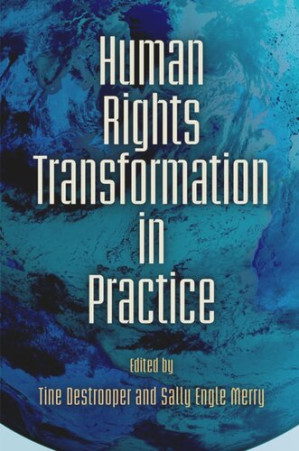
Human Rights Transformation in Practice (Pennsylvania Studies in Human Rights) 🔍
Tine Destrooper (editor); Sally Engle Merry (editor)
University of Pennsylvania Press, Inc., 2019 dec 31
English [en] · PDF · 1.8MB · 2019 · 📘 Book (non-fiction) · 🚀/lgli/lgrs/nexusstc/upload/zlib · Save
description
Human rights are increasingly described as being in crisis, but the ideals inherent in them remain appealing. __Human Rights Transformation in Practice__ demonstrates how these ideals are embedded in everyday social practice and activism, and how they can be reinterpreted and redefined in a variety of contexts and for a range of problems.
Human rights are increasingly described as being in crisis, but the ideals inherent in them remain appealing. __Human Rights Transformation in Practice__ demonstrates how these ideals are embedded in everyday social practice and activism, and how they can be reinterpreted and redefined in a variety of contexts and for a range of problems.
Human rights are increasingly described as being in crisis, but the ideals inherent in them remain appealing. __Human Rights Transformation in Practice__ demonstrates how these ideals are embedded in everyday social practice and activism, and how they can be reinterpreted and redefined in a variety of contexts and for a range of problems.
Alternative filename
nexusstc/Human Rights Transformation in Practice/e8afa8289e7741f84a393d53e34d22cb.pdf
Alternative filename
lgli/10.9783_9780812295467.pdf
Alternative filename
lgrsnf/10.9783_9780812295467.pdf
Alternative author
Tine Destrooper; Sally Engle Merry; ProQuest (Firme)
Alternative author
Destrooper, Tine; Merry, Sally Engle
Alternative edition
Pennsylvania studies in human rights, First edition, Philadelphia, 2018
Alternative edition
Lightning Source Inc. (Tier 2), Philadelphia, 2018
Alternative edition
United States, United States of America
Alternative edition
1, 2018
metadata comments
degruyter.com
metadata comments
producers:
iTextSharp 5.0.6 (c) 1T3XT BVBA
iTextSharp 5.0.6 (c) 1T3XT BVBA
metadata comments
{"isbns":["0812295463","9780812295467"],"last_page":296,"publisher":"University of Pennsylvania Press"}
Alternative description
<p>Human rights are increasingly described as being in crisis. But are human rights really on the verge of disappearing? <i>Human Rights Transformation in Practice</i> argues that it is certainly the case that human rights organizations in many parts of the world are under threat, but that the ideals of justice, fairness, and equality inherent in human rights remain appealing globally—and that recognizing the continuing importance and strength of human rights requires looking for them in different places. These places are not simply the Human Rights Council or regular meetings of monitoring committees but also the offices of small NGOs and the streets of poor cities.<br><br>In <i>Human Rights Transformation in Practice</i>, editors Tine Destrooper and Sally Engle Merry collect various approaches to the questions of how human rights travel and how they are transformed, offering a corrective to those perspectives locating human rights only in formal institutions and laws. Contributors to the volume empirically examine several hypotheses about the factors that impact the vernacularization and localization of human rights: how human rights ideals become formalized in local legal systems, sometimes become customary norms, and, at other times, fail to take hold. Case studies explore the ways in which local struggles may inspire the further development of human rights norms at the transnational level. Through these analyses, the essays in <i>Human Rights Transformation in Practice</i> consider how the vernacularization and localization processes may be shaped by different causes of human rights violations, the perceived nature of violations, and the existence of networks and formal avenues for information-sharing.<br><br><b>Contributors</b>: Sara L. M. Davis, Ellen Desmet, Tine Destrooper, Mark Goodale, Ken MacLean, Samuel Martínez, Sally Engle Merry, Charmain Mohamed, Vasuki Nesiah, Arne Vandenbogaerde, Wouter Vandenhole, Johannes M. Waldmüller.</p>
Alternative description
Human rights are increasingly described as being in crisis. But are human rights really on the verge of disappearing? Human Rights Transformation in Practice argues that it is certainly the case that human rights organizations in many parts of the world are under threat, but that the ideals of justice, fairness, and equality inherent in human rights remain appealing globally—and that recognizing the continuing importance and strength of human rights requires looking for them in different places. These places are not simply the Human Rights Council or regular meetings of monitoring committees but also the offices of small NGOs and the streets of poor cities.
In Human Rights Transformation in Practice , editors Tine Destrooper and Sally Engle Merry collect various approaches to the questions of how human rights travel and how they are transformed, offering a corrective to those perspectives locating human rights only in formal institutions and laws. Contributors to the volume empirically examine several hypotheses about the factors that impact the vernacularization and localization of human rights: how human rights ideals become formalized in local legal systems, sometimes become customary norms, and, at other times, fail to take hold. Case studies explore the ways in which local struggles may inspire the further development of human rights norms at the transnational level. Through these analyses, the essays in Human Rights Transformation in Practice consider how the vernacularization and localization processes may be shaped by different causes of human rights violations, the perceived nature of violations, and the existence of networks and formal avenues for information-sharing.
Contributors : Sara L. M. Davis, Ellen Desmet, Tine Destrooper, Mark Goodale, Ken MacLean, Samuel Martínez, Sally Engle Merry, Charmain Mohamed, Vasuki Nesiah, Arne Vandenbogaerde, Wouter Vandenhole, Johannes M. Waldmüller.
In Human Rights Transformation in Practice , editors Tine Destrooper and Sally Engle Merry collect various approaches to the questions of how human rights travel and how they are transformed, offering a corrective to those perspectives locating human rights only in formal institutions and laws. Contributors to the volume empirically examine several hypotheses about the factors that impact the vernacularization and localization of human rights: how human rights ideals become formalized in local legal systems, sometimes become customary norms, and, at other times, fail to take hold. Case studies explore the ways in which local struggles may inspire the further development of human rights norms at the transnational level. Through these analyses, the essays in Human Rights Transformation in Practice consider how the vernacularization and localization processes may be shaped by different causes of human rights violations, the perceived nature of violations, and the existence of networks and formal avenues for information-sharing.
Contributors : Sara L. M. Davis, Ellen Desmet, Tine Destrooper, Mark Goodale, Ken MacLean, Samuel Martínez, Sally Engle Merry, Charmain Mohamed, Vasuki Nesiah, Arne Vandenbogaerde, Wouter Vandenhole, Johannes M. Waldmüller.
Alternative description
Contents
Preface
List of Abbreviations
Introduction. On Travel, Translation, and Transformation
Part I. Initiatives by Formal Human Rights Norm-Setters
Chapter 1. The Escher–Human Rights Escalator: Technologies of the Local
Chapter 2. Accommodating Local Human Rights Practice at the UN Human Rights Council
Chapter 3. Human Rights-Based Approaches to Development: The Local, Travel, and Transformation
Part II. Interactions Between Social Mobilization and Legal Claim-Making
Chapter 4. Lost Through Translation: Political Dialectics of Eco-Social and Collective Rights in Ecuador
Chapter 5. Upstreaming or Streamlining? Translating Social Movement Agendas into Legal Claims in Nepal and the Dominican Republic
Chapter 6. New Visibilities: Challenging Torture and Impunity in Vietnam
Part III. Human Rights Programs and the Proliferation of Nonconfrontational Methods
Chapter 7. Rural-Urban Migration and Education in China: Unraveling Responses to Injurious Experiences
Chapter 8. Localization “Light”: The Travel and Transformation of Nonempowering Human Rights Norms
Chapter 9. Global Rights, Local Risk: Community Advocacy on Right to Health in China
Afterword. Our Vernacular Futures
List of Contributors
Index
Acknowledgments
Preface
List of Abbreviations
Introduction. On Travel, Translation, and Transformation
Part I. Initiatives by Formal Human Rights Norm-Setters
Chapter 1. The Escher–Human Rights Escalator: Technologies of the Local
Chapter 2. Accommodating Local Human Rights Practice at the UN Human Rights Council
Chapter 3. Human Rights-Based Approaches to Development: The Local, Travel, and Transformation
Part II. Interactions Between Social Mobilization and Legal Claim-Making
Chapter 4. Lost Through Translation: Political Dialectics of Eco-Social and Collective Rights in Ecuador
Chapter 5. Upstreaming or Streamlining? Translating Social Movement Agendas into Legal Claims in Nepal and the Dominican Republic
Chapter 6. New Visibilities: Challenging Torture and Impunity in Vietnam
Part III. Human Rights Programs and the Proliferation of Nonconfrontational Methods
Chapter 7. Rural-Urban Migration and Education in China: Unraveling Responses to Injurious Experiences
Chapter 8. Localization “Light”: The Travel and Transformation of Nonempowering Human Rights Norms
Chapter 9. Global Rights, Local Risk: Community Advocacy on Right to Health in China
Afterword. Our Vernacular Futures
List of Contributors
Index
Acknowledgments
date open sourced
2023-08-26
🚀 Fast downloads
Become a member to support the long-term preservation of books, papers, and more. To show our gratitude for your support, you get fast downloads. ❤️
- Fast Partner Server #1 (recommended)
- Fast Partner Server #2 (recommended)
- Fast Partner Server #3 (recommended)
- Fast Partner Server #4 (recommended)
- Fast Partner Server #5 (recommended)
- Fast Partner Server #6 (recommended)
- Fast Partner Server #7
- Fast Partner Server #8
- Fast Partner Server #9
- Fast Partner Server #10
- Fast Partner Server #11
- Fast Partner Server #12
🐢 Slow downloads
From trusted partners. More information in the FAQ. (might require browser verification — unlimited downloads!)
- Slow Partner Server #1 (slightly faster but with waitlist)
- Slow Partner Server #2 (slightly faster but with waitlist)
- Slow Partner Server #3 (slightly faster but with waitlist)
- Slow Partner Server #4 (slightly faster but with waitlist)
- Slow Partner Server #5 (no waitlist, but can be very slow)
- Slow Partner Server #6 (no waitlist, but can be very slow)
- Slow Partner Server #7 (no waitlist, but can be very slow)
- Slow Partner Server #8 (no waitlist, but can be very slow)
- Slow Partner Server #9 (no waitlist, but can be very slow)
- After downloading: Open in our viewer
All download options have the same file, and should be safe to use. That said, always be cautious when downloading files from the internet, especially from sites external to Anna’s Archive. For example, be sure to keep your devices updated.
External downloads
-
For large files, we recommend using a download manager to prevent interruptions.
Recommended download managers: JDownloader -
You will need an ebook or PDF reader to open the file, depending on the file format.
Recommended ebook readers: Anna’s Archive online viewer, ReadEra, and Calibre -
Use online tools to convert between formats.
Recommended conversion tools: CloudConvert and PrintFriendly -
You can send both PDF and EPUB files to your Kindle or Kobo eReader.
Recommended tools: Amazon‘s “Send to Kindle” and djazz‘s “Send to Kobo/Kindle” -
Support authors and libraries
✍️ If you like this and can afford it, consider buying the original, or supporting the authors directly.
📚 If this is available at your local library, consider borrowing it for free there.
Total downloads:
A “file MD5” is a hash that gets computed from the file contents, and is reasonably unique based on that content. All shadow libraries that we have indexed on here primarily use MD5s to identify files.
A file might appear in multiple shadow libraries. For information about the various datasets that we have compiled, see the Datasets page.
For information about this particular file, check out its JSON file. Live/debug JSON version. Live/debug page.