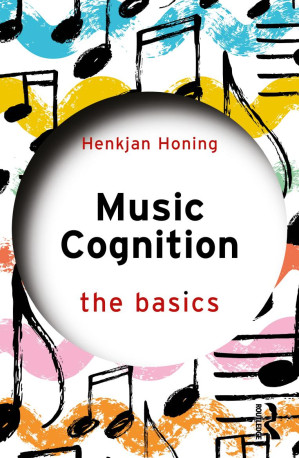
Music Cognition; The Basics; First Edition 🔍
Henkjan Honing
Routledge, Taylor & Francis (Unlimited), Abingdon, Oxon, 2022
English [en] · PDF · 5.7MB · 2022 · 📗 Book (unknown) · 🚀/zlib · Save
description
Why do people attach importance to the wordless language we call music? Music Cognition: The Basics considers the role of our cognitive functions, such as perception, memory, attention, and expectation in perceiving, making, and appreciating music. In this volume, Henkjan Honing explores the active role these functions play in how music makes us feel; exhilarated, soothed, or inspired. Grounded in the latest research in areas of psychology, biology, and cognitive neuroscience, and with clear examples throughout, this book concentrates on underappreciated musical skills such as sense of rhythm, beat induction, and relative pitch, that make people intrinsically musical creatures—supporting the conviction that all humans have a unique, instinctive attraction to music. The scope of the topics discussed ranges from the ability of newborns to perceive a beat, to the unexpected musical expertise of ordinary listeners. It is a must read for anyone studying the psychology of music, auditory perception, or simply interested in why we enjoy music the way we do.
Alternative publisher
Taylor & Francis Group
Alternative publisher
Taylor & Francis Ltd
Alternative edition
Basics (Routledge (Firm)), Abingdon, Oxon, 2022
Alternative edition
United Kingdom and Ireland, United Kingdom
Alternative edition
The basics, London ; New York, 2022
Alternative edition
The basics, 1st, London, 2021
date open sourced
2024-09-01
🚀 Fast downloads
Become a member to support the long-term preservation of books, papers, and more. To show our gratitude for your support, you get fast downloads. ❤️
- Fast Partner Server #1 (recommended)
- Fast Partner Server #2 (recommended)
- Fast Partner Server #3 (recommended)
- Fast Partner Server #4 (recommended)
- Fast Partner Server #5 (recommended)
- Fast Partner Server #6 (recommended)
- Fast Partner Server #7
- Fast Partner Server #8
- Fast Partner Server #9
- Fast Partner Server #10
- Fast Partner Server #11
- Fast Partner Server #12
🐢 Slow downloads
From trusted partners. More information in the FAQ. (might require browser verification — unlimited downloads!)
- Slow Partner Server #1 (slightly faster but with waitlist)
- Slow Partner Server #2 (slightly faster but with waitlist)
- Slow Partner Server #3 (slightly faster but with waitlist)
- Slow Partner Server #4 (slightly faster but with waitlist)
- Slow Partner Server #5 (no waitlist, but can be very slow)
- Slow Partner Server #6 (no waitlist, but can be very slow)
- Slow Partner Server #7 (no waitlist, but can be very slow)
- Slow Partner Server #8 (no waitlist, but can be very slow)
- Slow Partner Server #9 (no waitlist, but can be very slow)
- After downloading: Open in our viewer
All download options have the same file, and should be safe to use. That said, always be cautious when downloading files from the internet, especially from sites external to Anna’s Archive. For example, be sure to keep your devices updated.
External downloads
-
For large files, we recommend using a download manager to prevent interruptions.
Recommended download managers: JDownloader -
You will need an ebook or PDF reader to open the file, depending on the file format.
Recommended ebook readers: Anna’s Archive online viewer, ReadEra, and Calibre -
Use online tools to convert between formats.
Recommended conversion tools: CloudConvert and PrintFriendly -
You can send both PDF and EPUB files to your Kindle or Kobo eReader.
Recommended tools: Amazon‘s “Send to Kindle” and djazz‘s “Send to Kobo/Kindle” -
Support authors and libraries
✍️ If you like this and can afford it, consider buying the original, or supporting the authors directly.
📚 If this is available at your local library, consider borrowing it for free there.
Total downloads:
A “file MD5” is a hash that gets computed from the file contents, and is reasonably unique based on that content. All shadow libraries that we have indexed on here primarily use MD5s to identify files.
A file might appear in multiple shadow libraries. For information about the various datasets that we have compiled, see the Datasets page.
For information about this particular file, check out its JSON file. Live/debug JSON version. Live/debug page.